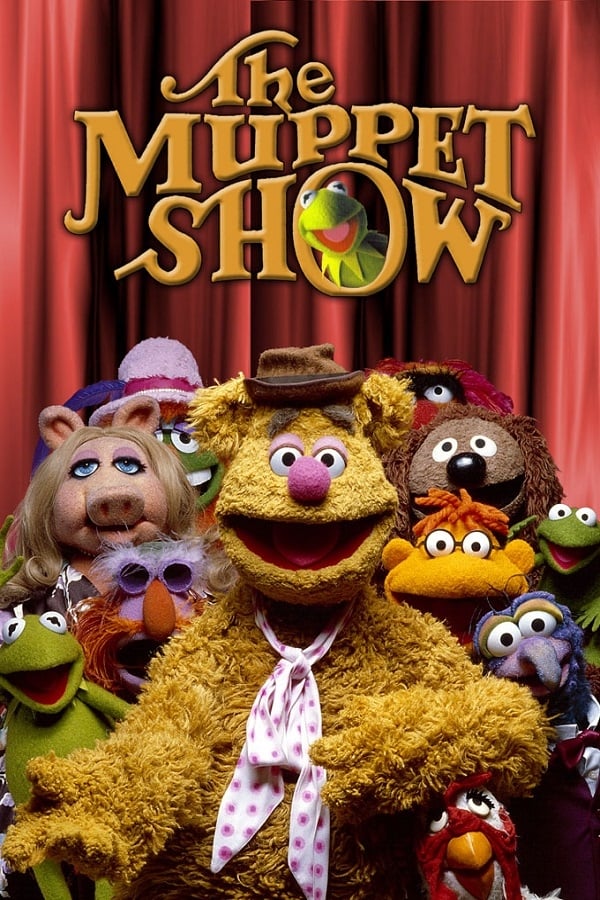
The Muppet Show (1976) interactive character relationship network and AI-powered story timeline. Explore the connections, alliances, and conflicts between characters across the narrative arc.
Overall narrative architecture across all 5 seasons, tracking backstage chaos, character evolution, and format stabilization.
"In episode 13, Gonzo and a crew of chickens fighting to save Kermit and the theater."
"Beauregard handles maintenance in S5E11 and S5E20, occasionally stepping into performance roles."
"In episodes 5 and 8, Kermit manages the broader cast, including unnamed Muppets who cause backstage trouble."
"In episode 17, Robin's Frog Scout troop visits the show... When Gonzo cancels his act, the Frog Scouts get their chance to do a performance of close-...
"In episode 15, Hal's Fourth of July number is invaded by Gonzo on a sleigh singing Christmas songs."
"Gonzo asks Scooter to be his manager, but Scooter gives up after Gonzo eats his contract."
"In episode 5, Fozzie directs Crazy Harry to perform 'Target Practice' as the opening skit, highlighting their collaborative chaos."
"Annie Sue appears in S1E7, S2E2, S3E2, S4E4, and S5E2, participating in pig-themed sketches."
Rating: 8/10 (366 votes)
The series establishes the Muppet Theatre's chaotic backstage environment. Kermit navigates constant disruptions from eccentric performers, hecklers, and guest stars. The season focuses on setting up recurring characters and comedic formats, with Fozzie's jokes, Gonzo's bizarre acts, and Statler and Waldorf's balcony presence becoming central pillars.
Stakes rise as Kermit faces more complex backstage crises, including blackmail, show cancellations, and talent disputes. The season introduces new formats like the Frog Scout troop and expands Gonzo's narrative arc. Performers test boundaries, leading to heightened comedic tension and structural experimentation.
The show finds its rhythm, balancing recurring gags with guest star collaborations. Fozzie's fire cover-up and Gonzo's motorcycle jumps mark key moments. The season emphasizes variety structure, with consistent segments like Muppet Newsflash and Veterinarian's Hospital anchoring the chaos.
Storylines become more interconnected, with murder mysteries, potion transformations, and superhero crazes driving plot progression. Kermit's authority is frequently challenged, forcing him to adapt his management style. The season explores deeper character dynamics and thematic experimentation.
The final season consolidates character arcs, with rat takeovers, pirate invasions, and radio simulcasts testing Kermit's leadership. The show embraces its meta-nature, acknowledging its own format while delivering a cohesive conclusion. Relationships solidify, and the theater's identity is firmly established.
Plot analysis generated from content on Wikipedia, licensed under CC BY-SA 4.0.
Related entry on Wikidata (Q2120540), public domain (CC0).