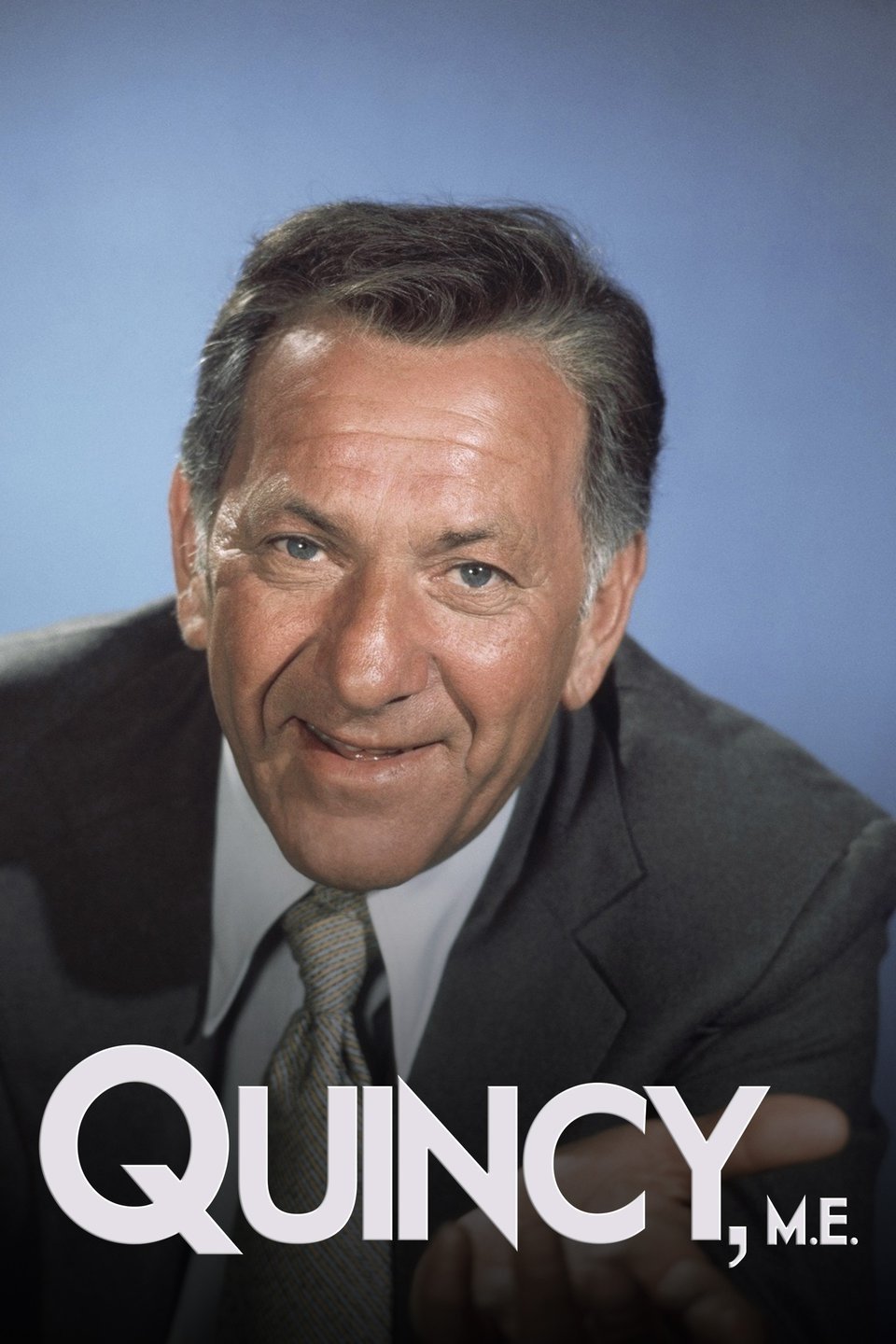
Quincy, M.E. (1976) character relationship network mapped with AI analysis. Explore the connections, alliances, and conflicts between characters.
Characters
Quincy
(played by Jack Klugman) — protagonist
Dr. R. Quincy is the resolute, ethical, and highly proficient Medical Examiner for the Los Angeles County Coroner's Office. A retired US Navy Captain, he conducts para-police investigations to determi...
Sam Fujiyama
(played by Robert Ito) — protagonist
A faithful and adept assistant who works alongside Quincy in the laboratory, providing crucial support during forensic investigations and case analysis.
Danny Tovo
(played by Val Bisoglio) — supporting
The owner of Danny's, a restaurant and lounge located at the Marina Del Rey marina. He is a close friend of Quincy, who frequently visits his establishment.
Robert Asten
(played by John S. Ragin) — supporting
Quincy's boss at the coroner's office. Initially, he frequently clashes with Quincy over differing theories about cases, but their professional and personal relationship becomes much closer in later e...
Frank Monahan
(played by Garry Walberg) — supporting
An LAPD Homicide Lieutenant who often conflicts with Quincy regarding investigative theories and methods. Like Asten, his initially volatile relationship with Quincy evolves into a closer professional...
Dr. Emily Hanover
(played by Anita Gillette) — cameo
Dr. Mason Colella
(played by Charles Aidman) — cameo
Fred
(played by Henry Slate) — cameo
Canonical Relationships
Family, romantic, and professional connections based on plot evidence.
Quincy → Sam Fujiyama
(Equal Authority) — Balanced power dynamic ensuring collaborative problem-solving without dominance.
"S3E1 to S8E10, they share equal decision-making authority in the field, with mutual respect overriding hierarchy."
Sam Fujiyama → Robert Asten
(Lab Assistants) — Reliable backup partnership emphasizing teamwork during primary investigator absences.
"S4E6 to S6E7, Sam assists Asten in lab operations and joint field missions when Quincy is unavailable."
Robert Asten → Frank Monahan
(Official Correspondents) — Formal administrative and law enforcement exchange focused on case documentation.
"S2E19 to S4E6, Asten and Monahan exchange autopsy reports and discuss legal admissibility of evidence."
Frank Monahan → Dr. Emily Hanover
(Profiling Consultants) — Law enforcement reliance on behavioral analysis to enhance investigative accuracy.
"S6E4 to S8E13, Monahan relies on Emily's psychological profiles to refine suspect theories."
Quincy → Fred
(Cameo Assistant) — Transient narrative device with no lasting impact on character development.
"S2E3, Fred appears as a student assistant during a specific cold case investigation."
Frank Monahan → Danny Tovo
(Information Sources) — Strategic use of local establishment for community policing and evidence collection.
"S3E1 to S5E8, Monahan accesses Danny's bar for witness interviews and informal information gathering."
Story Dynamics
Alliances, conflicts, and narrative interactions that evolve throughout the story.
Quincy → Robert Asten
(Thematic Foils) — Ideological contrast highlighting idealism versus administrative pragmatism.
"S1E2 to S8E21, their dynamic represents the tension between scientific truth and institutional bureaucracy."
Quincy → Dr. Emily Hanover
(Emotional Catalyst) — Relationship arc that humanizes Quincy and adds personal stakes to his professional mission.
"S8E13 to S8E19, their relationship introduces emotional depth and psychological complexity to Quincy's character."
Quincy → Frank Monahan
(Procedural Bridge) — Structural link connecting field operations with forensic validation.
"S1E4 to S8E13, their interactions bridge the gap between street-level policing and laboratory science."
Quincy → Dr. Mason Colella
(Antagonistic Mirror) — Villainous counterpart reflecting the systemic issues Quincy opposes.
"S4E14 to S4E15, Colella serves as a microcosm of the medical corruption Quincy consistently fights."
Robert Asten → Dr. Emily Hanover
(Methodology Pioneers) — Innovative partnership modernizing coroner office procedures through multidisciplinary research.
"S5E16 to S7E17, they collaborate on integrating psychological profiling into standard forensic protocols."
Sam Fujiyama → Dr. Emily Hanover
(Trauma Specialists) — Specialized partnership focusing on victim psychology and suspect profiling.
"S7E1 to S8E10, Sam and Emily coordinate on cases involving trauma and behavioral patterns."
Sam Fujiyama → Frank Monahan
(Field-Law Bridge) — Operational partnership enhancing inter-agency cooperation and evidence flow.
"S4E6 to S6E7, they operate as a field-and-law enforcement bridge during complex investigations."
Quincy → Danny Tovo
(Emotional Outlet) — Primary confidant for processing professional stress and personal sacrifices.
"S4E19 to S5E2, Quincy misses personal dates due to lab work, often venting to Danny at his bar."
Sam Fujiyama → Danny Tovo
(Casual Acquaintances) — Low-maintenance friendship providing neutral ground for team relaxation.
"S5E2 to S6E15, Sam and Quincy frequently visit Danny's bar, establishing a casual social circle."
Story Analysis
Across eight seasons, Quincy develops from a forensic investigator challenging individual death classifications into a broader advocate for medical accountability, public health, and vulnerable communities.
Plot Progression
Season 1: Challenging Official Stories
— Quincy establishes his method by questioning police assumptions and institutional explanations. His investigations connect forensic work with wider social and administrative failures.
Season 2: Public Health and Justice
— The cases expand from individual murders to epidemics, medical disagreement, abuse, radiation, and institutional neglect. Quincy increasingly treats forensic evidence as a basis for public accountabil...
Season 3: Systemic Threats
— Quincy confronts hidden bodies, police misconduct, terrorism, corporate concealment, and political violence. The stakes rise from local investigations to threats affecting whole communities.
Season 4: Institutional Accountability
— Medical negligence, environmental contamination, aircraft disaster, police brutality, and professional misconduct dominate the season. Quincy's personal life also becomes more visible as his work repe...
Season 5: Medicine and Social Power
— Quincy investigates unsafe drugs, abuse, hospital discrimination, prison violence, and political danger. His work increasingly challenges systems that protect profit, reputation, or authority.
Season 6: Evidence Under Pressure
— Forensic innovation and institutional resistance become central concerns. Quincy faces cases involving new identification methods, wrongful conclusions, medical research, and public danger.
Season 7: Expanding Moral Responsibility
— Quincy moves beyond determining causes of death and campaigns against dangerous policies, pollution, violence, and unequal medical access. His cases increasingly demand sustained social action.
Season 8: Personal and Ethical Reckoning
— The final season combines public-health investigations with professional dilemmas and Quincy's interrupted wedding plans. The closing cases balance institutional criticism with guarded hope in medical...