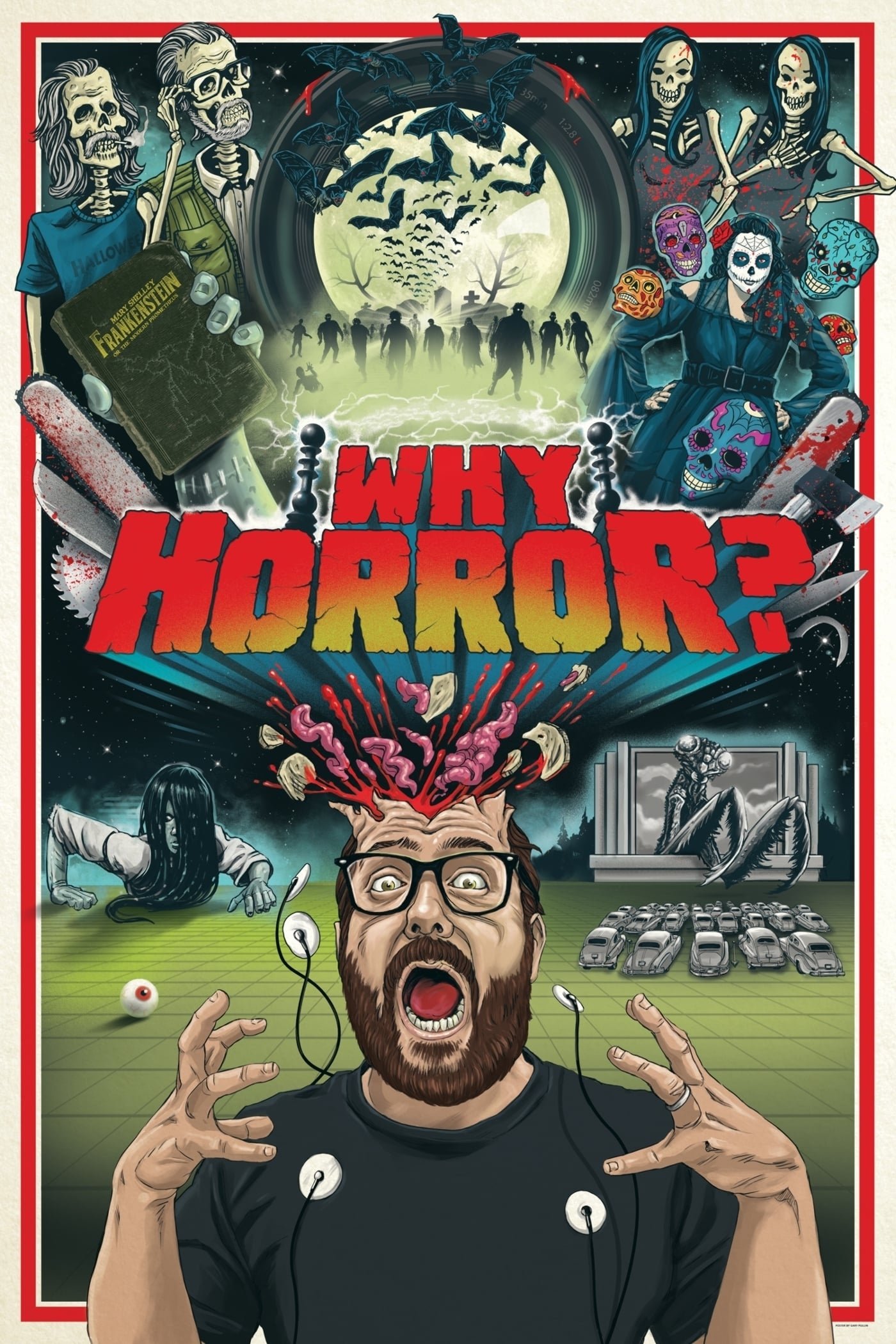
Plot Analysis Summary
The documentary explores fear's instinctive, cultural, artistic, and communal roles, concluding that horror remains compelling because its mystery is unresolved.
Story Structure — 4 Plot Phases
Fear, Art, and Human Nature
The documentary begins with fear as an instinct that helps people recognize danger. It connects frightening art and horror films to unsettling dimensions of human nature.
Key Events
-
Fear as Instinct — The documentary introduces fear as an instinctive response that helps people recognize danger.
Location: Unspecified
-
Understanding What Scares Us — The film argues that identifying fears can help people understand and avoid threats.
Location: Unspecified
-
Fear Reflected in Art — The documentary connects fear to art and presents Goya's disturbing images as reflections of human madness.
Location: Unspecified
-
Horror Mirrors Madness — Horror films are compared with disturbing art as reflections of unsettling aspects of human nature.
Location: Unspecified
Ancestors and Cultural Meaning
The film explains the Day of the Dead through corn, abundance, and honoring ancestors. It contrasts these meanings with outside imagery that can make the tradition seem sinister.
Key Events
-
Day of the Dead Traditions — The film explains that the Day of the Dead is connected to corn, abundance, and honoring ancestors.
Location: Unspecified
-
A Tradition Misread — The documentary describes how Halloween imagery and outside influences have made the tradition seem sinister to some.
Location: Unspecified
-
Pressure to Make Fear — The film notes pressure to treat the Day of the Dead as frightening despite its distinct cultural meaning.
Location: Unspecified
-
Offerings for Ancestors — The documentary considers offerings as part of honoring ancestors.
Location: Unspecified
-
The Dead Are Sown — The film presents the idea that in Xochimilco the dead are sown rather than buried.
Location: Xochimilco
Ghosts and Shared Fear
The documentary examines catharsis, Japanese ghost traditions, and the meanings attached to vengeful spirits. It also recalls reactions to The Ring and the communal pleasure of watching Evil Dead with friends.
Key Events
-
Violence and Catharsis — The documentary considers how violent stories may offer some viewers excitement or catharsis.
Location: Unspecified
-
Japanese Ghost Traditions — Japanese theatre and ghost traditions are discussed as sources of recognizable supernatural forms.
Location: Japan
-
Ghosts as Inner Darkness — Ghosts are described as human figures that embody inner darkness.
Location: Unspecified
-
Vengeful Spirits and Retribution — Stories of vengeful spirits are linked to aggression, death, and beliefs about karmic retribution.
Location: Unspecified
-
Panic Around The Ring — The documentary recalls panic surrounding the Japanese release of The Ring.
Location: Japan
-
Friends Watch Evil Dead — Watching Evil Dead on a poor-quality VHS with friends is presented as a shared pleasure of screaming together.
Location: Unspecified
Games and Horror's Mystery
A game creator describes how puzzle-solving added complexity to Resident Evil's action-survival design. The film closes by treating horror as a way to learn and as a mystery whose uncertainty sustains its appeal.
Key Events
-
Resident Evil Design — A game creator explains that puzzle-solving was added to Resident Evil.
Location: Unspecified
-
Beyond Straightforward Survival — Puzzle-solving is described as making the game's initially straightforward action-survival design more complex.
Location: Unspecified
-
Horror as a Way to Learn — The documentary considers horror a way to learn about the world.
Location: Unspecified
-
Fear Is Not Simply Bad — The film resists the idea that fear is simply negative.
Location: Unspecified
-
Horror's Unsolved Mystery — The documentary concludes that horror remains compelling as an unsolved mystery that would lose fascination if settled.
Location: Unspecified