Story Structure — 5 Plot Phases
Samba Rhythms Introduction
The film opens with Marcos Farias segment, establishing the cultural backdrop of samba schools and community life.
Key Events
-
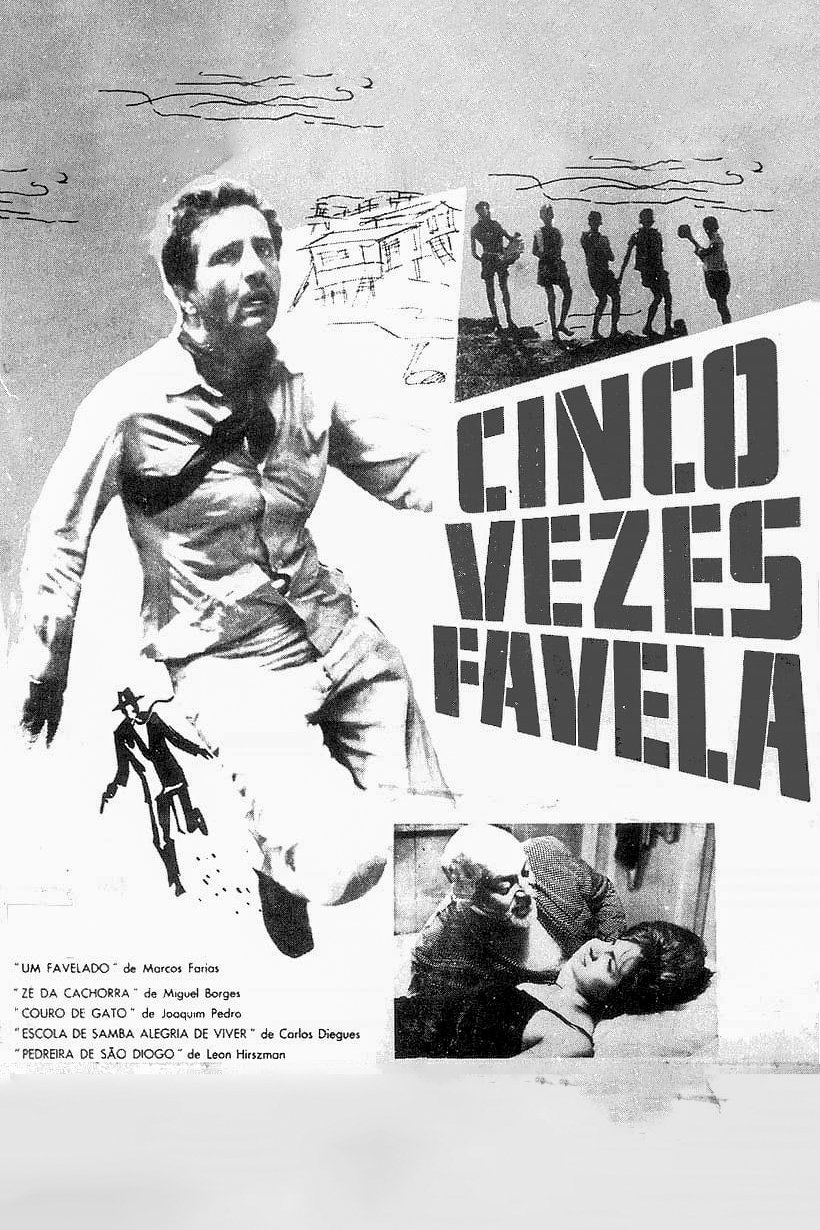
Anthology Framework Establishment — Introduction of the five-segment structure and Cinema Novo significance.
Location: Brazilian Cinema Context
-
Segment One: Samba Culture — Marcos Farias directs the opening segment focusing on samba traditions.
Location: Samba School
Labor and Quarry Realities
Miguel Borges directs the second segment, shifting focus to the physical demands and environment of quarry work.
Key Events
-
Segment Two: Quarry Labor — Miguel Borges presents the second story centered on quarry work.
Location: Pedreira de São Diogo
Favela Daily Existence
Cacá Diegues presents the third segment, exploring everyday struggles and social dynamics within the favela.
Key Events
-
Segment Three: Favela Existence — Cacá Diegues explores daily life and social dynamics in the favela.
Location: Favela Community
-
Segment Four: Urban Tension — Joaquim Pedro de Andrade directs the fourth segment with interpersonal conflict.
Location: Street Periphery
Urban Friction and Conflict
Joaquim Pedro de Andrade directs the fourth segment, introducing interpersonal tensions and narrative shifts.
Key Events
-
Segment Five: Musical Narrative — Leon Hirszman concludes the anthology with the fifth story.
Location: Favela Edge
-
Producer Credits Display — Acknowledgment of Leon Hirszman, Marcos Farias, and Paulo César Saraceni.
Location: Production Office
Musical Resolution and Legacy
Leon Hirszman concludes the anthology with the fifth segment, weaving music into the narrative before production credits roll.
Key Events
-
Producer Credits Display — Acknowledgment of Leon Hirszman, Marcos Farias, and Paulo César Saraceni.
Location: Production Office
-
Composer Integration: Lyra — Carlos Lyra's contributions to the samba and leather cat segments.
Location: Studio
-
Composer Integration: Milito — Hélcio Milito scores the quarry segment.
Location: Studio
-
Composer Integration: Rocha — Mário Rocha provides music for the favela and street segments.
Location: Studio
-
Composer Integration: Vandré — Geraldo Vandré composes for the final segment.
Location: Studio
-
CPC Organizational Context — Reference to Centro Popular de Cultura under União Nacional dos Estudantes.
Location: CPC Headquarters
-
Cinema Novo Historical Placement — Recognition of the film as a foundational work of the movement.
Location: Film Archive
-
Director Roster Confirmation — Final listing of the five directors and their respective segments.
Location: Production Notes
-
Anthology Closure — End of the five-part narrative structure and credits.
Location: Screen