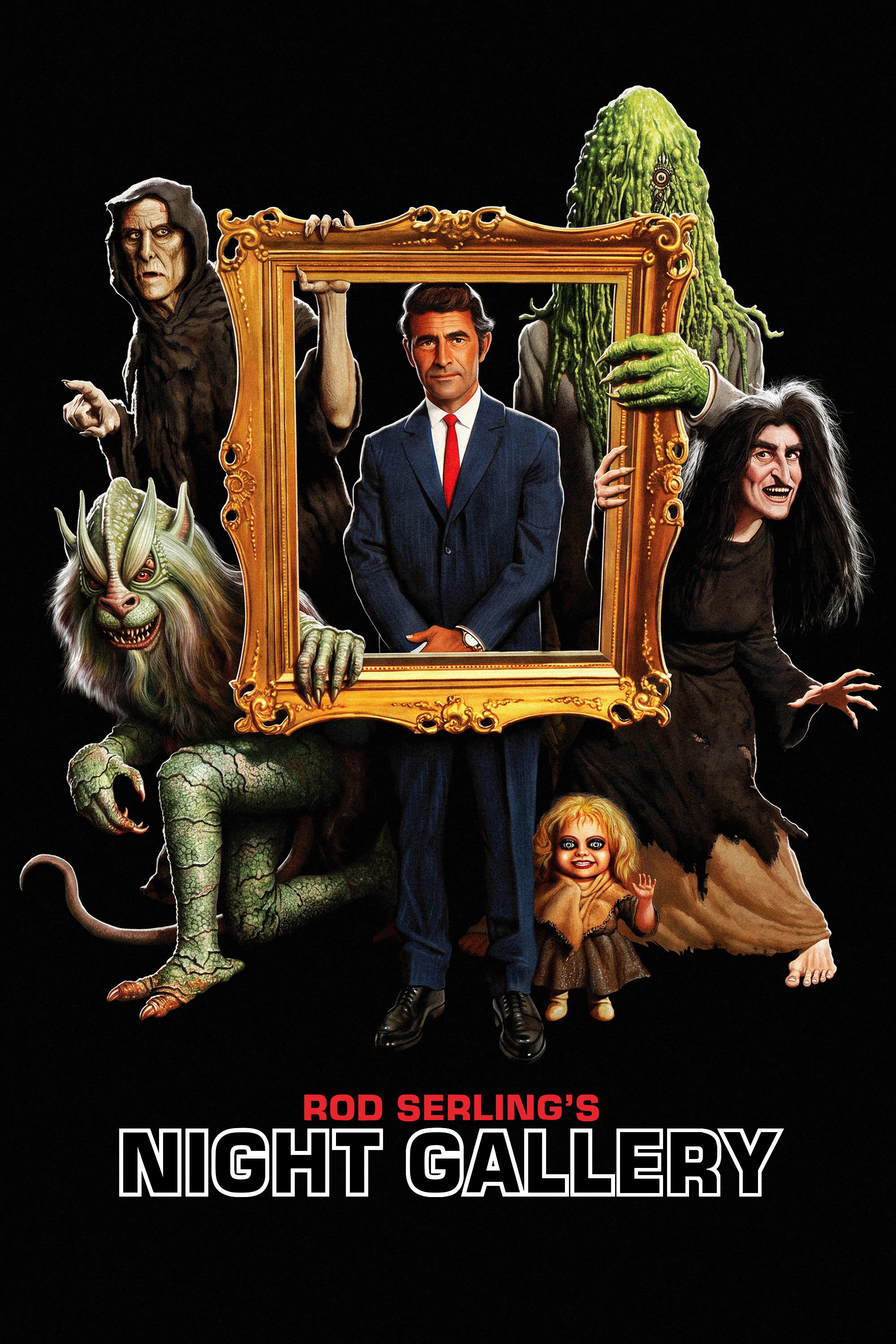
Night Gallery (1970) interactive character relationship network and AI-powered story timeline. Explore the connections, alliances, and conflicts between characters across the narrative arc.
A three-season anthology exploring psychological, medical, and supernatural horror through isolated yet thematically linked episodes.
"Both characters function as narrative devices rather than interconnected figures, emphasizing the episodic nature of the anthology."
Rating: 7.8/10 (112 votes)
The first season establishes the anthology's foundation through clinical experiments, hypnosis, and early supernatural encounters. Characters navigate the thin line between scientific rationality and inexplicable horror, setting a tone of grounded unease.
The narrative shifts toward overt occult themes, featuring possession, ancient curses, and psychological manipulation. The series expands its horror vocabulary, moving from medical realism to supernatural allegory while maintaining episodic isolation.
The final season embraces full supernatural dread, with glowing entities, ancient manuscripts, and existential bargains. Characters confront irreversible transformations, culminating in a series-wide thematic peak of irreversible loss and obsession.
A narrative bridge highlighting the series' commitment to the anthology format. Each segment operates independently, yet recurring motifs of obsession, transformation, and the supernatural create a cohesive meta-narrative across all three seasons.
The conclusion reflects on the series' impact, emphasizing how isolated tales of horror collectively explore human vulnerability. The anthology format proves essential to delivering concentrated, impactful narratives without dilution.
Plot analysis generated from content on Wikipedia, licensed under CC BY-SA 4.0.
Related entry on Wikidata (Q639433), public domain (CC0).