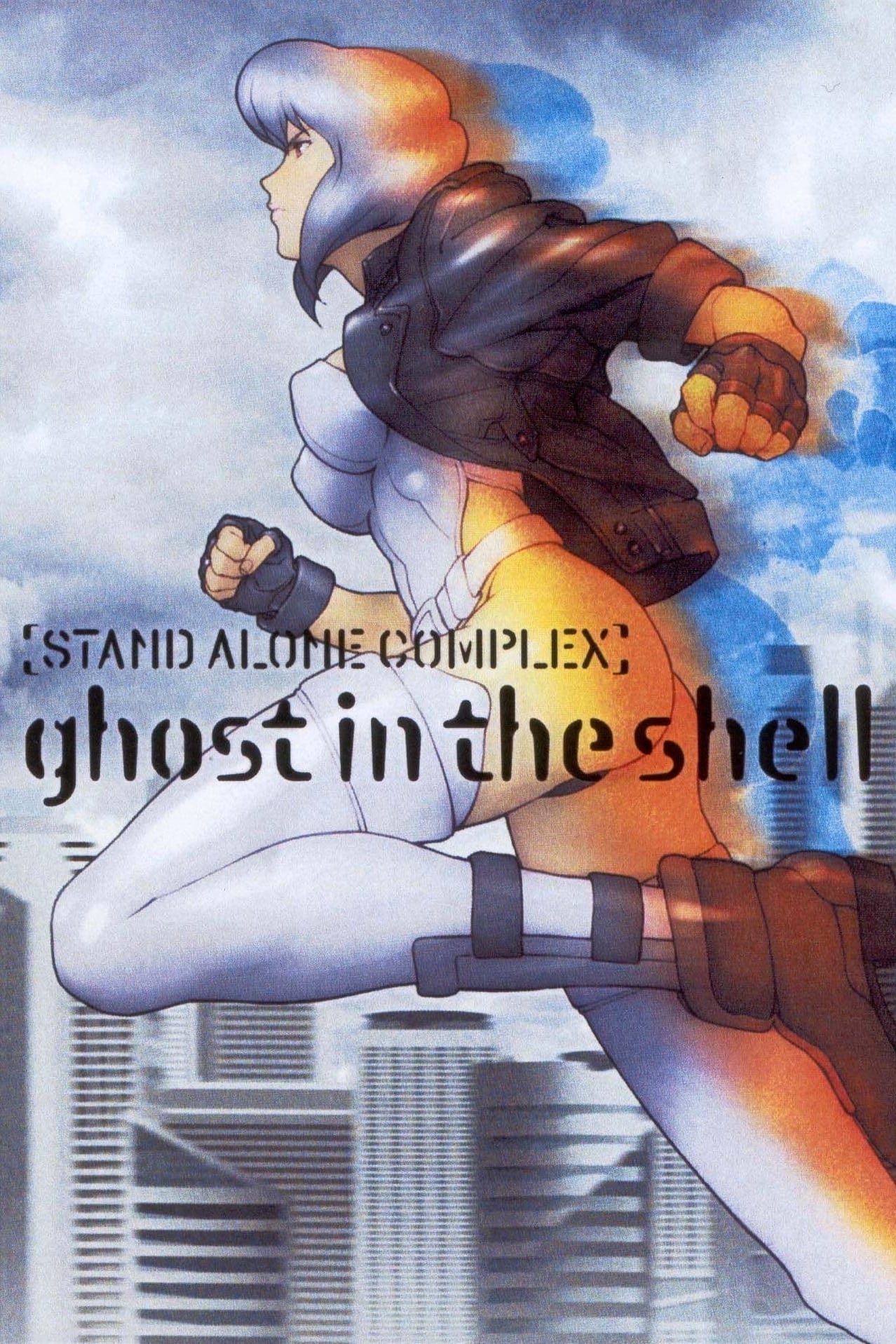
Character Relationship Map: Ghost in the Shell: Stand Alone Complex
Ghost in the Shell: Stand Alone Complex (2002) character relationship network mapped with AI analysis. Explore the connections, alliances, and conflicts between characters.
Characters
Motoko Kusanagi
(played by Atsuko Tanaka) — protagonist
Major of Section 9 who leads investigations into the Laughing Man incident and the Individual Eleven refugee crisis. She survives a staged death to expose government and corporate corruption, later le...
Batou
(played by Akio Otsuka) — protagonist
Daisuke Aramaki
(played by Osamu Saka) — supporting
Kubota
(played by Taimei Suzuki) — supporting
Ishikawa (voice)
(played by Yutaka Nakano) — supporting
Paz
(played by Takashi Onozuka) — supporting
Hideo Kuze
(played by Rikiya Koyama) — supporting
Charismatic leader of the Individual Eleven who genuinely advocates for refugee independence from Japan. His ideological stance contrasts with Kazundo Gōda's manipulations, driving the Season 2 confli...
Borma
(played by Taro Yamaguchi) — supporting
Saito
(played by Toru Okawa) — supporting
Tachikoma/ Uchikoma/ Togusa's Wife
(played by Sakiko Tamagawa) — supporting
Canonical Relationships
Family, romantic, and professional connections based on plot evidence.
Daisuke Aramaki → Motoko Kusanagi
(Leader and Subordinate) — Director of Public Security Section 9 who delegates critical missions to his lead operative.
"Aramaki commands Section 9, Kusanagi executes field operations. S2E1 and S2E24 show continued command structure despite political dissolution."
Kubota → Daisuke Aramaki
(Subordinate and Superior) — Government official who reports sensitive intelligence directly to Section 9's director.
"S1E1 Kubota briefs Aramaki on the Foreign Minister case and requests Section 9 intervention."
Daisuke Aramaki → Kubota
(Superior and Subordinate) — Section 9 director who delegates sensitive government cases to his intelligence liaison.
"S1E1 Aramaki receives case from Kubota and authorizes Section 9 involvement."
Batou → Kubota
(Handler and Operative) — Government liaison providing intelligence and case assignments to Section 9's field commander.
"Kubota assigns cases to Section 9 in S1E1, Batou executes field operations. S2 maintains professional distance as Section 9 operates off-grid."
Saito → Motoko Kusanagi
(Sniper and Commander) — Section 9 sniper who executes precise tactical support under Kusanagi's direct command.
"S1E2, S1E25, S2E14 Provides cover fire, follows orders during sieges and security duty."
Story Dynamics
Alliances, conflicts, and narrative interactions that evolve throughout the story.
Batou → Motoko Kusanagi
(Partners) — The central operational pair of Section 9, combining Batou's combat prowess with Kusanagi's strategic oversight.
"Core duo leading Section 9 in S1E1, S2E1, S2E21. Co-lead operations and share command responsibilities."
Hideo Kuze → Batou
(Rival and Enemy) — Ideological adversary whose physical superiority forces Batou into a vulnerable recovery phase during the refugee crisis.
"S2E21 Kuze disables Batou's right leg and left arm in combat, forcing a tactical retreat."
Batou → Saito
(Teammates) — Long-standing tactical partners who rely on each other in high-stakes combat and surveillance scenarios.
"Joint operations in S1E4 wake, S1E25 trapped together by Umibozu, and S2E14 poker game downtime."
Ishikawa (voice) → Batou
(Teammates) — Core Section 9 member who consistently partners with Batou on hacking, surveillance, and tactical missions.
"S1E10, S1E25, S2E8, S2E12 frequent partners in investigations and sieges."
Ishikawa (voice) → Motoko Kusanagi
(Partners) — Frequent investigative partner who collaborates with Kusanagi on cyber warfare and corporate corruption cases.
"S1E10, S2E8, S2E12 Joint investigations, hacking operations, and strategic planning."
Motoko Kusanagi → Tachikoma/ Uchikoma/ Togusa's Wife
(Commander and AI Asset) — Section 9 commander who maintains a complex relationship with the AI tanks, transitioning from tool to ally.
"S1E12, S1E15, S2E12, S2E15, S2E26 Kusanagi oversees Tachikoma development, they develop mutual respect and autonomous moral choices."
Hideo Kuze → Motoko Kusanagi
(Ideological Rival) — Former soldier whose separatist movement challenges Kusanagi's loyalty to Section 9 and Japanese policy.
"S2E17, S2E21 Kuze's actions and presence force Kusanagi to confront the refugee crisis and government policies."
Paz → Borma
(Teammates) — Specialists who coordinate closely during S2's technical and explosive threat investigations.
"S2E12, S2E22 work together on virus and bomb investigations."
Batou → Borma
(Teammates) — Specialist who provides technical and tactical backup to Batou during S2 operations.
"S2E12, S2E15, and S2E22 tech support and field ops coordination."
Batou → Paz
(Teammates) — Field operative who coordinates closely with Batou during S2 refugee and bomb investigations.
"S2E12 and S2E22 joint missions where Paz provides tactical support and trust in combat."
Story Analysis
Overall narrative architecture across both seasons, tracking Section 9's evolution from government unit to independent force amid political and cyber crises.
Plot Progression
S1: Initial Cases
— Section 9 tackles episodic crises involving androids, hijacked tanks, and corporate cover-ups, establishing their operational baseline and introducing the Laughing Man thread.
S1: Laughing Man Emerges
— Investigations into police corruption and viral memes deepen the Laughing Man mystery, revealing systemic government and corporate manipulation.
S1: Conspiracy Unfolds
— Section 9 uncovers the Murai Vaccine truth and DEA corruption, while Tachikoma AI development raises ethical concerns within the unit.
S1: Institutional Collapse
— The Laughing Man's mastermind is exposed, leading to Section 9's forced disbandment by the Umibozu and a major political reckoning.
S2: Unofficial Rebirth
— Two years later, Section 9 operates off-grid amid a refugee crisis, tackling corporate heists and military exercises while rebuilding trust.
S2: Individual Eleven Arc
— A mysterious virus and government manipulation drive Section 9 to investigate CIA servers and military officers, escalating political stakes.
S2: Dejima Crisis
— Refugee separatism and nuclear threats force Section 9 into direct combat, culminating in Tachikoma autonomous intervention and a moral reckoning.
Ghost in the Shell: Stand Alone Complex (2002) · 8.2/10 · action-adventure, animation, crime, sci-fi-fantasy