Story Structure — 4 Plot Phases
Divine Emperor and Religious Doctrine
The film introduces the Imperial Army uniformity and establishes Emperor Hirohito absolute divine authority. It traces how Shinto was twisted into a fanatical conquest doctrine.
Key Events
-
Preamble on Japanese Loyalty — Intro contrasts Japanese Americans with natives Characters: Narrator
Location: Narration Space
-
Imperial Soldier Uniformity — Soldiers described as photographic prints Characters: Narrator
Location: Military Camps
-
Emperor Hirohito's Divinity — Hirohito holds combined political and religious power Characters: Narrator
Location: Imperial Court
-
Shinto Religion Origins — Shinto portrayed as quaint before 1870 Characters: Narrator
Location: Ancient Japan
-
Hakkō Ichiu Doctrine — Fanatical conquest doctrine woven into Shinto Characters: Narrator
Location: Imperial Edicts
-
Yasukuni Shrine Function — War dead enshrined to return from battle Characters: Narrator
Location: Shrine Grounds
Historical Power and Feudal Codes
Narration shifts to historical analysis debunking the myth of pure divine blood. It critiques the samurai class and the Bushido code for sanctioning treachery.
Key Events
-
Yasukuni Shrine Function — War dead enshrined to return from battle Characters: Narrator
Location: Shrine Grounds
-
Geographic and Historical Shift — Film questions the real Japan beyond beliefs Characters: Narrator
Location: Narration Space
-
Divine Blood Debunked — Pure blood myth dismissed as plasma cocktail Characters: Narrator
Location: Anthropological Study
-
Early Power Dynamics — Emperor lacks power while daimyōs rule Characters: Narrator
Location: Feudal Japan
-
Bushido Code Critique — Code sanctions double-dealing as an art Characters: Narrator
Location: Samurai Courts
-
Christianity and Isolation — Warlords expel Westerners after 200 years Characters: Narrator
Location: Missionary Zones
Isolation and Forced Modernization
Japan two-century isolation is broken by Western pressure. The Meiji Restoration is portrayed as a warlord-driven strategy rather than genuine progress.
Key Events
-
Christianity and Isolation — Warlords expel Westerners after 200 years Characters: Narrator
Location: Missionary Zones
-
Perry's Forced Opening — Commodore Perry breaks isolation in 1853 Characters: Narrator
Location: Tokyo Bay
-
Meiji Westernization — Warlords use Western ideas for ambition Characters: Narrator
Location: Imperial Palace
-
Tanaka Memorial Blueprint — Document framed as world conquest plan Characters: Narrator
Location: Secret Archives
-
Information Control System — All data filtered to suit warlords Characters: Narrator
Location: Government Bureaus
-
Western Enlightenment Contrast — West advances while Japan stagnates Characters: Narrator
Location: Global Context
-
Shogun Position Eliminated — Emperor elevated as powerless rallying point Characters: Narrator
Location: Political Reform
Warlord Control and Wartime Reality
The documentary highlights how information control and stagnant social structures fueled expansionism. It concludes by contextualizing Japan 1945 wartime position.
Key Events
-
Information Control System — All data filtered to suit warlords Characters: Narrator
Location: Government Bureaus
-
Peasant Life Stagnation — People live unchanged since 17th century Characters: Narrator
Location: Rural Villages
-
White-Collar Medieval Life — Office workers live like Middle Ages ancestors Characters: Narrator
Location: Urban Homes
-
Expansionist Justification — Warlord control explains aggressive actions Characters: Narrator
Location: War Council
-
1945 Wartime Circumstances — Film concludes with current war status Characters: Narrator
Location: Battlefields
-
Final Propaganda Warning — Audience urged to understand enemy psychology Characters: Narrator
Location: Narration Space
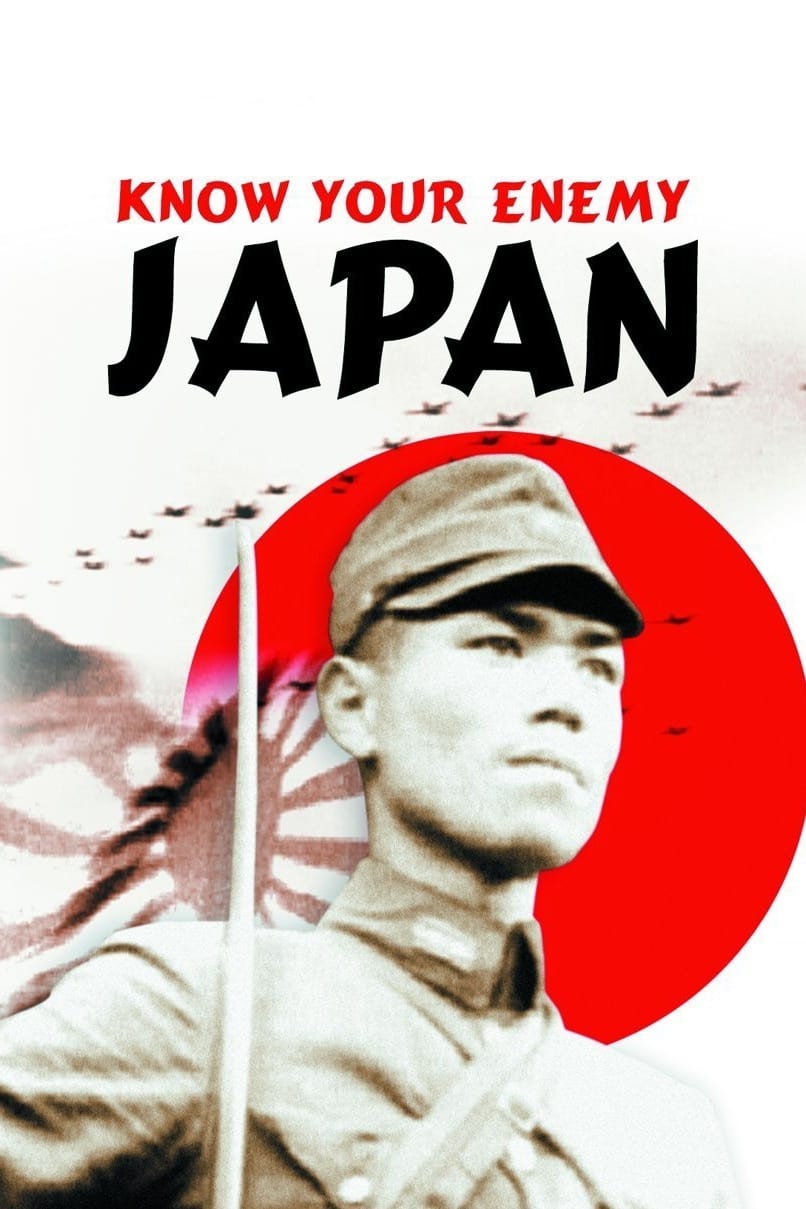
Frank Capra-directed propaganda film produced during World War II depicting the United States' new enemy: Japan.