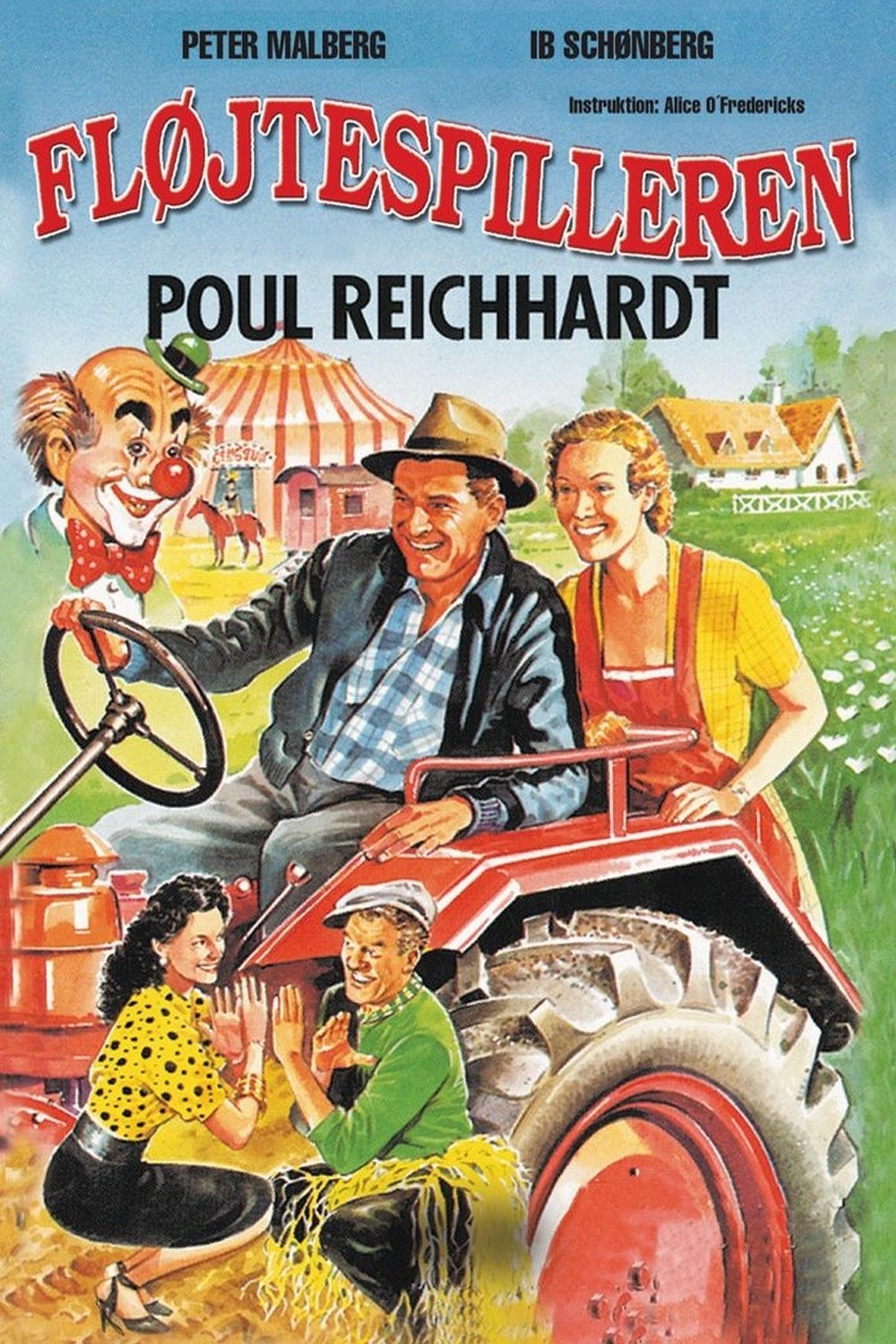
A metadata-driven overview of the 1953 Danish comedy film's creation and release.
Story Structure — 4 Plot Phases
Production Genesis
The film is introduced as a 1953 Danish comedy directed by Alice O'Fredericks.
Key Events
Film Introduction — Introduction of Fløjtespilleren as a 1953 Danish comedy film.
Location: Denmark
Creative Team Reveal — Director Alice O'Fredericks and producer Henning Karmark are credited.
Location: Production Studio
Cast Assembly
A comprehensive roster of actors is listed, establishing the ensemble.
Key Events
Cast Announcement — Extensive list of main actors including Poul Reichhardt and Axel Strøbye is presented.
Location: Casting Office
Technical Credits — Cinematographer Rudolf Frederiksen and editor Wera Iwanouw are highlighted.
Location: Editing Room
Technical Execution
Key crew members like the cinematographer and editor are credited.
Key Events
Technical Credits — Cinematographer Rudolf Frederiksen and editor Wera Iwanouw are highlighted.
Location: Editing Room
Market Debut
The film enters the 1953 cinematic landscape alongside contemporary hits.
Key Events
Release Context — Film released in 1953 alongside popular titles like Roman Holiday.
Location: Cinema Market
Story Breakdown
Creative Leadership — Key figures behind the film's direction and production.
Director Role — Alice O'Fredericks guides the comedic vision.
Producer Oversight — Henning Karmark manages financing and logistics.
Talent Roster — The extensive cast assembled for the film.
Lead Actors — Poul Reichhardt and Axel Strøbye headline the cast.
Supporting Cast — Dozens of actors fill secondary and minor roles.
Technical Craft — Behind-the-scenes roles shaping the visual and auditory experience.
Cinematography — Rudolf Frederiksen handles black and white photography.
Film Editing — Wera Iwanouw assembles the final cut.
Artistic Elements — Creative components defining the film's style.
Screenplay — Grete Frische writes the original Danish script.
Musical Score — Sven Gyldmark composes the soundtrack.
Release Context — The film's placement in the 1953 cinematic landscape.
Market Position — Competes with contemporary hits like Roman Holiday.
Industry Scale — Part of over a thousand Danish films released by 2022.
Format Details — Technical specifications of the film's presentation.
Runtime — The film runs for 102 minutes.
Visual Style — Shot entirely in black and white.
A bunch of wagons are crossing the border. It's the Karla Circus, which, after a rough season in Germany, is gonna try its luck in Denmark. Mrs. Karla, the beloved and respected circus director, goes through passports and papers with the customs officers... everything's fine, so the circus caravan can keep going to the next town. One of the circus employees is caught harboring a vagrant in his wagon. But when it turns out that the vagrant is an excellent flute player, he becomes an asset to Circus Karla.