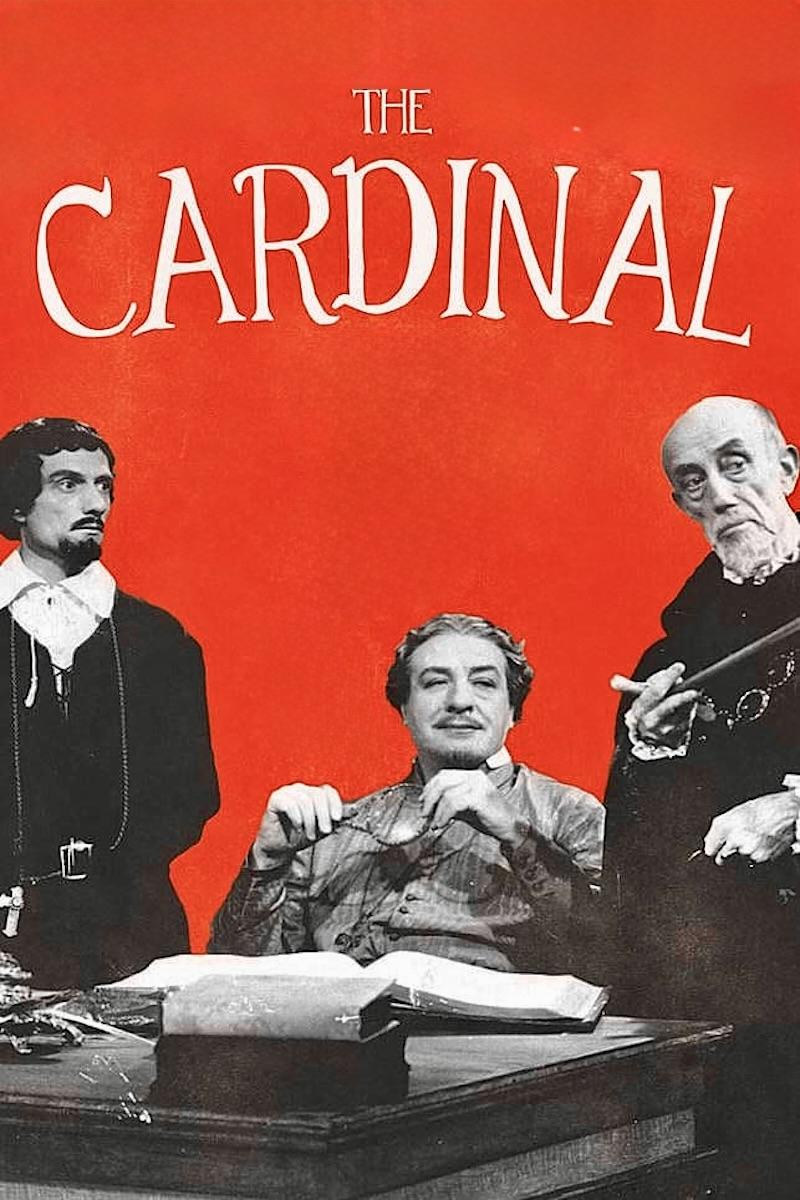
The Cardinal (1936) character relationship network mapped with AI analysis. Explore the connections, alliances, and conflicts between characters.
Characters
Cardinal de Medici
(played by Matheson Lang) — protagonist
Cardinal de Medici is one of the central figures in the film’s sixteenth-century Roman power struggle. Presented as a rival of Giuliano de Medici, he represents the opposing force in the contest betwe...
Giuliano de Medici
(played by Eric Portman) — supporting
Giuliano de Medici is the film’s leading church-statesman and one of the central figures in its power battle in sixteenth-century Rome. His rivalry with Cardinal de Medici forms the main political con...
General Belmont
(played by Robert Atkins) — supporting
Monterosa
(played by O.B. Clarence) — supporting
Pope Julius II
(played by F.B.J. Sharp) — supporting
Baglioni
(played by Douglas Jefferies) — supporting
English Abbot
(played by David Horne) — supporting
Bramante
(played by A. Bromley Davenport) — supporting
Michaelangelo
(played by Wilfred Fletcher) — supporting
Michaelangelo is the artist associated with the design for the new St. Peter’s Basilica, whose construction is one of the film’s major historical themes. His architectural contribution provides an imp...
Cardinal Orelli
(played by Rayner Barton) — supporting
Spini
(played by Edgar K. Bruce) — supporting
Francesca Monterosa
(played by June Duprez) — minor
Donna Claricia
(played by Henrietta Watson) — minor
Duenna
(played by Dora Barton) — minor
Story Analysis
A historical drama exploring political power struggles, wartime tensions, and architectural ambition in sixteenth-century Rome.
Plot Progression
Theatrical Origins and Production
— The film begins as an independent adaptation of a 1901 play, with director Sinclair Hill assembling the cast at Welwyn Studios. The production phase establishes the creative foundation and historical...
Rome's Political Crucible
— The narrative shifts to sixteenth-century Rome, where a fierce power battle unfolds between church-statesmen and their rivals. The Italian Wars against France and the basilica construction amplify the...
Escalating Conflicts and Ambitions
— Factions maneuver for dominance as external military threats and internal rivalries collide. The architectural project mirrors the characters' relentless drive for legacy and control.
Cinematic Release and Legacy
— Filming concludes and the distributor secures wide release. The film premieres as a notable British historical drama, cementing its place in early cinema history.