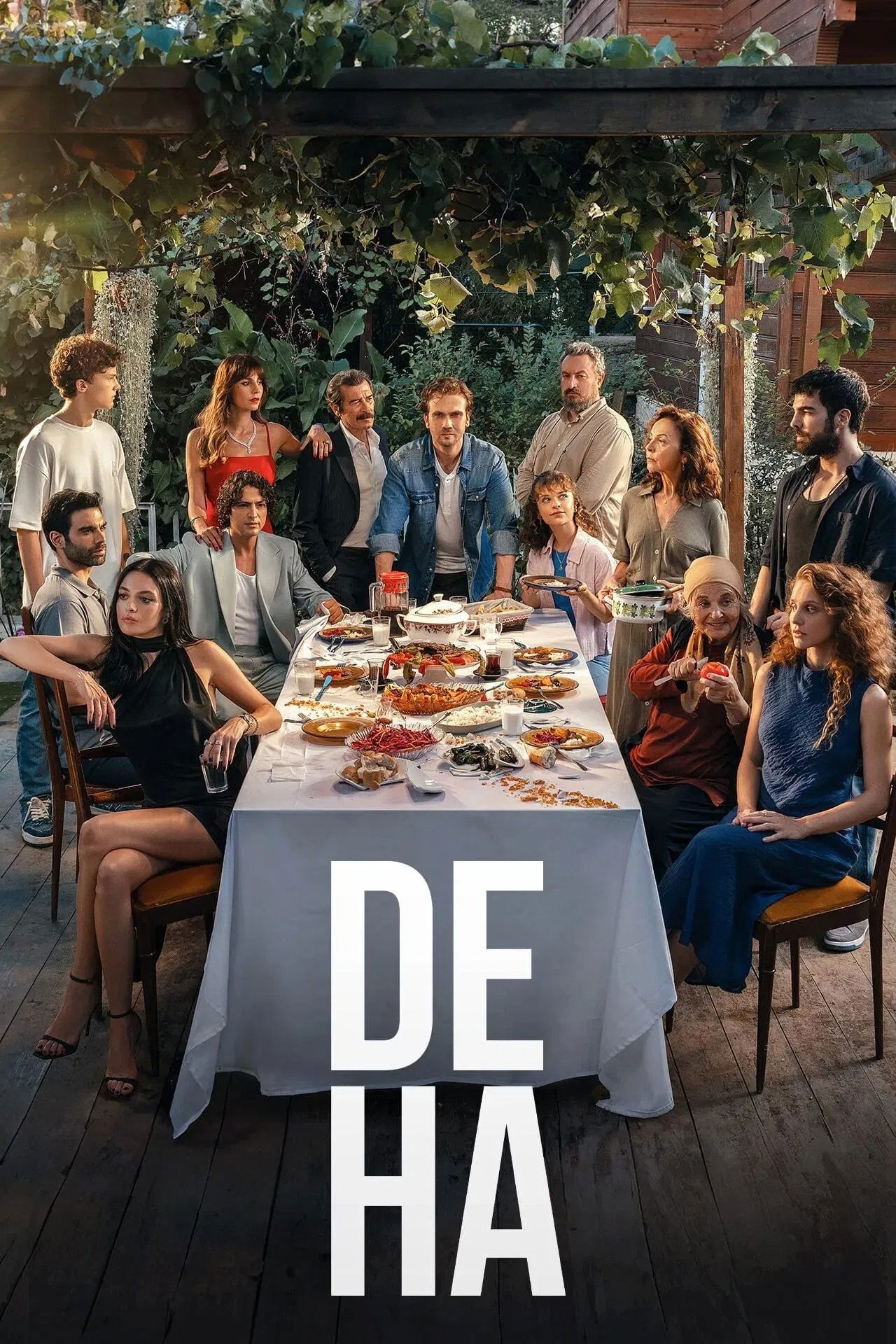
Deha (2024) character relationship network mapped with AI analysis. Explore the connections, alliances, and conflicts between characters.
Characters
Hakim
(played by Cenk Kangöz) — supporting
İmre
(played by Melis Sezen) — supporting
Cengiz
(played by Abdurrahman Yunusoğlu) — minor
Esme
(played by Ahsen Eroğlu) — supporting
Karga
(played by Taner Rumeli) — minor
Canonical Relationships
Family, romantic, and professional connections based on plot evidence.
İmre → Karga
(Strategic Contenders) — A high-stakes power struggle where life-altering decisions and direct confrontations over strategic control define their competitive dynamic.
"\u0130mre makes a life-altering decision about Devran... Karga confronts Imre about Devran."
Esme → Karga
(Adversarial Watchers) — A power dynamic where Karga's external threats trigger Esme's protective warnings, establishing a tense balance of influence and caution.
"Karga threat to Devran forces G\u00fclce to turn a blind eye... Esme is aware of this and warns Devran."
Karga → Hakim
(Investor and Business Partner) — A transactional professional bond formed through financial investment in a struggling enterprise, later complicated by investigative pressures.
"Iskender learns that Karga has invested in Hakim's failed company... Hakim pressures Cesur."
Story Dynamics
Alliances, conflicts, and narrative interactions that evolve throughout the story.
Cengiz → Karga
(Informant and Investigator) — A narrative-driven connection where informant intelligence directly influences investigative strategies and confrontational outcomes.
"Using the information that Cengiz is an informant... Karga confronts Imre about Devran."
Karga → İmre
(Reluctant Partners) — A reluctant alliance forged through persuasion and confrontation, where shared objectives temporarily override competitive instincts.
"\u0130mre manages to convince Devran of himself... Karga confronts Imre about Devran."
Esme → İmre
(Acquaintances with Tension) — A socially charged dynamic where personal revelations and new arrivals disrupt established household equilibrium, creating underlying tension.
"Devran confronts Esme and tells her the truths about Cesur... Imre's arrival changes the balance in the house."
Hakim → İmre
(Strategic Allies) — A pragmatic alliance formed through shared investigative goals and strategic persuasion, operating within a complex web of mutual interests.
"Hakim pressures Cesur... \u0130mre manages to convince Devran of himself."
İmre → Cengiz
(Converging Operatives) — A narrative convergence where İmre's external collaborations intersect with Cengiz's informant network, shaping trap strategies and outcomes.
"\u0130mre collaborates with Karahan... Cengiz is an informant... Devran decides to lure \u0130skender into a trap."
Karga → Esme
(Business Observers) — A socially detached but observant relationship where business recoveries and strategic warnings create an undercurrent of mutual awareness.
"Karga recovers control of the family business... Esme is aware of this and warns Devran."
Esme → Cengiz
(Crisis Responders) — A socially reactive dynamic where personal crises and informant revelations trigger coordinated responses and strategic adjustments.
"Devran, who is going through a major crisis... Cengiz is an informant... Devran receives the news of this confrontation."
Hakim → Cengiz
(Parallel Investigators) — An unknown dynamic where parallel investigative tracks operate independently, with informant intelligence potentially intersecting at critical junctures.
"Hakim learns that Karga has decided to take a closer look at Boran's murder... Cengiz is an informant."
Story Analysis
Overall narrative architecture across all 1 seasons
Plot Progression
Season 1: Strategic Foundations
— Establishes core business investments, initial warnings, and investigative pressures that set the operational landscape.
Season 1: Rising Tensions
— Business recoveries, persuasive campaigns, and health crises escalate stakes, forcing strategic reassessments.
Season 1: Critical Revelations
— Informant networks activate, life-altering decisions are made, and direct confrontations reshape power dynamics.
Season 1: Strategic Realignment
— External collaborations, risk assessments, and network activations drive temporary alliances and operational shifts.
Season 1: Final Convergence
— Final confrontations, crisis resolutions, and network convergence solidify strategic outcomes and operational control.