Story Structure — 4 Plot Phases
Tensions in the Province
The film establishes a volatile 1922 Italian town where socialist hospital strikes provoke fascist mobilization. Ideological friction quickly escalates into physical confrontations between the rival factions.
Key Events
-
Small Italian Town Setting — Establishes the 1922 provincial backdrop for the political conflict. Location: Small Italian Town
-
Hospital Strike Initiated — Socialists call a strike at the local hospital, disrupting operations. Location: Hospital
-
Blackshirt Patrol Begins — Local blackshirts mobilize to counter the socialist strike. Location: Town Streets
-
Ideological Tension Rises — Verbal clashes escalate between rival political factions. Location: Town Square
-
First Skirmish Erupts — Physical confrontation breaks out between the two groups. Location: Hospital Perimeter
Blood on the Hospital Steps
The conflict intensifies as blackshirts and socialists clash directly around the hospital. Mario enters the fray alongside the fascists, while Doctor Cardini defends his workplace against the strikers.
Key Events
-
First Skirmish Erupts — Physical confrontation breaks out between the two groups. Location: Hospital Perimeter
-
Hospital Siege Threat — Socialists attempt to blockade the hospital to pressure staff. Location: Hospital
-
Mario Joins the Front — Mario steps into the conflict alongside the blackshirts. Location: Town Streets
-
Doctor Cardini Defends Hospital — Cardini actively resists the socialist blockade. Location: Hospital
-
Intense Street Battle — Full-scale violent clash engulfs the town center. Location: Town Streets
-
Mario Falls in Combat — Mario is fatally wounded during the street fighting. Location: Town Streets
The Fall of the Son
A devastating street battle results in Mario's death, casting a heavy shadow over the local victory. Doctor Cardini's personal tragedy underscores the human cost of the political violence.
Key Events
-
Mario Falls in Combat — Mario is fatally wounded during the street fighting. Location: Town Streets
-
Cardini's Grief — Doctor Cardini processes the loss of his son. Location: Hospital
-
Blackshirt Victory Secured — Fascist forces gain the upper hand in the local conflict. Location: Town Streets
-
Socialists Retreat — Socialist strikers withdraw from the town. Location: Town Streets
-
March on Rome Begins — Blackshirts mobilize for the historic march toward the capital. Location: Provincial Roads
-
Troops Converge on Capital — Massive fascist forces gather outside Rome. Location: Rome Approaches
March to the Capital
Fascist forces pivot from local skirmishes to a nationwide campaign, marching on Rome. Benito Mussolini's rise to power concludes the narrative, followed by regime image management.
Key Events
-
Troops Converge on Capital — Massive fascist forces gather outside Rome. Location: Rome Approaches
-
Mussolini Assumes Power — Benito Mussolini officially takes control of the government. Location: Rome
-
Regime Consolidation — New leadership solidifies authority across the nation. Location: Political Headquarters
-
Violence Criticized by Hierarchy — Fascist leadership expresses concern over the film's violent portrayal. Location: Political Headquarters
-
Image Management Attempt — Regime attempts to cultivate a respectable public image. Location: Political Headquarters
-
Historical Legacy Cemented — The march and subsequent power shift become a defining historical moment. Location: Rome
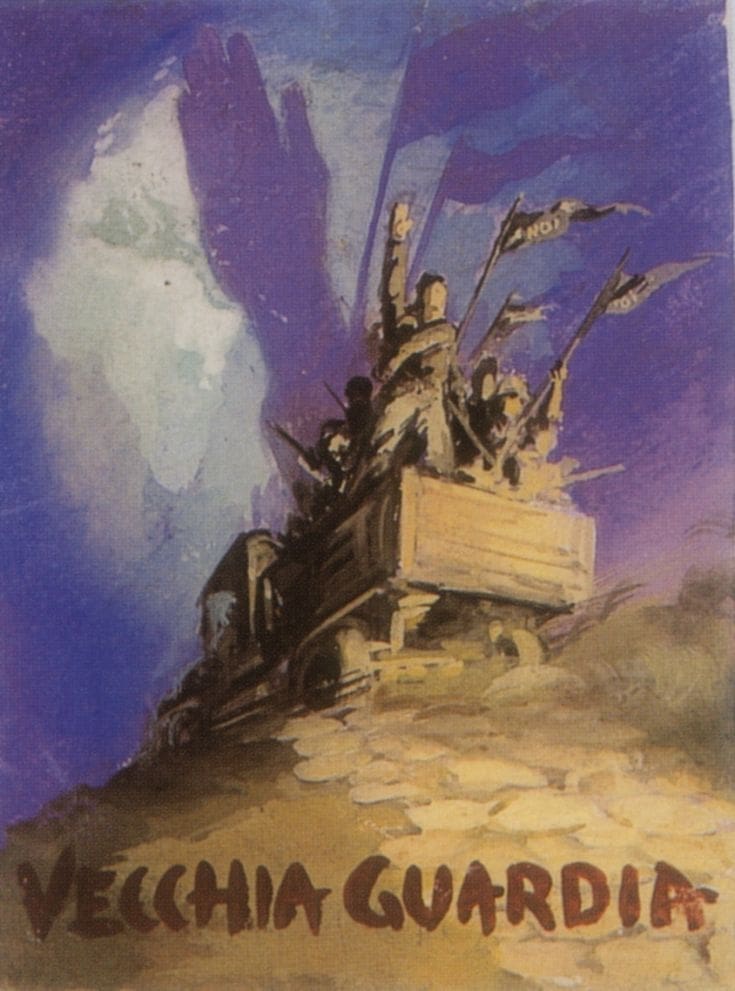
There were very few commercial feature films made during the Italian fascist era that were as openly propagandistic as this famous (notorious?) dramatic paean to the Blackshirts. The story takes place in a small village in Italy in October of 1922, on the eve of the fascist "March on Rome", in which King Victor Emanuel III was persuaded to consign power to Benito Mussolini. Gianfranco Giachetti is Dr. Cardini, a doctor at the local psychiatric hospital, where a strike has been called by the local socialists. Cardini turns to the fascists to help avert the strike. His son Roberto (Mino Doro) rounds up fascist friends to fight those aligned with the strikers and the town's socialists.