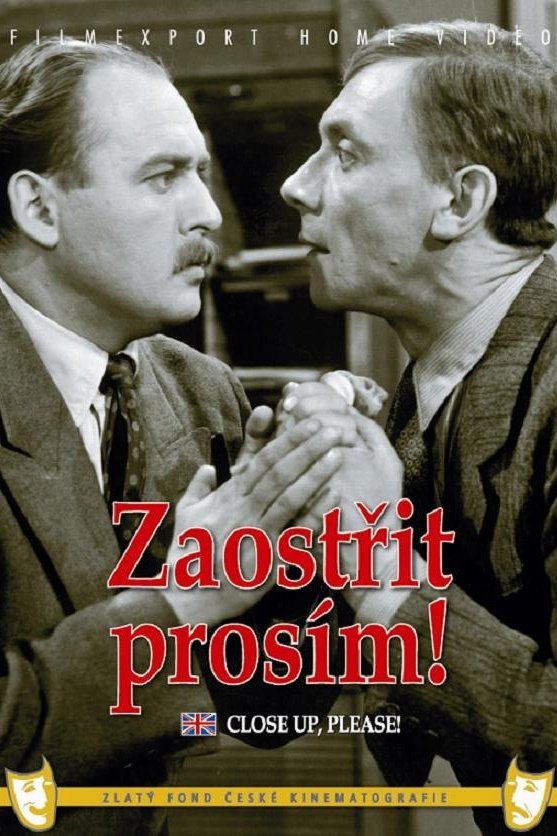
Zaostřit prosím! (1956) character relationship network mapped with AI analysis. Explore the connections, alliances, and conflicts between characters.
Characters
Jan Přehršle
(played by Josef Kemr) — supporting
Přehršle is an accountant and the protagonist of the story about an ambitious accountant. The summary identifies this as one of the film's three separate stories, but gives no further details about hi...
Přehršle's mother-in-law
(played by Zdeňka Baldová) — supporting
Secretary to the Minister
(played by František Filipovský) — supporting
commentator
(played by Ladislav Pešek) — supporting
Director
(played by Miloš Nedbal) — supporting
Chief Accountant Pištora
(played by Lubomír Lipský) — supporting
Canonical Relationships
Family, romantic, and professional connections based on plot evidence.
Přehršle's mother-in-law → Jan Přehršle
(mother)
commentator → Přehršle's mother-in-law
(Family Relative) — Family dynamic influencing personal decisions.
Director → Chief Accountant Pištora
(Professional Colleague) — Cross-departmental professional interaction.
Director → Secretary to the Minister
(Professional Subordinate) — Administrative support for directorial tasks.
Director → commentator
(Professional Colleague) — Professional peers observing bureaucratic absurdity.
Story Analysis
A three-part Czechoslovak comedy uses unrelated satirical stories to examine professional ambition, cultural judgment, and construction-site chaos.
Plot Progression
A Satirical Three-Part Design
— The film establishes itself as a comedy built from three unrelated stories. Its satirical basis is linked to stories by Jiří Marek.
The Ambitious Accountant
— The first episode follows an ambitious accountant and focuses on problems connected with that ambition. The story introduces the film's satirical treatment of professional life.
A Critic Under Pressure
— The second episode centers on a literary critic assessing a work. His uncertainty grows because he does not know whether his judgment agrees with the minister's expectations.
Chaos Under Construction
— The third episode moves to a construction site. Its central situation is the chaos surrounding construction activity.
Satirical Anthology Resolution
— The separate episodes together form a comic survey of ambition, institutional expectations, and workplace disorder. The film resolves through its anthology structure rather than a shared plot.