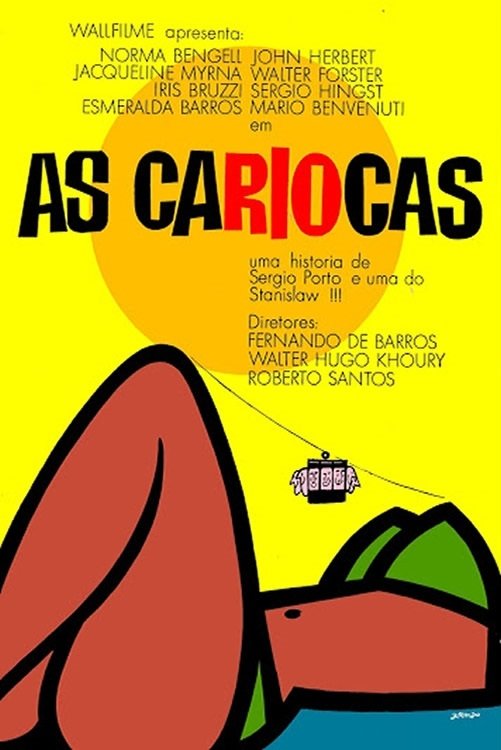
A tripartite adaptation exploring Rio de Janeiro's culture, genres, and social divides through distinct cinematic lenses.
Story Structure — 4 Plot Phases
Prologue and Rio Showcase
The film opens with author narration introducing Rio de Janeiro. Iconic cultural elements like football, carnival, and beauty pageants establish the vibrant setting.
Key Events
Prologue Narration — Author Sérgio Porto narrates prologue setting Rio context Characters: CidLocation: Narrative Frame
National Team Football — Scenes of Brazilian national team playing football
Location: Stadium
Pelé Scoring Goal — Highlight of Pelé scoring for the Brazilian team
Location: Pitch
Garrincha Scoring Goal — Highlight of Garrincha scoring for the Brazilian team
Location: Pitch
Zone Comparison Montage — Direct comparison highlighting economic divide between zones
Location: Split Screen/Editing
Santos Documentary Segment — Third director handles the pseudo-documentary portion
Location: Documentary Setting
Social Contrast and Finale
The final segment adopts a pseudo-documentary style to highlight economic divides between Rio's zones. The film concludes with a sweeping aerial view and iconic music.
Key Events
Zone Comparison Montage — Direct comparison highlighting economic divide between zones
Location: Split Screen/Editing
Rio Spatial Mapping — Visual mapping of north versus south Rio geography
Location: Cityscape
Carioca Lifestyle Depiction — Exploration of local Rio de Janeiro cultural identity
Location: Various Locations
Class Disparity Theme — Underlying critique of social inequality woven throughout
Location: Narrative Focus
Aerial City View — Camera pulls back to reveal expansive Rio skyline
Location: Skyline
Monument Final Shot — Iconic Christ the Redeemer statue dominates final frame
Location: Corcovado
Cidade Maravilhosa Audio — Famous song plays over closing visual imagery
Location: Soundtrack
Story Breakdown
Cultural Prologue — Establishes the vibrant backdrop of Rio through iconic local traditions and sports.
Football Showcase — Features national team matches and star player highlights.
Carnival & Pageants — Displays festive parades and beauty competitions.
Romantic Comedy Segment — The first directed portion focuses on lighthearted love stories.
Part One Setup — Introduces characters and romantic premises.
Romantic Development — Unfolds comedic interactions and relationship growth.
Dramatic Narrative — The second portion shifts to serious emotional storytelling.
Emotional Conflict — Presents interpersonal struggles and dramatic tension.
Character Struggles — Explores personal challenges within the dramatic framework.
Documentary Approach — The third portion utilizes observational filmmaking techniques.
Pseudo-Style Format — Adopts a realistic documentary aesthetic for the narrative.
Observational Footage — Captures everyday life and urban environments authentically.
Social Geography — Examines the physical and economic divisions within the city.
Penha Neighborhood — Depicts the impoverished northern zone of Rio.
Copacabana Contrast — Showcases the affluent southern zone for comparison.
Thematic Resolution — Synthesizes cultural identity and social commentary.
Class Disparity — Highlights economic inequality as a central theme.
Carioca Identity — Celebrates the unique lifestyle and spirit of Rio residents.
Cinematic Finale — Concludes with iconic imagery and musical resonance.
Aerial Perspective — Pulls back to reveal the expansive city skyline.
Monument & Music — Features Christ the Redeemer alongside the closing song.
Divided into three episodes based on stories by Stanislaw Ponte Preta (Sérgio Porto), the film portrays three young people from Rio de Janeiro: a furious lover, a beautiful beachgoer, and a former beauty queen. All live in profound solitude amid the apparent social vibrancy of Copacabana.
Directed by
Walter Hugo Khouri, Roberto Santos, Fernando de Barros