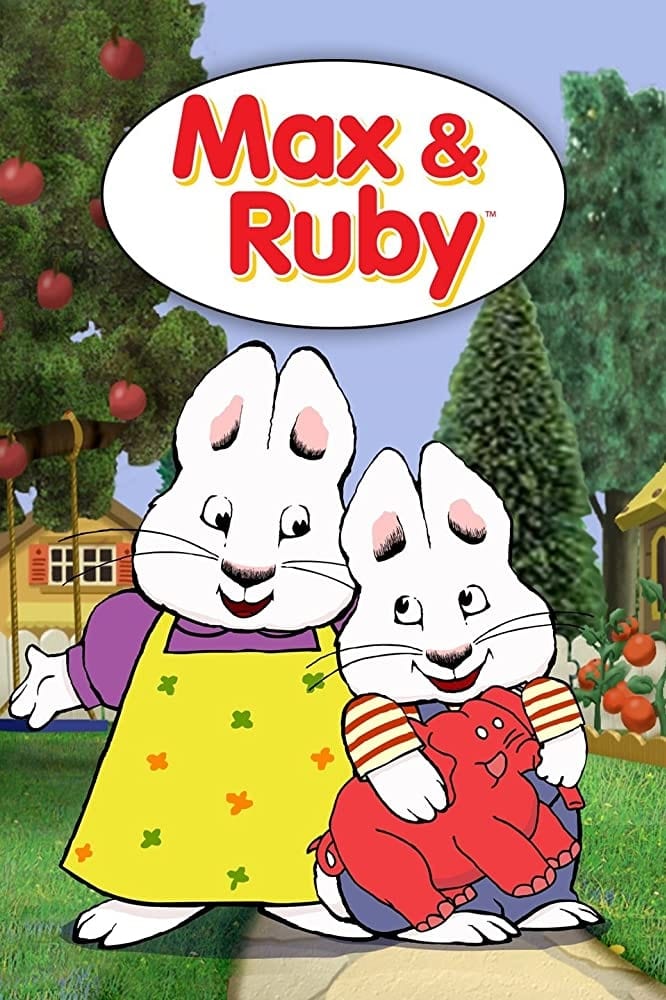
Max & Ruby (2002) character relationship network mapped with AI analysis. Explore the connections, alliances, and conflicts between characters.
Characters
Grandma
(played by Kay Hawtrey) — supporting
Max
(played by Gavin MacIver-Wright) — minor
Ruby
(played by Lana Carillo) — minor
Morris
(played by Nicholas Fry) — cameo
Louise
(played by Julie Lemieux) — cameo
Valerie
(played by Loretta Jafelice) — cameo
Canonical Relationships
Family, romantic, and professional connections based on plot evidence.
Grandma → Ruby
(Encouraging elder) — Grandma guides Ruby through opportunities that recognize her interests and growing competence.
"Grandma proposes Ruby's recital, hosts her birthday activities, and creates a treasure hunt for Ruby."
Grandma → Max
(Adult family guidance) — Grandma provides the adult framework within which Max's play and family participation take place.
"Grandma sets or hosts family activities involving Max, including meals, holidays, parties, berry picking, and the treasure hunt."
Story Dynamics
Alliances, conflicts, and narrative interactions that evolve throughout the story.
Ruby → Max
(Primary sibling duo) — Ruby and Max form the series' core narrative pairing, with nearly every plot built around their contrasting priorities.
"The episode premises consistently center on Ruby's plans and Max's counter-plans, including bedtime, birthdays, fairs, holidays, school activities, a...
Max → Louise
(Activity interruption) — Louise often experiences Max as the disruptive younger child attached to Ruby's plans.
"Max interrupts Louise and Ruby's bird-watching, clubhouses, magic practice, music, ballet, banners, and other organized activities."
Ruby → Grandma
(Family support) — Their relationship combines affection with mutual participation in family traditions and creative activities.
"Ruby helps with Grandma's birthday and Thanksgiving preparations, performs for her, and follows Grandma's activities such as the treasure hunt and pr...
Louise → Valerie
(Peer friends) — Louise and Valerie share a recurring peer network centered on Bunny Scout and recreational activities.
"Louise and Valerie join Ruby in music, posters, scouting activities, skating, and group celebrations."
Max → Grandma
(Playful family partnership) — Max supports Grandma's occasions in ways that are unconventional but materially useful or affectionate.
"Max makes an earthworm cake, disguises his toys as dolls for Grandma's party, picks berries for her recipe, and participates in family holiday prepar...
Ruby → Louise
(Shared boundary-setting) — Their shared boundaries create conflict with Max rather than with each other, reinforcing their united social space.
"Ruby and Louise exclude Max from their girls-only clubhouse, restrict his access to their projects, and try to maintain quiet or privacy during their...
Max → Valerie
(Game disruption) — Their friction comes from Max refusing to follow the group's immediate activity or rules.
"During Freeze Tag, Max wants to eat his Dribbler while Ruby, Louise, and Valerie are trying to play the game and avoid being tagged."
Max → Morris
(Competing play agendas) — Their conflict is limited and situational, arising when their preferred games compete with other children's plans.
"Morris and Max's dump-truck play competes with Ruby and Louise's beach-party plans, creating a split between the boys' and girls' activities."
Ruby → Morris
(Sibling's playmate) — Ruby knows Morris primarily through Max's social and imaginative activities.
"Ruby encounters Morris in group settings involving Max, including outdoor play and superhero activities."
Louise → Morris
(Neighborhood acquaintances) — Louise and Morris are connected through group activities rather than a sustained individual storyline.
"Morris appears in shared neighborhood and play contexts involving Ruby, Louise, and Max."
Ruby → Valerie
(Creative coordination) — The available plots support occasional project pressure but not a sustained personal rivalry.
"Ruby's group projects with Valerie involve coordinating music, posters, skating, and parade work while Max's interruptions complicate the activities....
Story Analysis
The four-season narrative is built from recurring sibling conflicts that gradually become shared experiments in family life, friendship, creativity, and imaginative play.
Plot Progression
Season 1: Domestic Negotiations
— Ruby organizes daily life while Max pursues toys, food, costumes, and imaginative games. Their conflicts establish the recurring pattern of disruption followed by an unexpected solution.
Season 2: Expanding Social Worlds
— Ruby's Bunny Scout and peer activities become more elaborate, while Max develops clearer play connections with Morris and the wider group. The sibling conflict increasingly takes place in shared socia...
Season 3: Imagination and Milestones
— The stories broaden into birthdays, fairs, fairy tales, mysteries, holidays, and playful challenges. Ruby and Max continue to differ, but their shared experiences make cooperation more visible.
Season 4: Collaborative Maturity
— Ruby pursues music, sports, crafts, and organized projects while Max keeps testing the boundaries of those plans. Several stories resolve through Max contributing rather than merely interrupting.
Series Resolution: Shared Play
— The final stretch preserves the sibling contrast but emphasizes mutual adaptation. Ruby's structured world and Max's improvisational imagination increasingly coexist within the same activities.
Directed by Mauro Casalese
Max & Ruby (2002) · 6.5/10 · animation, kids, comedy