Plot Analysis Summary
A murder trial unravels through circumstantial evidence, a stolen letter, and a posthumous confession that shifts guilt to the victim.
Story Structure — 4 Plot Phases
The Murder and Accusation
Andrew Prentice is found dead, triggering a high-stakes trial. Robert Armstrong steps forward as the primary accuser, while Edith Craig's secret engagement to the deceased is revealed. The investigation initially relies on circumstantial evidence and public suspicion.
Key Events
-
Murder of Andrew Prentice — Andrew Prentice is found dead under mysterious circumstances. Characters: Andrew Prentice
Location: Prentice Residence
-
Foster-Brother Accusation — Robert Armstrong steps forward as the primary accuser. Characters: Robert Armstrong, Andrew Prentice
Location: Courtroom
-
Secret Engagement Revealed — Edith Craig's secret engagement to Prentice surfaces. Characters: Edith Craig, Andrew Prentice
Location: Craig Residence
-
Allegation of Infidelity — Armstrong alleges Craig loved Winthrop, casting suspicion. Characters: Robert Armstrong, Edith Craig
Location: Courtroom
Circumstantial Evidence and Doubt
The prosecution presents a clock as key time evidence, but investigators discover it is actually a stationary meat scale. This critical discovery undermines the timeline and casts doubt on the initial accusations against the accused.
Key Events
-
Circumstantial Clock Evidence — Prosecution presents a clock as key time evidence. Characters: Robert Armstrong, Andrew Prentice
Location: Courtroom
-
Butcher Shop Investigation — Investigation focuses on the butcher shop window. Characters: Edith Craig, Andrew Prentice
Location: Butcher Shop
-
Meat Scale Discovery — The clock is revealed to be a stationary meat scale. Characters: Edith Craig, Andrew Prentice
Location: Butcher Shop
-
Timeline Debunked — The debunked timeline weakens the circumstantial case. Characters: Robert Armstrong, Edith Craig
Location: Courtroom
The Stolen Letter and Revelation
A postal inspector recovers a letter written by Prentice on the night of the murder. The letter's contents are analyzed in court, shifting suspicion away from the living suspects and directly implicating the deceased.
Key Events
-
Mail Holdup Recovery — A letter written by Prentice on the murder night is recovered. Characters: Andrew Prentice
Location: Postal Office
-
Postal Inspector Testimony — A postal inspector presents the recovered letter as evidence. Characters: Robert Armstrong, Andrew Prentice
Location: Courtroom
-
Letter Content Analysis — The letter's contents reveal Prentice's own involvement. Characters: Edith Craig, Andrew Prentice
Location: Courtroom
-
Guilt Shifted to Prentice — Evidence points directly to Andrew Prentice as the culprit. Characters: Robert Armstrong, Edith Craig
Location: Courtroom
Confession and Aftermath
Confronted with irrefutable evidence, Andrew Prentice confesses and takes his own life. The trial concludes, allegations are dismissed, and the surviving characters process the tragic resolution and restored innocence.
Key Events
-
Prentice's Confession — Andrew Prentice confesses to the crime upon facing evidence. Characters: Andrew Prentice
Location: Prentice Residence
-
Prentice's Suicide — Overcome by guilt, Prentice takes his own life. Characters: Andrew Prentice
Location: Prentice Residence
-
Trial Resolution — With the true culprit dead, the trial concludes. Characters: Robert Armstrong, Edith Craig
Location: Courtroom
-
Allegations Dismissed — Armstrong's allegations against Craig are proven baseless. Characters: Robert Armstrong, Edith Craig
Location: Courtroom
-
Truth Unveiled — The community learns the full truth behind Prentice's death. Characters: Robert Armstrong, Edith Craig
Location: Public Square
-
Foster-Brother Reflection — Armstrong reflects on the tragic end of his foster-brother. Characters: Robert Armstrong, Andrew Prentice
Location: Cemetery
-
Craig's Emotional State — Craig processes the revelation of her secret engagement. Characters: Edith Craig, Andrew Prentice
Location: Craig Residence
-
Aftermath Reflection — The town grapples with the complex web of secrets. Characters: Robert Armstrong, Edith Craig
Location: Town Hall
-
Final Verdict Implied — The legal proceedings formally close with acquittal. Characters: Robert Armstrong, Edith Craig
Location: Courtroom
-
Legacy of the Case — The case becomes a noted example of evidence pitfalls. Characters: Robert Armstrong, Edith Craig, Andrew Prentice
Location: Historical Archive
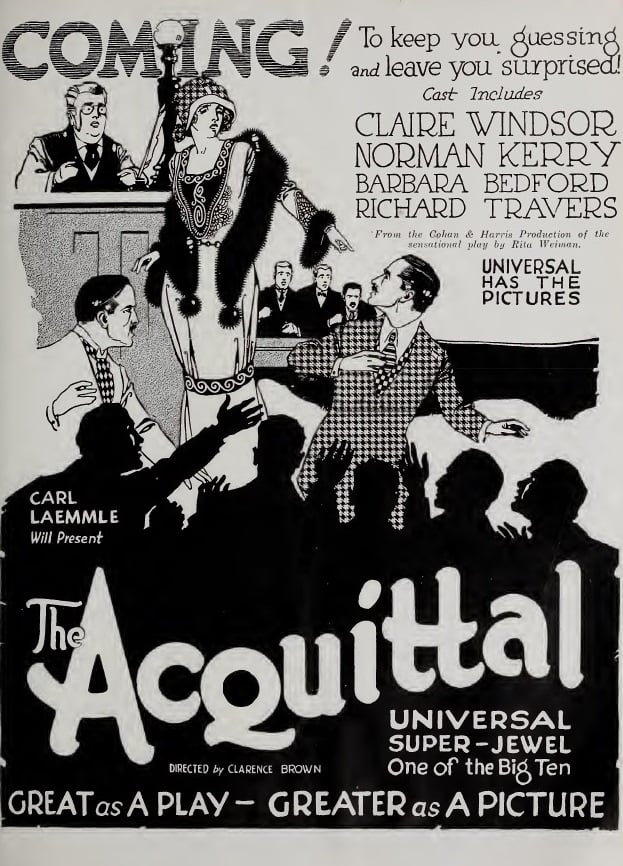
When a wealthy man is found murdered in his bedroom, one of his two adopted sons is arrested and charged with the killing. However, the verdict at his trial is an acquittal. Since the police don't seem to be particularly interested in finding the real killer, the dead man's daughter-in-law--the wife of the adopted son who wasn't charged--takes it upon herself to solve the crime.