A satirical examination of post-reunification Germany's economic disparities and political failures.
The narrative opens twenty years after the Wall's fall, highlighting a prevailing economic crisis and growing western resentment toward eastern development.
A stark contrast emerges between the decaying western peripheries and the heavily modernized eastern zones, fueled by decades of financial transfers.
Traditional major parties like SPD, CDU, and FDP are depicted as entirely incapable of addressing the nation's crises, leaving a political vacuum.
Die PARTEI surges in popularity with thousands of new members, prompting the narrative to question whether it represents Germany's final hope.
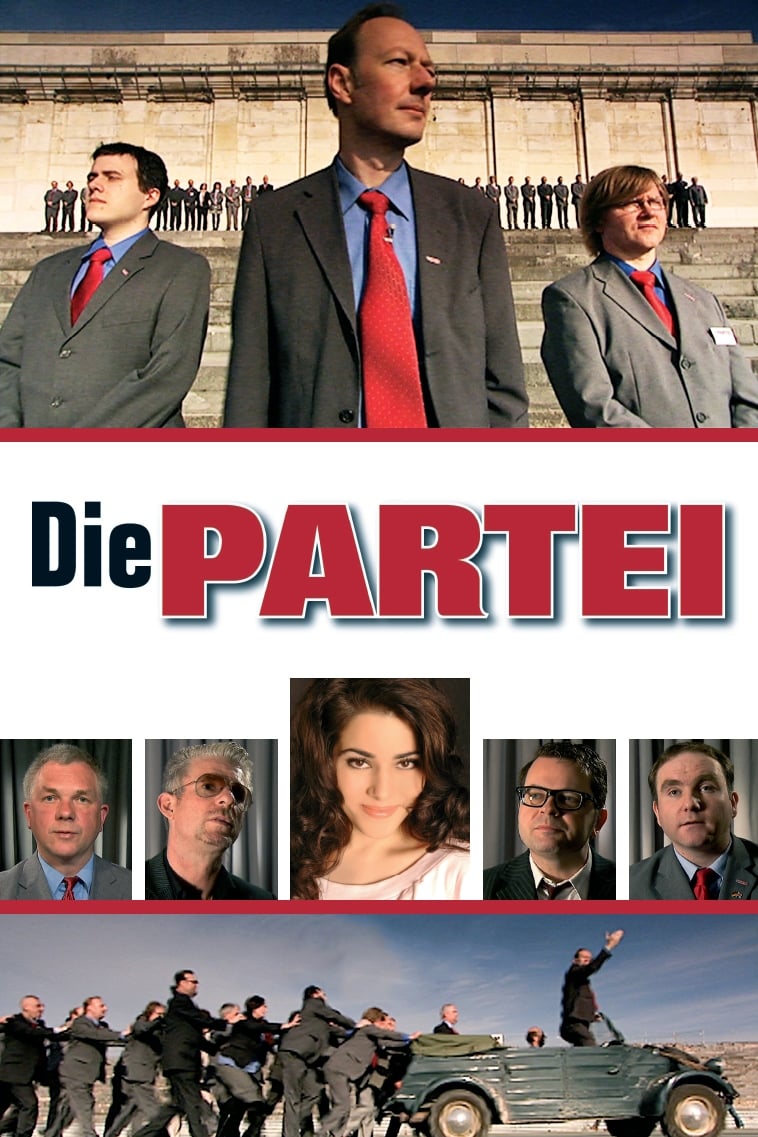
20 years after the fall of the Wall, the economic crisis prevails. In the ruined peripheral areas of West Germany, resentment towards the new federal states is growing. The consequences of decades of uncontrolled transfers from West to East are now clearly visible: while the zone has the highest density of water parks in Europe and the East German cities are being pimped out with designer street lighting, entire city archives are collapsing in the run-down West and weeds are sprouting up on the pothole-strewn streets. The times when Merkel was still locked away behind the Wall and the Federal Republic was in full bloom are long gone. The former people's parties SPD and CDU are just as incapable of acting as the fun party FDP, only Die PARTEI continues to gain popularity and now has over 8,200 members. Is it Germany's last resort?
Martin Sonneborn, Andreas Coerper
Rating: 5.8/10 (9 votes)
Related entry on Wikidata (Q1215309), public domain (CC0).
Plot breakdown and analysis on this page are AI-generated from the title's synopsis and metadata.