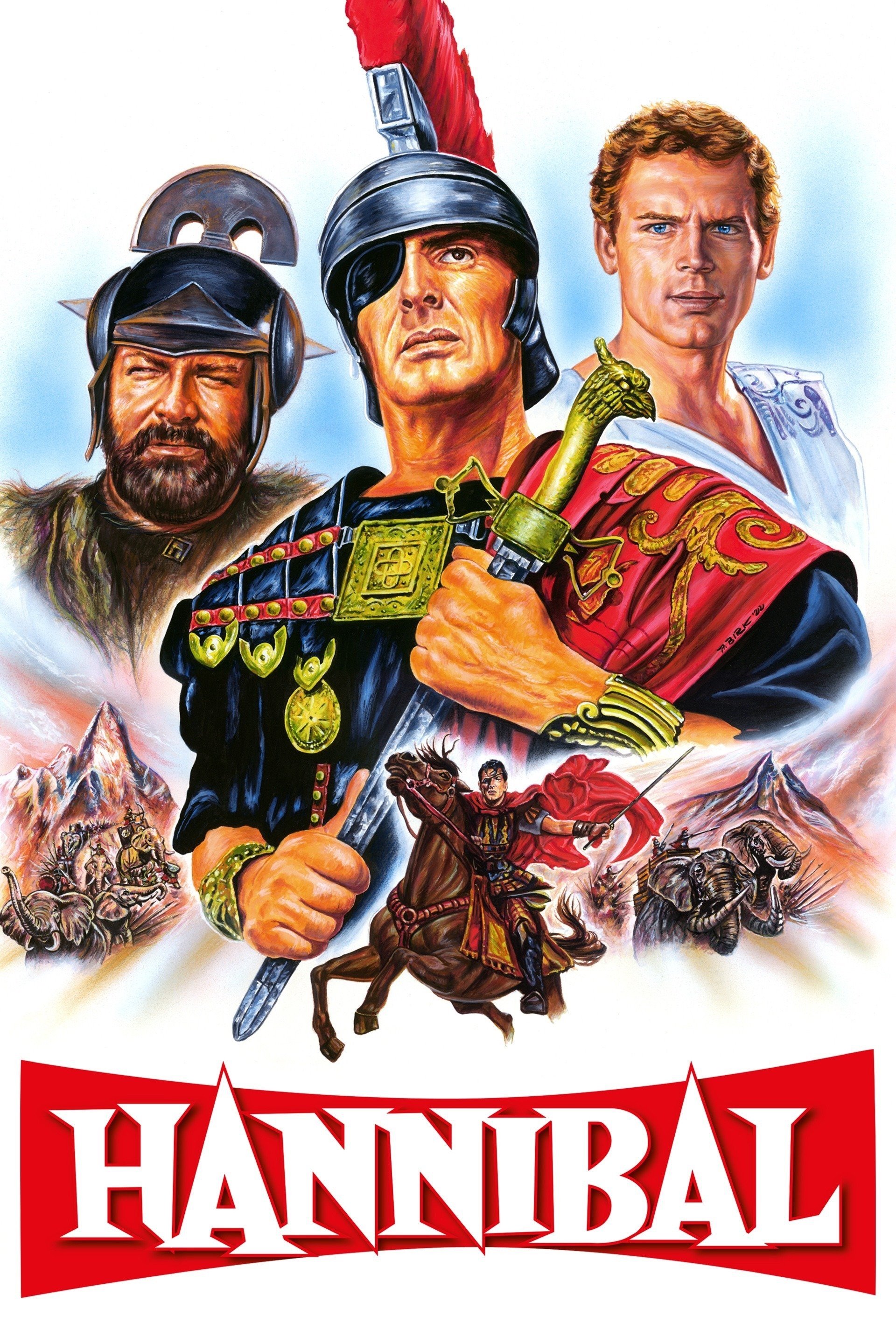
Hannibal (1959) character relationship network mapped with AI analysis. Explore the connections, alliances, and conflicts between characters.
Characters
Hannibal
(played by Victor Mature) — protagonist
Hannibal is the central military leader whose troops cross the Alps despite severe losses and later defeat Rome at Cannae. He falls in love with Sylvia, survives the opposition of some of his own troo...
Senator Quintus Fabius
(played by Gabriele Ferzetti) — protagonist
Senator Quintus Fabius is a Roman senator and Sylvia's uncle. He warns against confronting Hannibal in an open battle and recommends a campaign of exhaustion instead. After the Roman defeat at Cannae,...
Hasdrubal
(played by Rik Battaglia) — supporting
Hannibal's Son
(played by Piero Tiberi) — minor
Slave
(played by Andrea Esterhazy) — minor
Rutario
(played by Bud Spencer) — minor
Magone
(played by Mirko Ellis) — supporting
Canonical Relationships
Family, romantic, and professional connections based on plot evidence.
Hannibal → Hasdrubal
(sibling)
Magone → Hannibal
(sibling)
Hasdrubal → Magone
(sibling)
Hannibal's Son → Hannibal
(son)
Story Dynamics
Alliances, conflicts, and narrative interactions that evolve throughout the story.
Hannibal → Slave
(Narrative Informant And Captor) — The Slave's information helps Hannibal capture the hostage, while Hannibal's refusal to bargain establishes their unequal, transactional connection.
The Slave reveals the location of an important hostage, and the information leads to her capture. Hannibal initially refuses to bargain over the Slave...
Hannibal → Rutario
(Conflict Military Opponents) — Rutario leads the sole stated resistance to Hannibal's advance across the mountains.
The account says that after Hannibal crosses the Alps, Rutario and his mountain tribe are the only ones who offer resistance.
Hannibal → Senator Quintus Fabius
(Conflict Strategic Adversaries) — Fabius advocates exhausting Hannibal through time and distance, opposing the Roman commanders who seek open battle; Hannibal's battlefield strategy repeatedly puts Rome under pressure.
Fabius warns Rome against a decisive battle and urges ambushes and small engagements, while Hannibal advances through Italy and defeats Roman forces.
Story Analysis
Hannibal's Italian campaign tests Rome's military judgment as strategic deception, Roman resistance, and personal conflict converge in decisive battles.
Plot Progression
The Alpine Gamble
— Rome declares war as Hannibal's campaign in Spain threatens Roman interests. Fabius warns the Senate not to underestimate him, but Hannibal crosses the Alps and Roman garrisons flee.
A Hostage and a Message
— In Italy, Hannibal recognizes his weakened army needs allies and uses fires to exaggerate its size. Information from a Slave leads to a hostage's capture, and Hannibal uses her release to communicate...
The Cost of Open Battle
— Fabius recommends wearing Hannibal down through time, distance, and smaller engagements, but other commanders demand a decisive confrontation. Near the Trebia, Hannibal draws Roman troops into a trap...
Love and Roman Judgment
— The woman returns to Hannibal, saying she seeks peace and confessing her love. After their relationship is discovered, Fabius condemns her and sentences her to a life of chastity in Vesta's temple.
The Encirclement at Cannae
— Varro orders an assault despite Paulus Emilius's warnings. Hannibal draws the Roman infantry forward, surrounds it, and launches a pincer attack; Varro flees as the battle turns decisively in Hannibal...
Directed by Edgar G. Ulmer, Carlo Ludovico Bragaglia
Hannibal (1959) · 5.6/10 · adventure, drama, history
Content sources
Related entry on
Wikidata
(Q1576167), public domain (CC0).
Plot breakdown and analysis on this page are AI-generated from the title's synopsis and metadata.