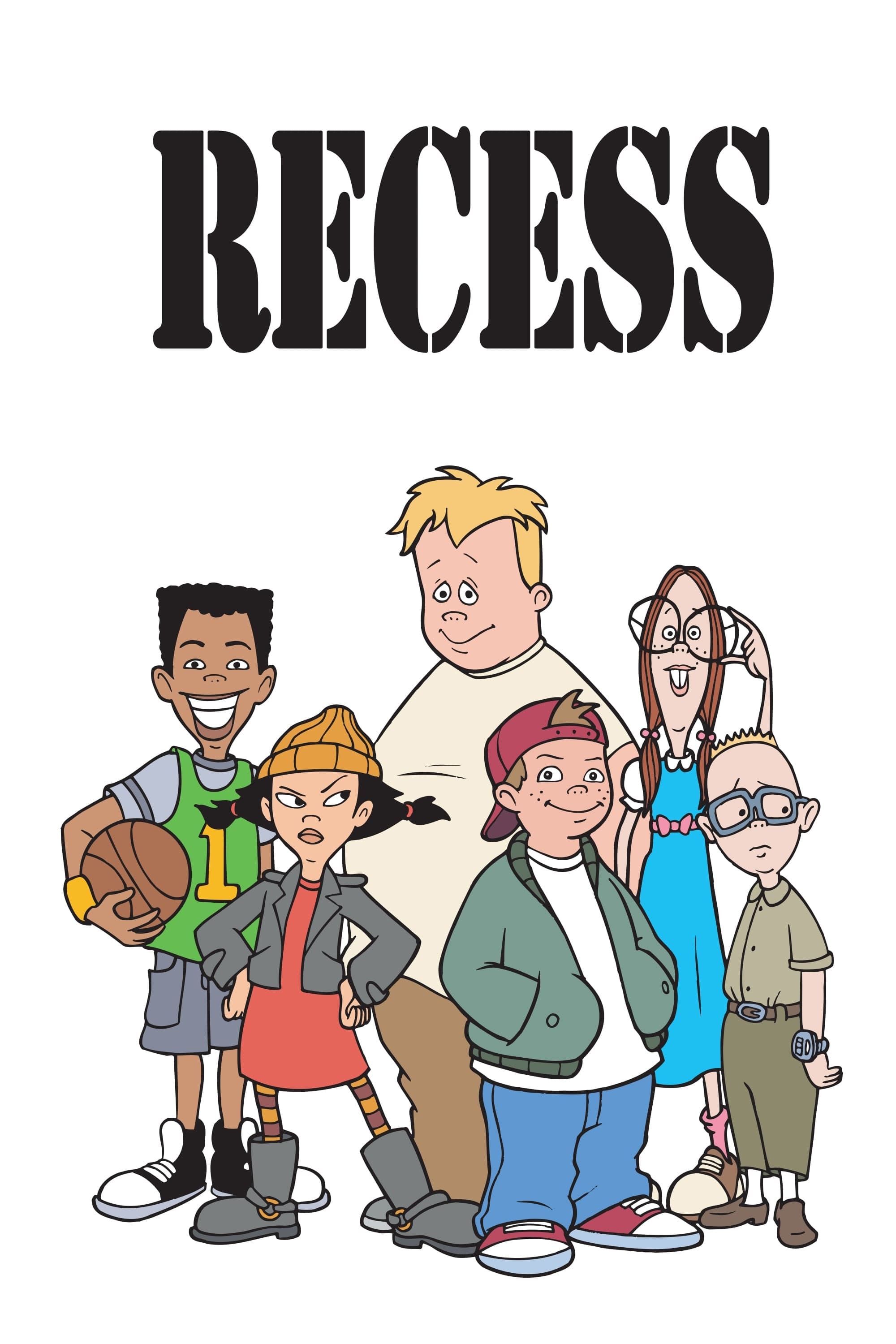
Recess (1997) interactive character relationship network and AI-powered story timeline. Explore the connections, alliances, and conflicts between characters across the narrative arc.
Across six seasons, the series presents the playground as a miniature society where friendship, identity, authority, and freedom are repeatedly tested.
"Spinelli worries about her parents attending Parents' Night, and Flo Spinelli is identified as her mother in that storyline."
"Spinelli asks Gretchen to accompany her on a family trip, while later episodes show Spinelli becoming upset when her parents praise Gretchen over her...
"Vince catches a baseball that appears to threaten Mikey, and Mikey later struggles with his desire to imitate Vince."
"Gretchen helps the group support Mikey's ambitions, including his safety-ranger goal, singing, poetry, and concerns about growing up."
"Butch tells frightening playground stories, including tales about school fears and later serialized horror stories involving the students."
"Vince joins the group in helping Spinelli resist the Ashleys and later convinces her to compete in the beauty contest."
"Mikey turns to Menlow for help organizing his preparation for a poetry ceremony."
"Vince works with Gretchen during group schemes, and both later run for school president."
Rating: 7.7/10 (538 votes)
The first season establishes the playground as a social system where friendship protects individuality. The group confronts punishment, status pressure, family embarrassment, and separation threats.
The second season expands the playground's political and economic rules. The children confront bullying, conformity, public reputation, and competing ideas of leadership.
The third season emphasizes consequences, moral choices, and the pressure to perform. Group loyalty is tested by danger, public judgment, and threats of separation.
The fourth season explores identity through family comparison, leadership competition, unusual friendships, and rival groups. The friends learn that recognition can be less valuable than solidarity.
The fifth season revisits the group's response to heat, money, school administration, and new friendships. Rivalry repeatedly threatens established bonds but also clarifies their value.
The final season uses horror stories, unexpected friendships, and renewed leadership problems to revisit the series' central playground myths. The group remains defined by cooperation rather than formal authority.
Plot analysis generated from content on Wikipedia, licensed under CC BY-SA 4.0.
Related entry on Wikidata (Q344081), public domain (CC0).