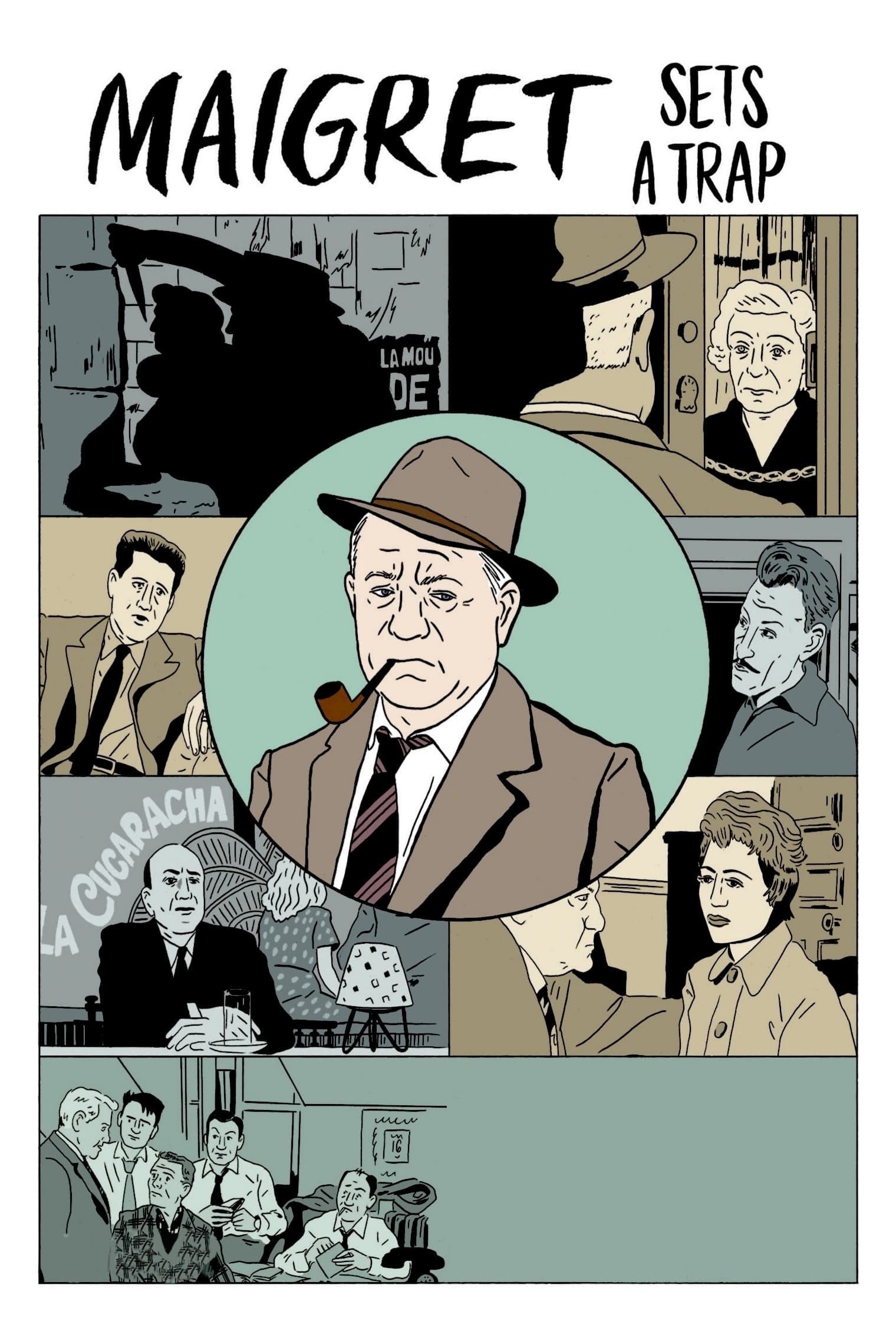
Maigret Sets a Trap (1958) character relationship network mapped with AI analysis. Explore the connections, alliances, and conflicts between characters.
Characters
Commissioner Jules Maigret
(played by Jean Gabin) — protagonist
Patient French detective known for psychological insight and methodical investigations.
Lagrume
(played by Olivier Hussenot) — supporting
Police inspector assisting Maigret, handles procedural and fieldwork duties.
Veuve Adèle Maurin
(played by Lucienne Bogaert) — supporting
Elderly matriarch of the Maurin family, holds historical secrets about the murders.
Marcel Maurin
(played by Jean Desailly) — supporting
Family member of the Maurins, provides alibis and family dynamics.
Inspecteur Torrence
(played by Lino Ventura) — supporting
Police inspector assisting with the quadruple murder investigation.
Canonical Relationships
Family, romantic, and professional connections based on plot evidence.
Lagrume → Marcel Maurin
(Professional Case Investigator) — Lagrume contributes to the broader investigation surrounding Marcel and his family.
Lagrume reports on public obsession with the killer while detectives question residents and investigate the Maurin household.
Inspecteur Torrence → Marcel Maurin
(Professional Investigating Officer) — Torrence is part of the police force investigating Marcel's possible connection to the case.
Torrence is one of the detectives whose statements are sought by journalists while the investigation examines suspects including Marcel Maurin.
Marcel Maurin → Veuve Adèle Maurin
(Family Member) — Adèle is Marcel's mother and is emotionally affected by the investigation.
The plot identifies Veuve Adèle Maurin as Marcel Maurin's mother, and she becomes distressed during questioning about the family history.
Commissioner Jules Maigret → Inspecteur Torrence
(Professional Senior Colleague) — Torrence works as one of the detectives operating under Maigret's direction.
Journalists demand statements from Inspecteur Torrence while Maigret directs the investigation and the planned reconstruction.
Commissioner Jules Maigret → Lagrume
(Professional Supervisor) — Lagrume assists Maigret with investigative reporting and procedural work.
Lagrume reports to Maigret that the public is obsessed with the killer and provides information during the investigation.
Story Dynamics
Alliances, conflicts, and narrative interactions that evolve throughout the story.
Veuve Adèle Maurin → Commissioner Jules Maigret
(Conflict Questioning Subject) — Adèle is indirectly placed under investigative pressure by Maigret's inquiry.
Adèle becomes distressed while Marcel is confronted about the anonymous letters and the family's painful past during Maigret's investigation.
Commissioner Jules Maigret → Marcel Maurin
(Conflict Investigator And Suspect) — Maigret investigates Marcel as a possible culprit connected to the murders.
Maigret questions Marcel Maurin about the anonymous letters, practical jokes, and painful events from the past.
Lagrume → Inspecteur Torrence
(Alliance Fellow Investigator) — They belong to the investigative team handling the case.
Lagrume and Torrence are both identified as detectives involved in responding to the Marais murders and the resulting public pressure.
Story Analysis
Commissioner Maigret uses psychological insight, investigative pressure, and a staged reconstruction to expose a murderer hiding behind apparent madness.
Plot Progression
Another Marais Murder
— A new attack on Rue Rosiers repeats the deliberate method of the previous murders. Police confirm that the same killer may be responsible and Maigret takes control.
Letters And Public Pressure
— The press and public demand answers while anonymous letters challenge the police interpretation of the killer. Maigret studies the letters and designs a public reconstruction as a trap.
Clues Through The Households
— Detectives question residents, test alibis, and search wardrobes. Missing clothing and other details redirect attention toward the Maurin family.
The Maurin Confrontation
— Maigret confronts Marcel about letters, practical jokes, and painful family history. Adèle becomes distressed, while Maitre Lieutard protests against the questioning.
The Trap Springs
— The reconstruction provokes Marcel into an agitated performance. Maigret identifies the apparent madness as an act, and Marcel is removed in handcuffs as the police manage the crowd.