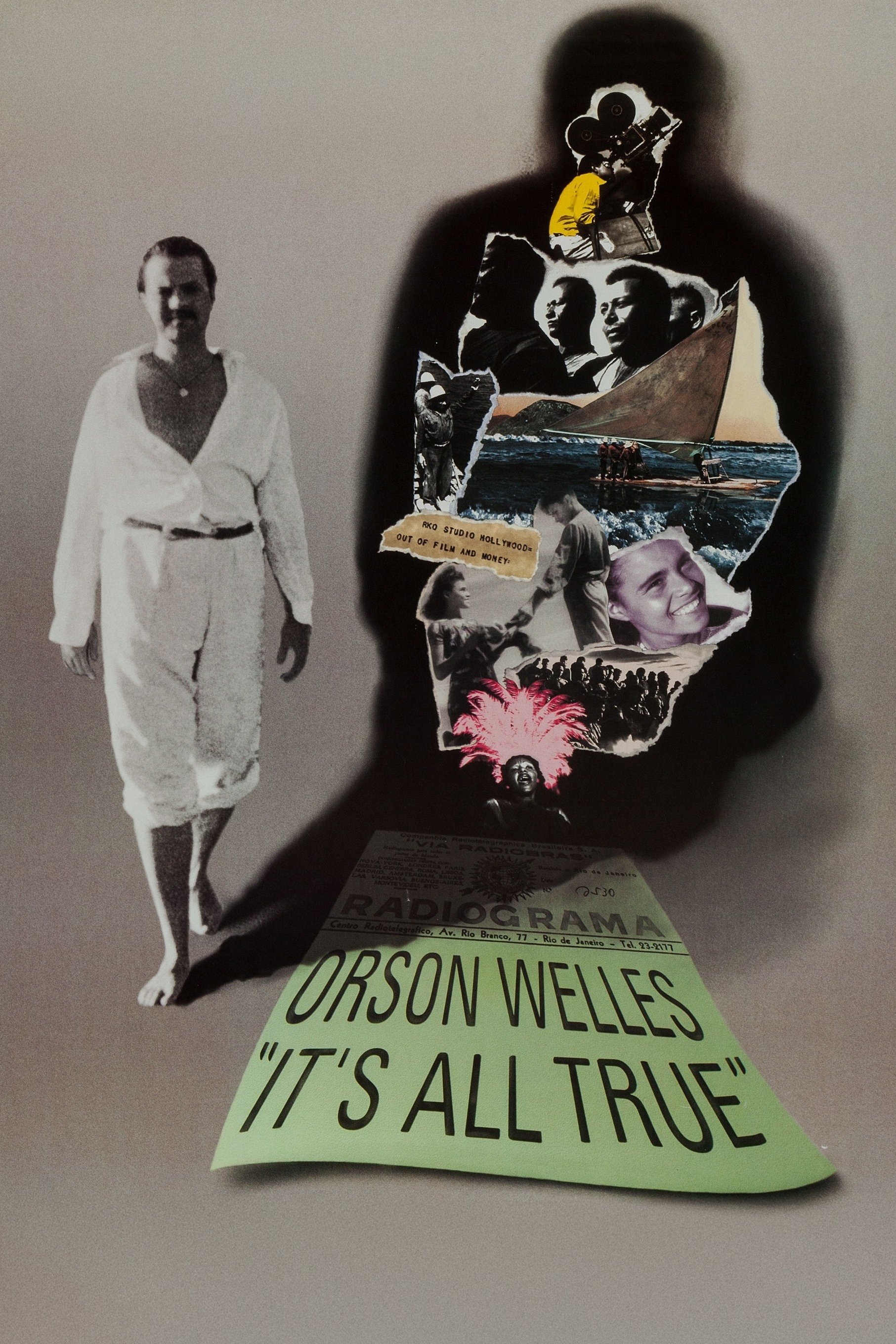
Plot Analysis Summary
The documentary chronicles the conception, filming, cancellation, and archival recovery of Orson Welles's unfinished Latin American film project.
Story Structure — 4 Plot Phases
Transatlantic Ambition
The project launches as Welles's third RKO film, partnering with the OIAA to document Latin American culture. Filming begins in Mexico and Brazil, capturing vibrant cultural stories under studio backing.
Key Events
-
Project Conception — Welles plans his third feature film following Kane and Ambersons.
Location: RKO Studio
-
RKO Partnership — RKO Radio Pictures agrees to co-produce the Latin American project.
Location: RKO Studio
-
OIAA Collaboration — The Office of the Coordinator of Inter-American Affairs joins as co-producer.
Location: Government Office
-
Mexico Expedition — Filming begins for the My Friend Bonito episode under Norman Foster.
Location: Mexico
-
Bonito Supervision — Welles oversees the Mexican segment while Foster directs.
Location: Mexico
-
Brazil Departure — Production shifts to Brazil for the Carnaval and Jangadeiros episodes.
Location: Brazil
Corporate Friction
Production expands to Brazil with two major episodes, but creative control and budget concerns escalate. Studio interference intensifies, leading to a sudden termination of funding and project cancellation.
Key Events
-
Brazil Departure — Production shifts to Brazil for the Carnaval and Jangadeiros episodes.
Location: Brazil
-
Carnaval Shoot — Welles directs the vibrant Carnaval episode capturing samba culture.
Location: Brazil
-
Jangadeiros Shoot — Filming continues for the Four Men on a Raft documentary segment.
Location: Brazil
-
Studio Friction — Creative differences and budget concerns escalate between studio and directors.
Location: RKO Studio
-
RKO Termination — RKO officially terminates the project and funding due to corporate disputes.
Location: RKO Studio
-
Footage Repurposing — Some completed footage is repurposed or sent to stock film libraries.
Location: Archive Facility
Oceanic Loss
Decades later, the massive Technicolor nitrate negative is dumped into the Pacific Ocean. A vault cache is unexpectedly discovered in the 1980s and formally transferred to UCLA for safekeeping.
Key Events
-
Footage Repurposing — Some completed footage is repurposed or sent to stock film libraries.
Location: Archive Facility
-
Pacific Dumping — Approximately 200,000 feet of Technicolor nitrate negative is dumped into the ocean.
Location: Pacific Ocean
-
Vault Discovery — A cache of largely black-and-white nitrate negative is found in the 1980s.
Location: Storage Vault
-
UCLA Transfer — The discovered footage is formally presented to the UCLA Film and Television Archive.
Location: UCLA Archive
-
Inventory Initiation — A comprehensive 2000 inventory begins to assess the surviving material.
Location: Archive Facility
-
Preserved Reels Count — Inventory confirms approximately 50,000 feet of footage has been preserved.
Location: Archive Facility
Archival Revival
Modern inventory reveals partial preservation alongside severe deterioration of the remaining nitrate. Conservation efforts focus on stabilizing the surviving footage for historical documentation.
Key Events
-
Preserved Reels Count — Inventory confirms approximately 50,000 feet of footage has been preserved.
Location: Archive Facility
-
Deterioration Assessment — Assessment reveals approximately 130,045 feet of nitrate remains unpreserved.
Location: Archive Facility
-
Conservation Planning — Archivists develop strategies to stabilize and restore the remaining deteriorating reels.
Location: Archive Facility
-
Historical Review — Historians review the project's impact on Latin American cinema and Welles's career.
Location: Archive Facility
-
Legacy Documentation — The surviving fragments are cataloged as a significant piece of cinematic history.
Location: Archive Facility