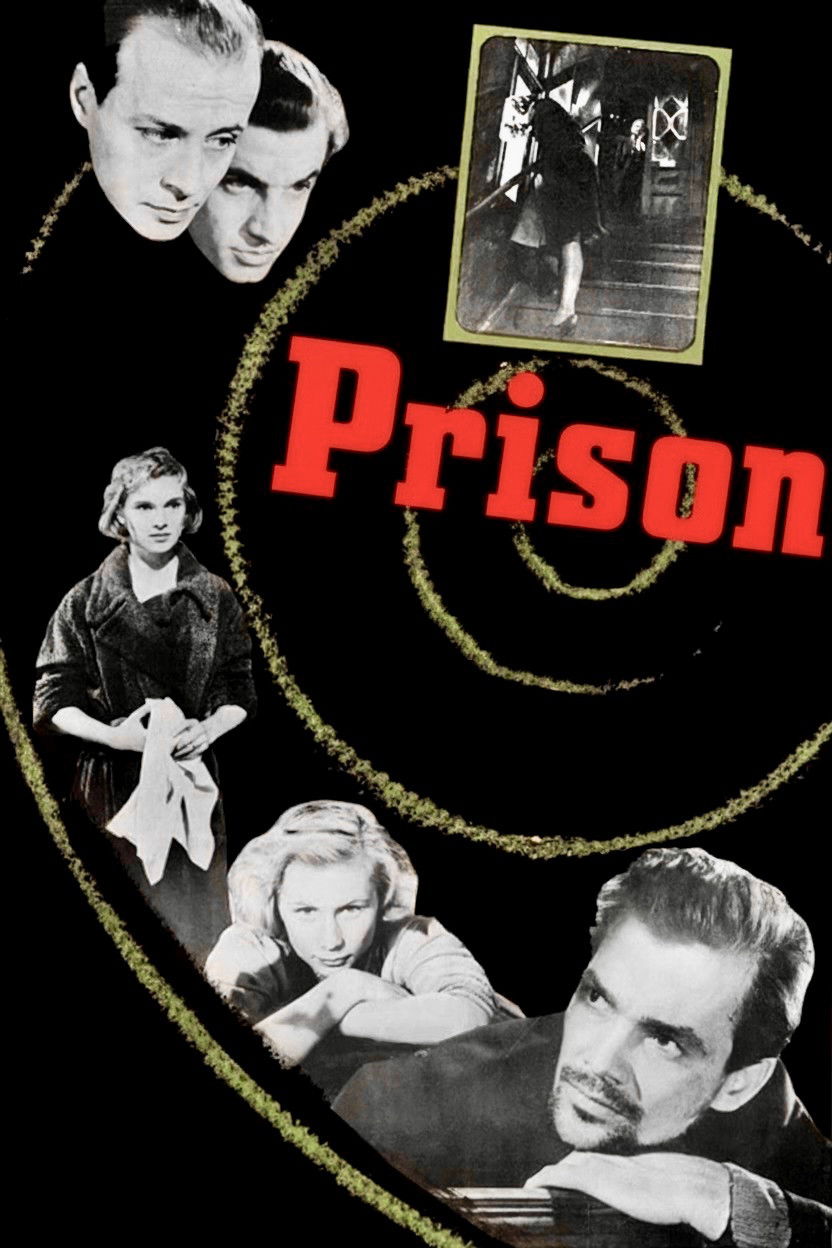
Prison (1949) character relationship network mapped with AI analysis. Explore the connections, alliances, and conflicts between characters.
Characters
Birgitta Carolina Söderberg
(played by Doris Svedlund) — protagonist
A pregnant young woman who is determined to keep her child despite pressure to obtain an abortion. She refuses to treat the baby as merely a problem, later returns to face questions about what happene...
Thomas
(played by Birger Malmsten) — supporting
A troubled man who returns near the end claiming that he has found someone he loves: Birgitta Carolina Söderberg. He says he wants to put matters right, but the others question whether his feelings ar...
Martin Grande
(played by Hasse Ekman) — supporting
The figure who frames the film’s philosophical prologue. He arrives at a studio to see his former teacher and presents a screenplay idea about Hell, in which the Devil controls the world while ordinar...
Linnea
(played by Irma Christenson) — supporting
A person whom the young man approaches for help in arranging a solution to Birgitta Carolina Söderberg’s pregnancy. Her involvement places her close to the central conflict, although the plot summary...
Canonical Relationships
Family, romantic, and professional connections based on plot evidence.
Birgitta Carolina Söderberg → Thomas
(Romantic Potential Love Interest) — Thomas presents his feelings for Birgitta as love, although the other characters question whether they are genuine.
Thomas returns and says that he has found someone he loves, identifying 'that girl' as Birgitta Carolina Söderberg.
Story Dynamics
Alliances, conflicts, and narrative interactions that evolve throughout the story.
Martin Grande → Thomas
(Narrative Framing Narrator) — Martin's philosophical premise frames Thomas's actions within the film's broader idea of moral imprisonment.
Martin Grande's screenplay concept describes humanity trapped between fear, indifference, and death, while Thomas later participates in the story's un...
Martin Grande → Birgitta Carolina Söderberg
(Narrative Framing Narrator) — Martin's opening vision provides the moral framework for Birgitta's imprisonment by fear and guilt.
Martin Grande introduces a screenplay about Hell, after which the philosophical prologue gives way to Birgitta's story in 'Prison.'
Birgitta Carolina Söderberg → Linnea
(Alliance Requested Assistance) — Linnea is connected to the attempt to manage the pregnancy crisis, although Birgitta does not accept the plan.
The young man involved asks Linnea to help arrange a solution concerning Birgitta's pregnancy, while Birgitta refuses to accept the proposed solution.
Story Analysis
The film connects an unwanted pregnancy, emotional selfishness, and unresolved guilt to a broader vision of humanity trapped in a moral prison.
Plot Progression
The Devil's Moral Frame
— Martin Grande presents a screenplay about Hell in which ordinary life remains outwardly unchanged. His vision establishes fear, indifference, and death as forms of imprisonment.
A Child Treated As A Problem
— Birgitta is pregnant and insists on keeping her child. The young man's hostility and fear of authorities turn the pregnancy into a conflict over love, responsibility, and survival.
The City Closes In
— The police search for Birgitta while confusion, threats, drunkenness, and contradictory stories spread through domestic life. The setting begins to resemble the moral prison described in the prologue.
Letters And Dangerous Promises
— Anna receives a letter and decides to marry the young man, who promises goodness and a future with the child. Her involvement with an older married man exposes further conflicts between love and selfi...
Guilt Without Release
— Thomas returns and identifies Birgitta as the person he loves. When Birgitta returns and describes the baby's fate, the characters rationalize the crime but remain trapped in guilt and emotional damag...
Directed by Ingmar Bergman
Prison (1949) · 7.1/10 · drama
Content sources
Related entry on
Wikidata
(Q572931), public domain (CC0).
Plot breakdown and analysis on this page are AI-generated from the title's synopsis and metadata.