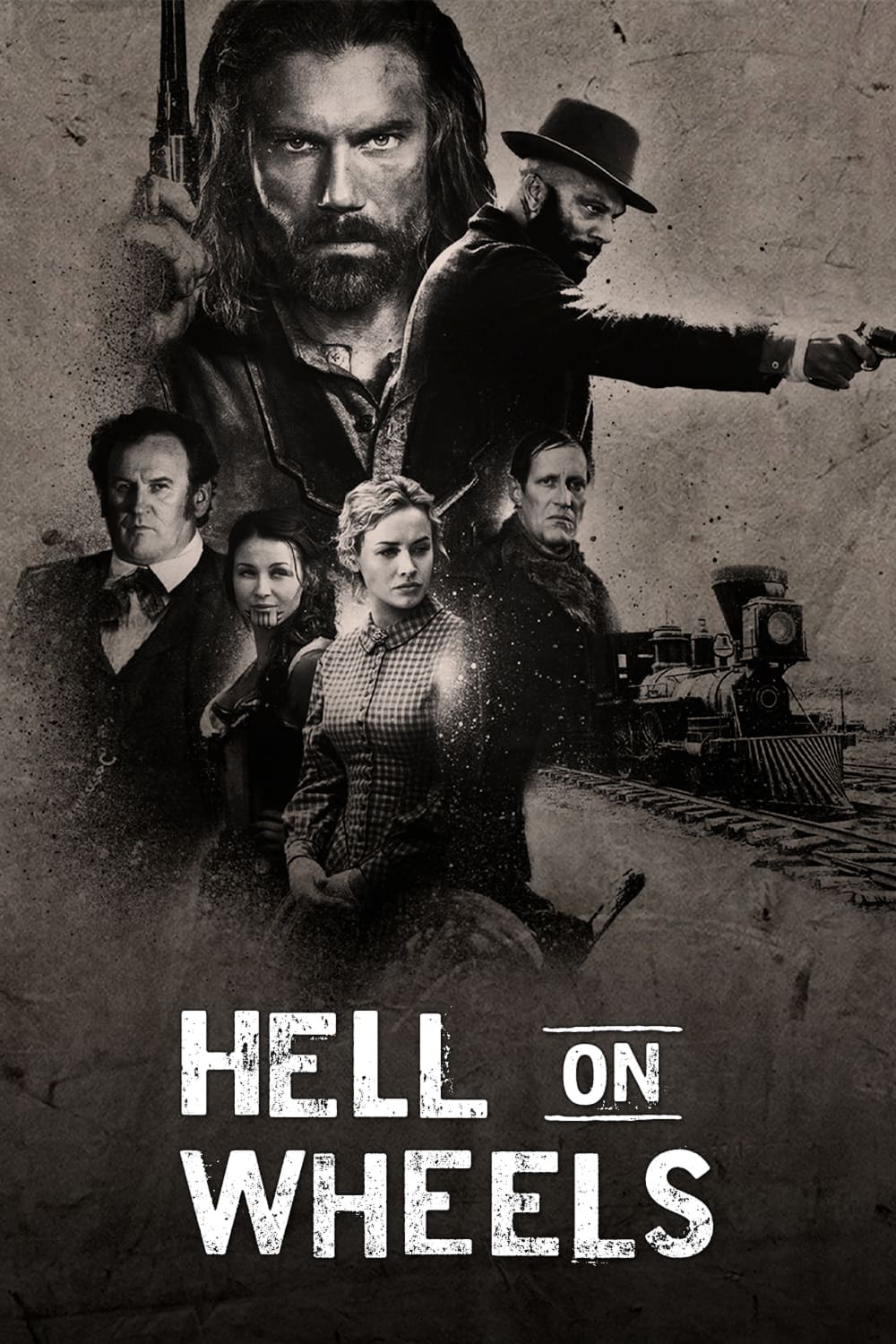
Hell on Wheels (2011) character relationship network mapped with AI analysis. Explore the connections, alliances, and conflicts between characters.
Characters
Eva
(played by Robin McLeavy) — supporting
A woman who gives birth to a baby fathered during her marriage to Gregory Toole. Elam proposes marriage to her, but she struggles under the weight of postpartum depression.
Elam Ferguson
(played by Common) — supporting
A member of the all-black cut crew hired to prepare terrain for the Union Pacific tracks. He later proposes marriage to Eva despite her struggle with postpartum depression.
Lily Bell
(played by Dominique McElligott) — supporting
A surveyor's wife who accompanies her ailing husband while he works for the Union Pacific. After his death at the hands of Cheyenne natives, she must cope with widowhood and later seeks to gain contro...
Louise Ellison
(played by Jennifer Ferrin) — supporting
The Swede
(played by Christopher Heyerdahl) — supporting
A railroad-associated figure who assists Reverend Cole and the natives in attacking the railroad after construction enters Sioux territory. He later joins a Mormon family traveling toward Fort Smith a...
Reverend Cole
(played by Tom Noonan) — supporting
A reverend who baptizes Joseph Black Moon and takes him under his tutelage in the church. He later becomes misguided and assists the natives in attacking the railroad.
Mickey McGinnes
(played by Phil Burke) — supporting
Psalms
(played by Dohn Norwood) — supporting
Collis Huntington
(played by Tim Guinee) — supporting
Mei
(played by Angela Zhou) — supporting
Chang
(played by Byron Mann) — supporting
Mr. Toole
(played by Duncan Ollerenshaw) — cameo
Ezra Dutson
(played by Tayden Marks) — cameo
Aaron Hatch
(played by James Shanklin) — cameo
Canonical Relationships
Family, romantic, and professional connections based on plot evidence.
Chang → Mei
(Guardian and dependent) — Chang's protection is inseparable from control over Mei's movement and labor.
"Chang controls Mei's return, knows the danger of her disguise, and later refuses to sell her contract."
The Swede → Ezra Dutson
(False religious authority) — The Swede's fabricated authority places Ezra in the position of a vulnerable dependent and witness.
"The Swede kills Ezra's parents, later poses as a bishop, and uses the family's religious setting to maintain authority."
Eva → Elam Ferguson
(Parents of the same child) — Parenthood makes their relationship more permanent but also creates the central disagreement that separates them.
"Season 2 establishes Eva's pregnancy with Elam's baby, and Season 3 follows their baby and the dispute over the child's future."
Collis Huntington → Chang
(Railroad management and labor negotiation) — Their relationship embodies the unequal negotiation between railroad capital and organized immigrant labor.
"Huntington directs Central Pacific labor strategy, while Chang organizes Chinese workers and negotiates their demands."
Chang → Collis Huntington
(Labor and railroad intermediaries) — Their relationship represents the negotiation between Chinese labor organization and railroad management.
"Chang organizes Chinese workers and negotiates labor demands within the railroad system controlled by Central Pacific interests."
Mei → Collis Huntington
(Worker within a railroad system) — Mei's concealed labor identity becomes part of Huntington's broader industrial vision.
"Mei works on Central Pacific construction while Huntington directs the railroad's labor strategy and argues that Chinese workers represent the future...
Aaron Hatch → The Swede
(Household authority challenged by imposture) — The Swede's false religious office undermines Aaron's control over the fort's family and community structure.
"The Swede operates as a false bishop within the fort community, while Aaron belongs to the household affected by that authority."
Story Dynamics
Alliances, conflicts, and narrative interactions that evolve throughout the story.
Ezra Dutson → The Swede
(Survivor and false bishop) — Ezra's survival exposes the human cost of The Swede's religious manipulation.
"The Swede kills Ezra's parents and later adopts a bishop identity connected to Ezra's family."
Reverend Cole → The Swede
(Ideological collaborators) — Their shared opposition to the railroad temporarily outweighs their differing personal motives.
"They cooperate in Season 2 by supporting the Sioux war effort against the railroad."
The Swede → Reverend Cole
(Religious and military collaborators) — They reinforce one another's radical religious and political convictions during the railroad conflict.
"In Season 2, The Swede and Reverend Cole aid the Sioux war effort, with The Swede supplying rifles and Reverend Cole hijacking a train."
Elam Ferguson → Mr. Toole
(Rivals over Eva) — Their hostility is driven by Mr. Toole's claim over Eva and Elam's refusal to abandon her.
"Mr. Toole's gang targets Elam because he protects Eva, and Mr. Toole later confronts Eva at Elam's home."
Eva → Mr. Toole
(Abusive pursuer and target) — Mr. Toole's possessive pursuit turns Eva's past association with him into an ongoing threat.
"Mr. Toole searches for Eva, claims a connection through his brother, and later kills himself in front of her after she says she has ended the relatio...
Lily Bell → The Swede
(Business and security antagonists) — Lily's practical railroad responsibilities repeatedly place her against The Swede's deception and sabotage.
"The Swede reports railroad financial activity, assists Lily with ledgers, is arrested for supplying weapons, and later sabotages railroad equipment."
Eva → Louise Ellison
(Confidantes) — Their relationship joins personal trust with shared knowledge of women's restricted choices.
"Louise asks Eva for help with an abortion, and Eva later speaks with Louise about her Mormon upbringing."
The Swede → Aaron Hatch
(Religious impostor and threatened authority) — The Swede's assumed religious authority destabilizes Aaron's household and community.
"The Swede takes the role of bishop at the fort, while Aaron is part of the household that Cullen warns about the impostor."
Story Analysis
The series follows railroad expansion through cycles of violence, labor negotiation, religious authority, family disruption, and institutional change.
Plot Progression
Season 1: Camp and Vengeance
— The railroad camp gathers displaced people around expansion, survival, and unresolved violence. Personal loyalties form while financial deception and sabotage threaten the settlement.
Season 2: War Against the Railroad
— Railroad operations become entangled with robbery, labor unrest, and war. The town is ultimately attacked and destroyed, forcing its survivors to rebuild.
Season 3: Families and False Faith
— Parenthood, missing children, disease, and religious imposture reshape the frontier community. The Swede's transformation into a false bishop turns private violence into institutional control.
Season 4: Law, Fire, and Displacement
— The expanding city brings formal law, political conflict, and competing claims over land and labor. Violence in the church and the collapse of family security expose the cost of institutional power.
Season 5: Labor and Completion
— The railroad's final race depends on Chinese labor, contested contracts, and industrial strategy. The golden spike brings formal completion but leaves legal, personal, and economic consequences unreso...
Hell on Wheels (2011) · 7.6/10 · action-adventure, drama, western