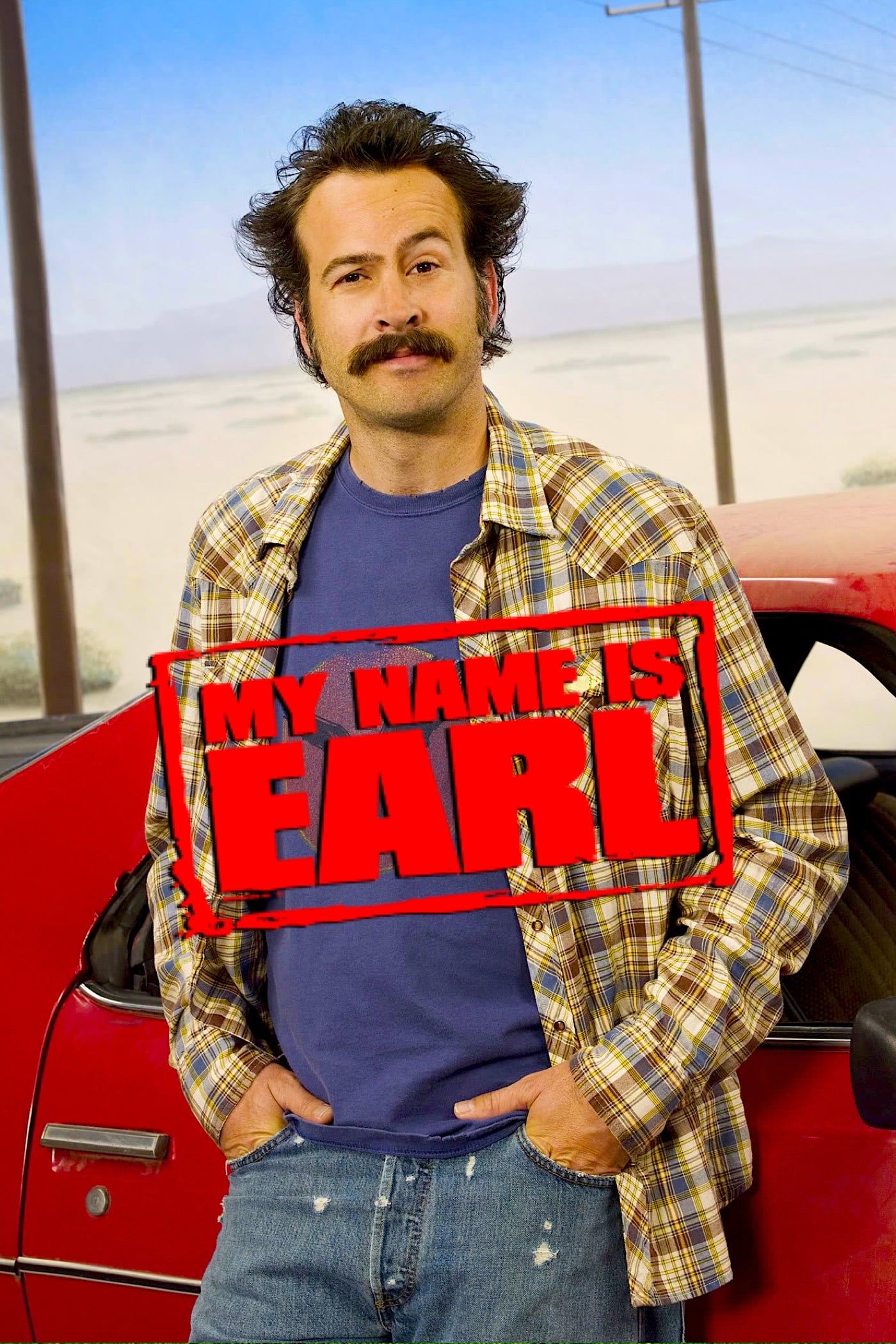
My Name Is Earl (2005) interactive character relationship network and AI-powered story timeline. Explore the connections, alliances, and conflicts between characters across the narrative arc.
Overall narrative architecture across all 4 seasons
"Flashbacks show Earl confronting his younger self's actions throughout the series, particularly in S1E3, S1E19, and S4E14."
"Earl dedicates significant effort to teaching Kenny James life skills and gambling, marking a shift from guilt to repair."
"Young Earl's mockery of Kenny James establishes a pattern of cruelty Earl must later undo through his list."
"Flashbacks of Young Earl constantly contrast with Earl's adult attempts at redemption and list management."
"Earl consciously tries to avoid repeating his own parenting failures with Earl Jr. through structured guidance."
"Earl steps in to fulfill paternal duties when Dodge's biological father is absent, highlighting his capacity for care."
"Young Earl's antics consistently clash with Carl Hickey's desire for stability and respect in the community."
"Earl assists his father in navigating political strategies to win the mayoral race after initial sabotage."
Rating: 7.7/10 (1,185 votes)
Earl creates his karma list after losing lottery winnings. He confronts childhood bullying, sabotages his father's mayoral campaign, and surrenders his winnings to settle the first debt. The season establishes the core redemption premise and introduces recurring community dynamics.
Earl tackles increasingly complex list items while navigating Joy's trial and personal relationships. He deals with identity theft, buried treasure mysteries, and political fallout. The season intensifies emotional stakes as Earl's actions ripple through Camden County.
Earl serves prison time, mediating gang conflicts and facing institutional challenges. A coma episode introduces surreal alternate realities, testing his faith in karma. The season explores psychological resilience and the limits of external redemption.
Earl returns to civilian life, producing a film, navigating surrogate fatherhood, and confronting shocking biological truths. A tornado destroys his list, forcing internalization of his moral code. The season pushes Earl to mature beyond external validation.
Earl fully accepts his past mistakes without relying on a physical list. He prioritizes honest guidance for his son and surrogate children, solidifying his transformation from reckless youth to responsible adult. The narrative closes on themes of acceptance and generational healing.
Plot analysis generated from content on Wikipedia, licensed under CC BY-SA 4.0.
Related entry on Wikidata (Q34659), public domain (CC0).