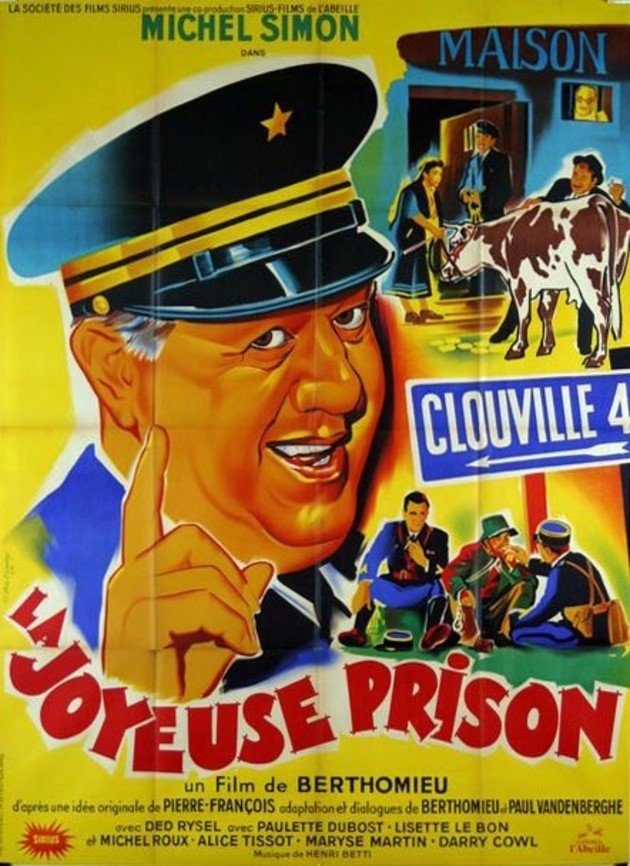
La joyeuse prison (1956) character relationship network mapped with AI analysis. Explore the connections, alliances, and conflicts between characters.
Characters
Benoit, chief guard
(played by Michel Simon) — protagonist
Benoit is the chief guard of a detention house in Clouville. Gentle and kind toward his inmates, he chooses diplomacy over force and becomes fond of them. Under his considerate approach, the prison gr...
Auguste Tuboeuf, inmate farmer
(played by Ded Rysel) — supporting
Justine Benoit
(played by Paulette Dubost) — supporting
Rosette Benoit
(played by Lisette Lebon) — supporting
Sub-prefect
(played by Christian Alers) — supporting
André Chauvin
(played by Michel Roux) — supporting
Ferdinand Bouchonnet
(played by Georges Baconnet) — supporting
Breton, safe-cracking inmate
(played by Paul Derly) — supporting
Gustave
(played by Henri Coutet) — supporting
Vauclin, inmate gangster
(played by Robert Dalban) — supporting
Madame de St-Leu
(played by Alice Tissot) — minor
Charlotte Tuboeuf
(played by Maryse Martin) — minor
Filasse, poacher inmate
(played by Paul Faivre) — minor
'Petit Louis', burglar inmate
(played by Émile Genevois) — minor
Blafard, forger inmate
(played by Charles Bouillaud) — minor
Brigadier
(played by Marcel Rouzé) — minor
Maître Larigot
(played by Darry Cowl) — minor
Sub-prefect
(played by Marguerite Héliès) — minor
Story Analysis
A gentle guard transforms a strict detention facility into a warm refuge through diplomacy, drawing administrative scrutiny.
Plot Progression
Gentle Beginnings
— Benoit arrives at the Clouville detention facility and establishes his core philosophy. He chooses kindness and diplomacy over traditional punitive measures, setting a unique tone for the institution.
Diplomacy in Practice
— The head guard consistently applies respectful negotiation to manage daily inmate interactions. The pensionnaires gradually adapt to the new environment, responding positively to the lack of harsh for...
Sanctuary Emerges
— A liberal atmosphere and relaxed morals permeate the facility, transforming it into a warm refuge. The prison culture shifts from intimidation to camaraderie, fundamentally altering its purpose.
Authority Friction
— Administrative oversight notices the unconventional conditions and grows increasingly irritated. Despite external pressure, Benoît defends his methods, solidifying the prison's unique identity.