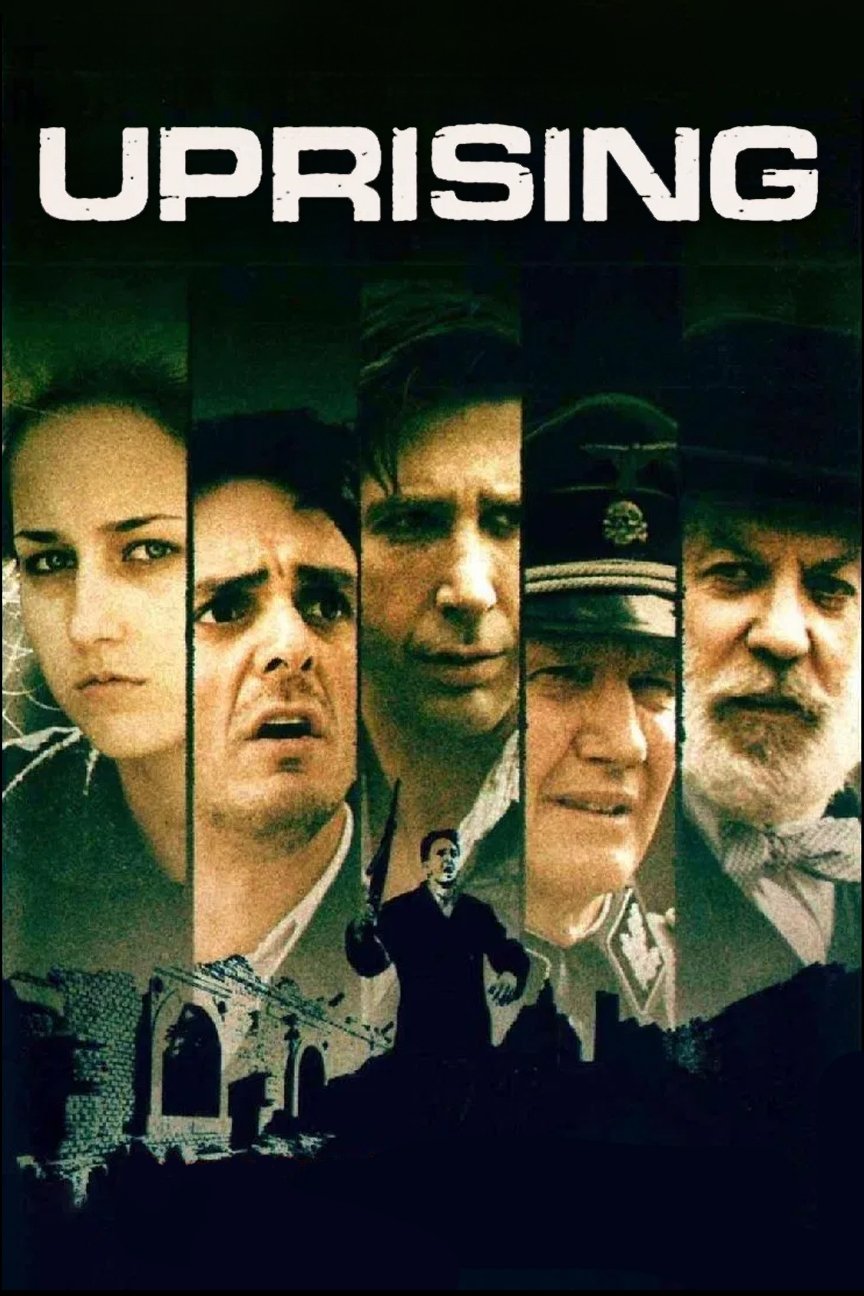
Uprising (2001) character relationship network mapped with AI analysis. Explore the connections, alliances, and conflicts between characters.
Characters
Tosia Altmann
(played by Leelee Sobieski) — protagonist
Mordechaj Anielewicz
(played by Hank Azaria) — protagonist
Co-founder and key planner of the Jewish Combat Organization (ZOB). He organizes the rudiments of resistance alongside Yitzhak Zuckerman as the reality of deportation to Treblinka becomes clear.
Icchak 'Antek' Cukierman
(played by David Schwimmer) — supporting
Works directly with Mordechai Anielewicz to lay the foundation for the Jewish Combat Organization (ZOB) and coordinates the initial planning for the ghetto's armed resistance.
SS-Brigadeführer Jürgen Stroop
(played by Jon Voight) — supporting
Adam Czerniaków
(played by Donald Sutherland) — supporting
Head of the Warsaw Ghetto's Judenrat. He faces intense moral dilemmas while forced to carry out German deportation orders to Treblinka and actively opposes the Jewish rebellion out of fear of severe r...
Kazik Rotem
(played by Stephen Moyer) — supporting
Mira Fruchner
(played by Radha Mitchell) — supporting
Ziviah Lubetkin
(played by Sadie Frost) — supporting
Ruthie Altman
(played by Konstanze Breitebner) — supporting
Devorah Baron
(played by Mili Avital) — supporting
Canonical Relationships
Family, romantic, and professional connections based on plot evidence.
Tosia Altmann → Ruthie Altman
(Family Sisters) — Family members in the ghetto
Adam Czerniaków → SS-Brigadeführer Jürgen Stroop
(Professional Administrator Vs Commander) — Judenrat leader dealing with Nazi authorities
Adam Czerniaków → Mordechaj Anielewicz
(Professional Conflict) — Judenrat leader vs resistance leader
Story Dynamics
Alliances, conflicts, and narrative interactions that evolve throughout the story.
Icchak 'Antek' Cukierman → Tosia Altmann
(Social Comrades) — ZOB members working together
Mordechaj Anielewicz → Devorah Baron
(Alliance Resistance Fighter) — ZOB members fighting together
Mordechaj Anielewicz → Mira Fruchner
(Alliance Resistance Fighter) — ZOB members fighting together
Mordechaj Anielewicz → Tosia Altmann
(Alliance Resistance Fighter) — ZOB members fighting together
Mordechaj Anielewicz → Kazik Rotem
(Alliance Resistance Fighter) — ZOB members fighting together
Mordechaj Anielewicz → Ziviah Lubetkin
(Alliance Resistance Fighter) — ZOB members fighting together
The story follows the Warsaw Ghetto's moral crisis under German orders and the growth of organized Jewish resistance.
Plot Progression
Occupation and Confinement
— Germany invades Poland and imposes a regulation forcing Polish Jews into the Warsaw Ghetto. A Judenrat is appointed, placing Adam Czerniaków inside the system of administration.
Orders and Moral Rupture
— German authorities issue deportation orders to Treblinka, forcing Czerniaków to confront an unbearable moral dilemma. Resistance begins forming as some Jews reject cooperation with the killing of thei...
Resistance Takes Shape
— As deportations continue, residents recognize that they are doomed and resistance planning develops. Hidden bunkers and tunnels are constructed while fighters debate morality and survival.
The Ghetto Fights Back
— A German raid on 18 January 1943 is met with resistance, and the Nazi forces are stopped from entering the ghetto. The victory creates a brief sense of defiance before a larger assault returns.
Uprising in the Shelters
— German forces return on 19 April 1943, beginning the Warsaw Ghetto Uprising. Fighters use limited weapons, bunkers, and defensive positions to resist the assault.
Directed by Jon Avnet
Uprising (2001) · 6.6/10 · drama, history, tv-movie, war