Story Structure — 4 Plot Phases
Radio Pioneers and Broadcast Origins
Alan Freed launches his internationally broadcast show on Radio Luxembourg in 1956 while recording segments for WINS New York. Dick Clark is introduced as a competing Philadelphia disc jockey, establishing the foundational rivalry between the two industry figures.
Key Events
-
Radio Luxembourg Broadcast Launch — Alan Freed hosts a new show that begins airing internationally in 1956.
Location: Radio Luxembourg
-
WINS New York Recording — Freed records his featured segments while employed at the New York station.
Location: WINS New York City
-
Philadelphia DJ Introduction — Dick Clark is introduced as a competing disc jockey from Philadelphia.
Location: Philadelphia
-
DJ Rivalry Emerges — A professional rivalry develops between the two prominent disc jockeys.
Location: Radio Industry
-
Rock and Roll Package Tours — Freed pioneers the concept of packaged rock and roll music tours.
Location: Concert Venues
-
Radio Luxembourg Studio — International radio station where Freed's 1956 show originally aired.
Location: Radio Luxembourg
-
WINS New York Office — New York radio station where Freed recorded his featured segments.
Location: New York City
Industry Expansion and Legal Turmoil
Freed pioneers rock and roll package tours and early cinema, expanding his cultural influence. However, U.S. Congressional hearings into payola practices escalate, leading to the eventual ruin of Freed's broadcasting career while Clark's remains unaffected.
Key Events
-
Rock and Roll Package Tours — Freed pioneers the concept of packaged rock and roll music tours.
Location: Concert Venues
-
Early Rock and Roll Films — Freed expands his pioneering work into the cinema with early genre movies.
Location: Film Studios
-
Payola Hearings Begin — Congressional hearings investigate payola practices in radio broadcasting.
Location: Washington D.C.
-
Freed's Career Ruined — The congressional fallout ultimately destroys Alan Freed's broadcasting career.
Location: Radio Industry
-
Payola Legal Records — Official documents detailing radio broadcasting payment practices under investigation.
Location: Congressional Hearing Room
Cinematic Production and Musical Focus
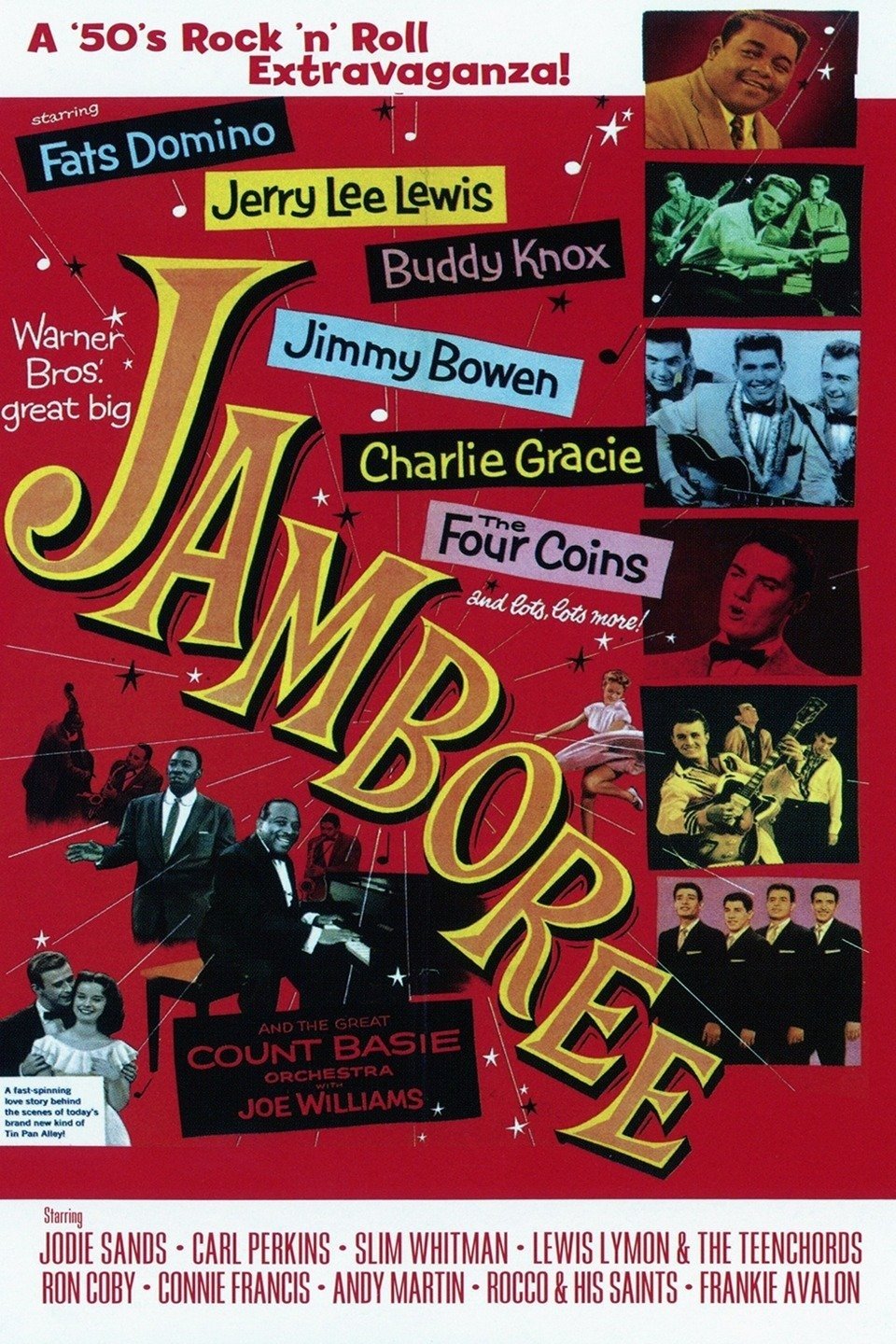
The Jamboree film is produced to capitalize on rock and roll popularity, prioritizing live musical performances over narrative depth. Rising singers and their managers navigate a secondary storyline of romance and professional rivalry backstage.
Key Events
-
Freed's Career Ruined — The congressional fallout ultimately destroys Alan Freed's broadcasting career.
Location: Radio Industry
-
Clark's Career Continues — Dick Clark avoids the scandal and maintains an uninterrupted career path.
Location: Philadelphia
-
Jamboree Film Production — The Jamboree musical film is produced to capitalize on rock and roll popularity.
Location: Film Set
-
Musical Performances Focus — Live musical acts take center stage, overshadowing the fictional narrative.
Location: Concert Stage
-
Storyline Secondary — The romance and rivalry plot between singers and managers remains secondary.
Location: Backstage
-
Singer Rivalry Plot — Two young singers compete for attention within the film's limited storyline.
Location: Performance Venue
-
Jamboree Film Reels — Physical copies of the musical film preserving early rock and roll performances.
Location: Film Archive
Historical Legacy and Cultural Preservation
The film gains lasting historical importance through the appearances of various performers and both disc jockeys. It ultimately stands as a documented artifact of the early rock and roll era, preserving the cultural moment for future generations.
Key Events
-
Singer Rivalry Plot — Two young singers compete for attention within the film's limited storyline.
Location: Performance Venue
-
Romance Subplot — A romantic tension develops between the competing young singers.
Location: Dressing Room
-
Manager Dynamics — Managers navigate professional pressures while guiding their young talents.
Location: Office
-
Historical Importance Gained — The film acquires lasting historical value due to its notable appearances.
Location: Cinema
-
DJs Feature in Film — Both disc jockeys make direct appearances within the cinematic production.
Location: Film Set
-
Rock and Roll Legacy — The film stands as a documented artifact of the early rock and roll era.
Location: Cultural Archive