Story Structure — 4 Plot Phases
Studio Foundations
British International Pictures initiates production at Elstree Studios. Director Ewald André Dupont assembles the primary cast including Norah Baring, John Longden, and Donald Calthrop. The project begins with standard pre-production workflows and script finalization.
Key Events
-
Film Production Initiation — British International Pictures begins filming at Elstree Studios under director Ewald André Dupont.
Location: Elstree Studios
-
Cast Assembly — Actors Norah Baring, John Longden, and Donald Calthrop are cast for the lead roles.
Location: Elstree Studios
-
WWI Eastern Front Setting — The narrative establishes its historical backdrop during the First World War.
Location: Eastern Front
Historical Canvas
The narrative framework establishes the First World War era as the primary backdrop. Alfred Junge designs period-accurate sets to ground the story in historical reality. The Austrian and Russian imperial forces are positioned as opposing factions.
Key Events
-
Austrian Russian Conflict — The plot centers on the military and political tensions between Austria and the Russian Empire.
Location: Eastern Front
-
Art Direction Implementation — Alfred Junge oversees the visual and architectural design of the wartime environments.
Location: Elstree Studios
Cross-Border Adaptation
Production shifts toward simultaneous multi-language recording to accommodate different European markets. Separate German and French scripts are adapted for the same physical sets. Technical crews manage parallel shooting schedules to maintain visual consistency.
Key Events
-
Art Direction Implementation — Alfred Junge oversees the visual and architectural design of the wartime environments.
Location: Elstree Studios
-
German Version Production — A separate German-language adaptation titled Zwei Welten is recorded.
Location: Elstree Studios
-
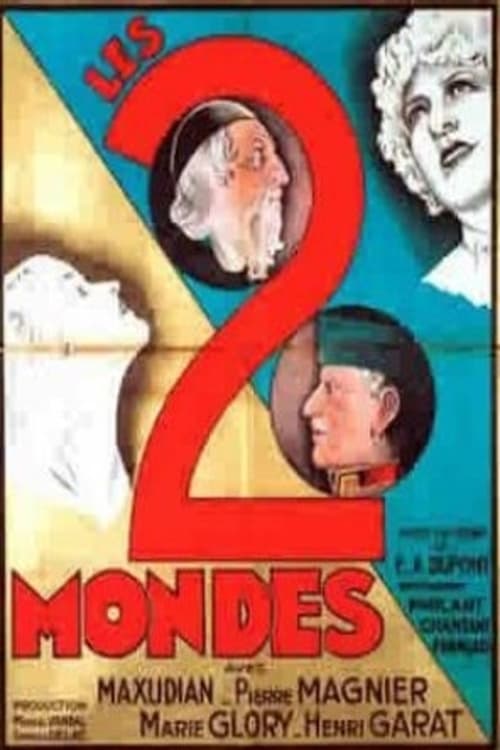
French Version Production — A distinct French-language cut named Les deux mondes is simultaneously produced.
Location: Elstree Studios
International Distribution
The completed film reels are prepared for release across multiple territories. The dual-language strategy aims to capture broader audience engagement during the post-war cinematic boom. The project concludes with standard distribution protocols.
Key Events
-
French Version Production — A distinct French-language cut named Les deux mondes is simultaneously produced.
Location: Elstree Studios
-
Multi-Language Release Strategy — The film is distributed across multiple language versions to maximize European audience reach.
Location: International Markets