Plot Analysis Summary
A group of tuberculosis patients confronts illness, attraction, loneliness, social difference, and personal vulnerability within a hospital.
Story Structure — 5 Plot Phases
Arrival Under Treatment
A new group of tuberculosis patients arrives at the hospital. Their different backgrounds and personal attitudes begin shaping ward life.
Key Events
-
Patients Arrive — A new group of patients arrives at a hospital for tuberculosis treatment.
Location: Hospital
-
Treatment Begins — The newly arrived patients enter a hospital routine centered on tuberculosis treatment.
Location: Hospital
-
Nurses Attract Attention — Several patients become attracted to one or another of the attractive nurses.
Location: Hospital
-
Denial Of Illness — A Welsh coal miner remains in denial about the seriousness of his disease.
Location: Hospital
-
The Miner Settles In — The coal miner adjusts to life in the hospital while resisting acceptance of his condition.
Location: Hospital Ward
Attraction And Separation
Several patients are attracted to the nurses, while one patient's lengthy stay threatens his relationship with his girlfriend. Romantic interest develops alongside loneliness.
Key Events
-
Flirtation Begins — An RAF officer known for chasing women takes an interest in the nurses.
Location: Hospital
-
Romantic Competition — The patients' attractions create romantic competition within the hospital environment.
Location: Hospital
-
Girlfriend Drifts Away — One patient faces the loss of his girlfriend because his hospital stay is lengthy.
Location: Hospital
-
Letters From Home — A bachelor receives devoted letters from his sister during his hospital stay.
Location: Hospital Ward
-
Bachelor's Superiority — A supercilious bachelor maintains a superior attitude despite his sister's devoted correspondence.
Location: Hospital Ward
Private Qualities Revealed
A devoted sister writes to a supercilious bachelor, and a West Country farmer displays hidden intelligence. The patients' contrasting personalities become clearer.
Key Events
-
Farmer's Hidden Intelligence — A West Country farmer is revealed to possess intelligence beneath his outward presentation.
Location: Hospital
-
Different Backgrounds Meet — The hospital brings together patients from mining, military, farming, and domestic backgrounds.
Location: Hospital Ward
-
Poetry In The Ward — A timid trainee chef expresses his sensitivity by writing poetry.
Location: Hospital
-
Masculinity Challenged — The trainee chef is bullied by the coal miner about his masculinity.
Location: Hospital Ward
Bullying And Vulnerability
A timid trainee chef writes poetry but is bullied about his masculinity by the coal miner. Personal sensitivity becomes a source of conflict in the ward.
Key Events
-
Vulnerability Exposed — The bullying exposes the trainee chef's timid and sensitive nature.
Location: Hospital
-
Hospital Emotions Rise — Illness, romantic interest, separation, and personal conflict intensify the group dynamic.
Location: Hospital
-
Illness Meets Romance — The patients' romantic hopes develop alongside the uncertainty of tuberculosis treatment.
Location: Hospital
Intertwined Ward Lives
Illness, attraction, separation, and conflict converge within the hospital community. The patients remain connected by their shared treatment experience.
Key Events
-
Personal Struggles Converge — The patients' conflicting attitudes and private troubles converge within the ward.
Location: Hospital Ward
-
Shared Hospital Experience — The group remains linked by treatment, attraction, loneliness, and pressure from fellow patients.
Location: Hospital
-
Ward Life Continues — The hospital setting continues to contain the patients' intertwined emotional experiences.
Location: Hospital
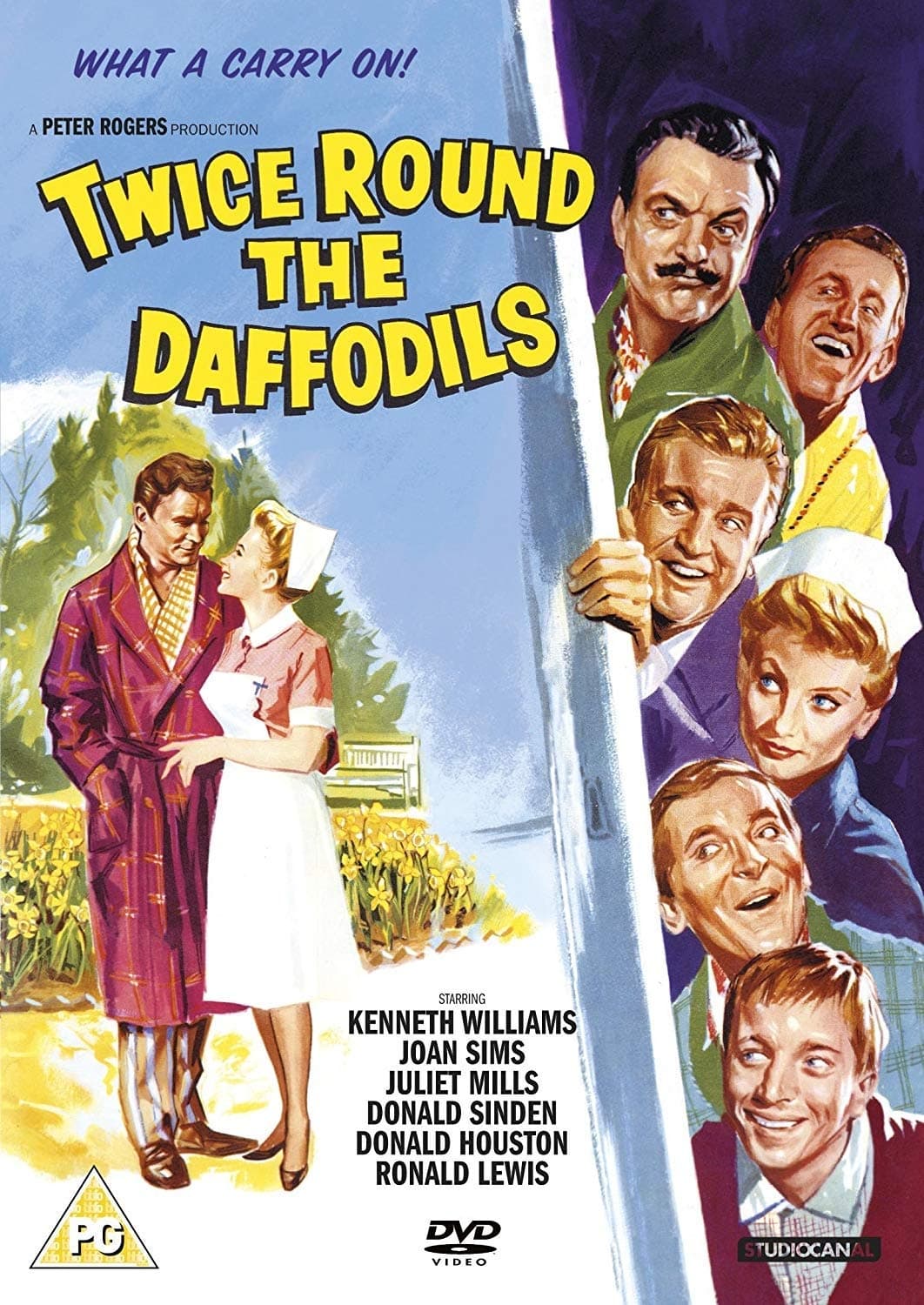
Twice Round the Daffodils is a 1962 British comedy drama film directed by Gerald Thomas and starring Juliet Mills, Donald Sinden, Donald Houston, Kenneth Williams, Ronald Lewis, Andrew Ray, Joan Sims and Jill Ireland. A new group of patients arrive at a hospital to be treated for tuberculosis where they all take a fancy to one of the nurses. The film was adapted from the play Ring for Catty by Patrick Cargill and Jack Beale. Carry on Nurse from 1959 was based on the same play. The cast and production team of Twice Round the Daffodils create a noticeable similarity with the Carry On films, but the film is not an official member of the Carry On series.