Story Structure — 4 Plot Phases
The Collector's Quest
Zweig introduces the documentary's premise and establishes his self-filmed confessional style. He outlines the core question driving the film: what motivates people to collect vinyl records?
Key Events
-
Documentary Premise Setup — Zweig introduces the documentary's focus on vinyl collecting motivations.
Location: Studio
-
Self-Filmed Confession — Zweig reflects on how collecting impacts his personal life.
Location: Self-filmed set
-
Celebrity Interview Introduction — Zweig begins interviewing Don McKellar about record culture.
Location: Interview space
-
Harvey Pekar Perspective — Zweig discusses collecting with American Splendor creator Harvey Pekar.
Location: Interview space
-
Celebrity Peer Connection — Two celebrity interviewees share overlapping perspectives on record culture.
Location: Interview space
-
Meta Directorial Technique — Zweig uses self-filming to create an intimate documentary style.
Location: Self-filmed set
Celebrity Perspectives
Interviews with Don McKellar and Harvey Pekar explore the cultural and artistic value of vinyl. These segments establish the broader context of record collecting beyond mere hoarding.
Key Events
-
Car Wash Employee Introduction — Zweig meets a collector claiming over one million records.
Location: Car wash storage
-
Million Record Revelation — Collector reveals the sheer scale of his vinyl archive.
Location: Storage room
-
Memorized Track Listings — Collector demonstrates deep knowledge of every K-tel collection.
Location: Storage room
-
Government Employee Introduction — Zweig interviews a collector who refuses to organize his collection.
Location: Home office
-
Celebrity Peer Connection — Two celebrity interviewees share overlapping perspectives on record culture.
Location: Interview space
Extreme Collecting Habits
Deep dives into eccentric collectors reveal psychological extremes. A million-record hoarder, a disorganized government employee, and a man who destroyed his collection showcase obsession, fear, and rejection.
Key Events
-
Government Employee Introduction — Zweig interviews a collector who refuses to organize his collection.
Location: Home office
-
Refusal to Organize — Collector explains his deliberate disorganization to deter visitors.
Location: Home office
-
Fear of Social Intrusion — Collector reveals hoarding as a defense mechanism against social interaction.
Location: Home office
-
Man Who Threw Out Collection — Zweig interviews a man who destroyed his entire record collection.
Location: Discarded items area
-
Possessive Rejection — Collector explains destroying records to prevent others from owning them.
Location: Discarded items area
-
Parallel Collector Contrast — Contrasting collector habits highlight different psychological extremes.
Location: Storage locations
Personal Sacrifice and Resolution
Zweig confronts his own regrets about how collecting impacted his family life. The documentary synthesizes collector psyches and concludes with a reflective resolution on passion versus personal fulfillment.
Key Events
-
Possessive Rejection — Collector explains destroying records to prevent others from owning them.
Location: Discarded items area
-
Zweig's Family Regret — Zweig confesses that collecting prevented him from building a family.
Location: Self-filmed set
-
Collecting vs Family Dreams — Protagonist reflects on the personal cost of his obsessive hobby.
Location: Self-filmed set
-
Synthesis of Collector Psyches — Zweig connects the psychological threads of all interviewed collectors.
Location: Various locations
-
Documentary Conclusion — Zweig wraps up the exploration of collecting motivations.
Location: Studio
-
Final Reflection on Vinyl — Closing thoughts on the enduring emotional impact of vinyl records.
Location: Studio
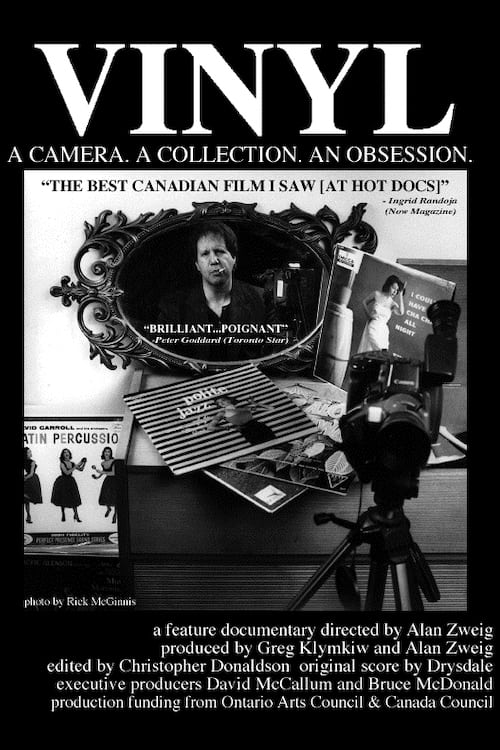
Toronto filmmaker Alan Zweig analyzes the phenomenon of record collecting.