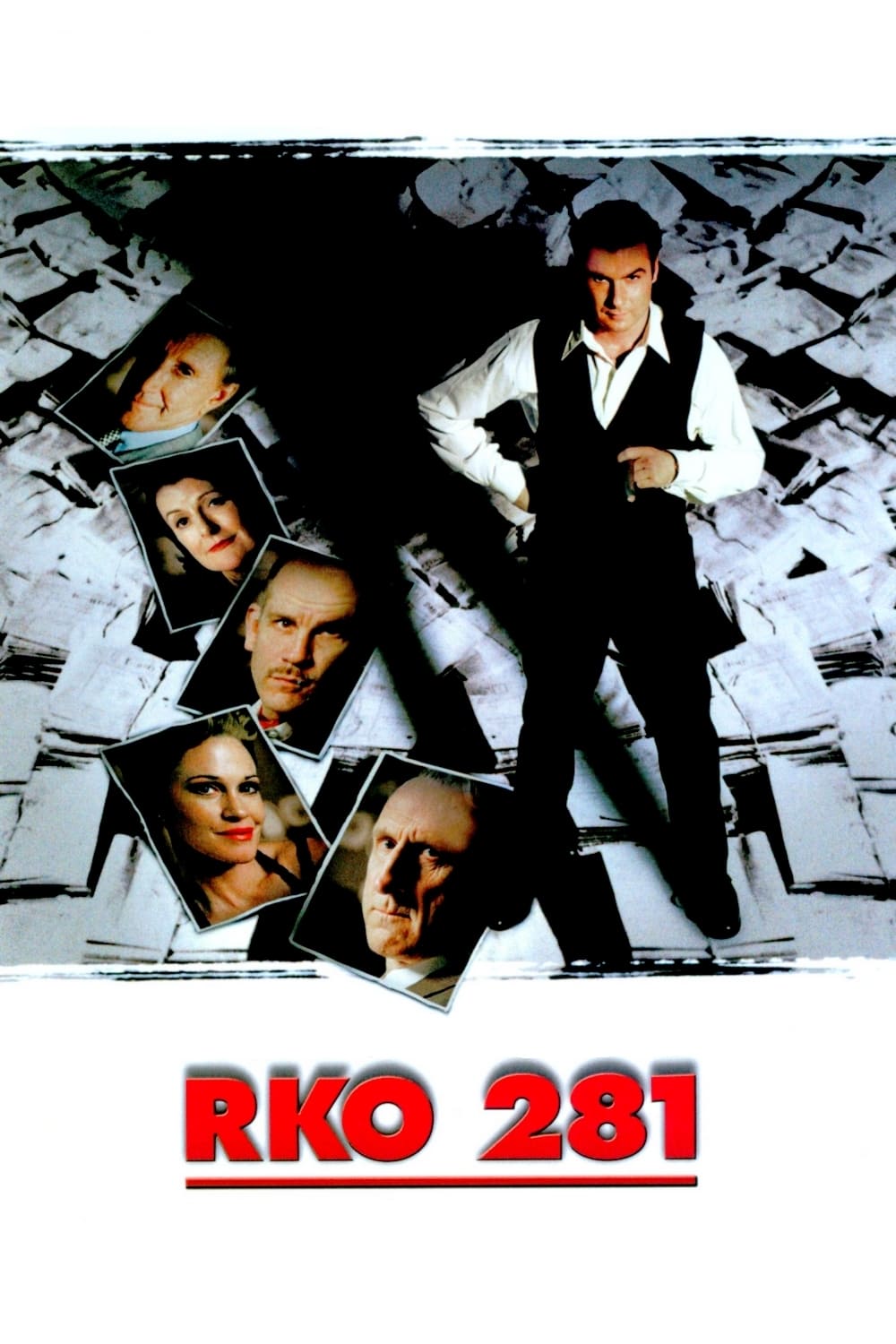
Orson Welles (played by Liev Schreiber) is a protagonist in RKO 281.
Orson Welles is the ambitious filmmaker at the center of the story. After meeting William Randolph Hearst, he conceives a thinly veiled film about Hearst's life and pushes the project forward. He initially tries to claim sole credit for the script, then restores Herman Mankiewicz's joint credit before finally seeing the film released. William Randolph Hearst (played by James Cromwell) is a protagonist in RKO 281.
William Randolph Hearst is a powerful publishing tycoon whose life inspires Orson Welles's film. After learning that the picture portrays him in an exceptionally unflattering way, he uses his influence to delay and obstruct its release, bans its mention in his publications, and threatens the careers of those involved. Marion Davies (played by Melanie Griffith) appears in RKO 281.
Marion Davies is William Randolph Hearst's mistress and an actress whose private life is exposed and vilified by Orson Welles's film. She suffers the humiliation caused by the picture, yet remains loyal to Hearst when his finances decline, selling the jewelry he gave her and giving him the proceeds.
RKO 281 (1999) character relationship network mapped with AI analysis. Explore the connections, alliances, and conflicts between characters.
Characters
Orson Welles
(played by Liev Schreiber) — protagonist
Orson Welles is the ambitious filmmaker at the center of the story. After meeting William Randolph Hearst, he conceives a thinly veiled film about Hearst's life and pushes the project forward. He init...
William Randolph Hearst
(played by James Cromwell) — protagonist
William Randolph Hearst is a powerful publishing tycoon whose life inspires Orson Welles's film. After learning that the picture portrays him in an exceptionally unflattering way, he uses his influenc...
Marion Davies
(played by Melanie Griffith) — supporting
Marion Davies is William Randolph Hearst's mistress and an actress whose private life is exposed and vilified by Orson Welles's film. She suffers the humiliation caused by the picture, yet remains loy...
Canonical Relationships
Family, romantic, and professional connections based on plot evidence.
William Randolph Hearst → Marion Davies
(Romantic Partner)
The plot identifies Marion Davies as Hearst's mistress and says that the film exposes and vilifies their private lives.
Story Dynamics
Alliances, conflicts, and narrative interactions that evolve throughout the story.
Orson Welles → Marion Davies
(Narrative Subject And Portrayer)
The film is described as a thinly veiled and exceptionally unflattering biography of Hearst, while Marion's private life with him is also exposed and...
Orson Welles → William Randolph Hearst
(Conflict Creative Adversary)
After attending a party at Hearst Castle, Orson Welles is inspired to make a film based on Hearst's life. Hearst later uses his power and influence to...
Story Analysis
Orson Welles fights to create and release a controversial film inspired by William Randolph Hearst despite personal conflict, censorship pressure, and professional damage.