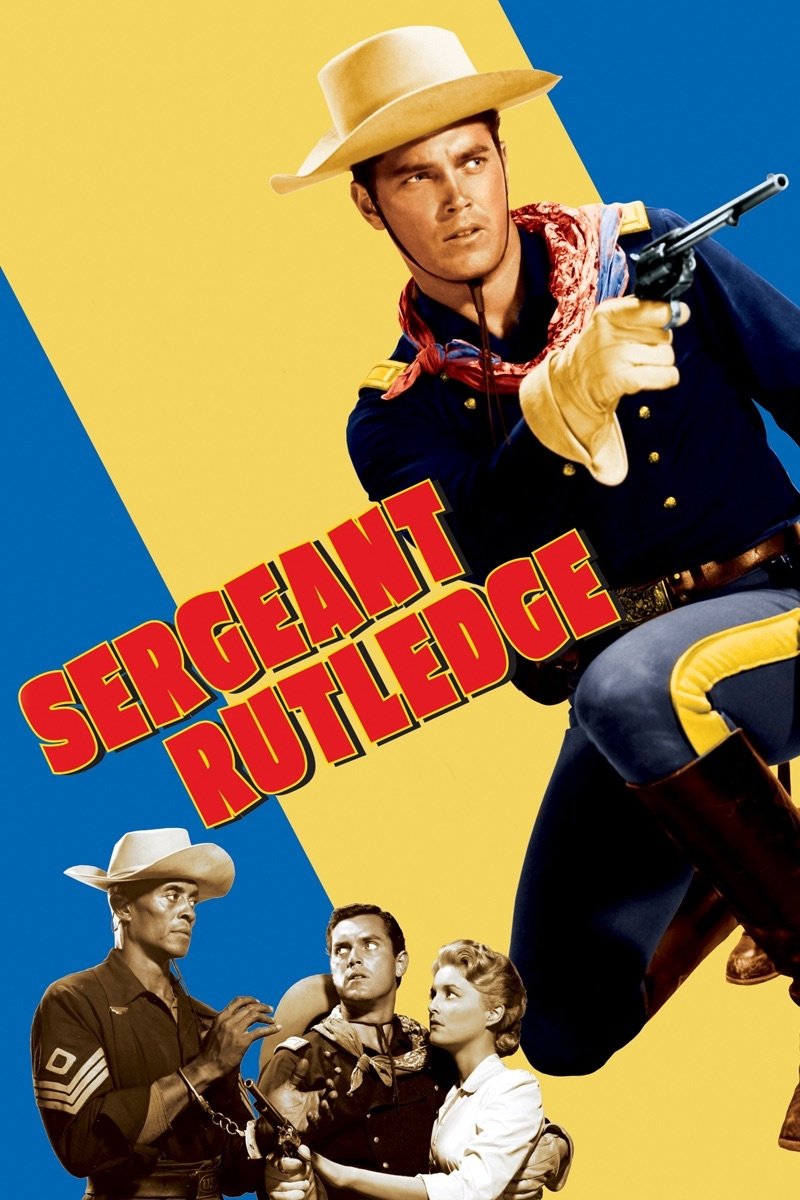
Sergeant Rutledge (1960) character relationship network mapped with AI analysis. Explore the connections, alliances, and conflicts between characters.
Characters
Lt. Tom Cantrell
(played by Jeffrey Hunter) — protagonist
A cavalry officer who serves as Sgt. Braxton Rutledge’s defense counsel at the court-martial. Despite colleagues’ doubts and Capt. Shattuck’s objection that his personal interest makes him unsuitable,...
1st Sgt. Braxton Rutledge
(played by Woody Strode) — protagonist
A cavalry sergeant standing trial over accusations connected to the deaths at the military post. Mary Beecher testifies that he restrained her when they met at a remote station, explained that Mescale...
Mary Beecher
(played by Constance Towers) — supporting
A civilian witness whose testimony is central to the court-martial of Sgt. Braxton Rutledge. She recalls meeting him at a remote station, where he explained that he had been pursued by Mescaleros and...
Sgt. Matthew Luke Skidmore
(played by Juano Hernández) — supporting
A sergeant who testifies during Rutledge’s court-martial. His history as a slave-born soldier becomes part of the courtroom’s questioning of the case. In the closing scenes, he insists that duty and t...
Col. Otis Fosgate - president of the court-martial
(played by Willis Bouchey) — supporting
The colonel presiding over the court-martial of Sgt. Braxton Rutledge. He oversees proceedings in which Cantrell defends Rutledge and Capt. Shattuck prosecutes, while testimony and evidence about the...
Canonical Relationships
Family, romantic, and professional connections based on plot evidence.
Sgt. Matthew Luke Skidmore → Col. Otis Fosgate - president of the court-martial
(Professional Witness And Presiding Officer) — Skidmore gives testimony in the proceedings conducted under Fosgate's authority.
Skidmore testifies during the court-martial, and Col. Otis Fosgate presides over it.
Mary Beecher → Col. Otis Fosgate - president of the court-martial
(Professional Witness And Presiding Officer) — Mary gives testimony in the court-martial over which Fosgate presides.
Mary Beecher's testimony becomes central to the proceedings, which are presided over by Col. Otis Fosgate.
Lt. Tom Cantrell → Col. Otis Fosgate - president of the court-martial
(Professional Defense Counsel And Presiding Officer) — They occupy opposing procedural roles in the same court-martial, with Cantrell presenting the defense and Fosgate presiding.
Cantrell serves as Rutledge's defense counsel while Col. Fosgate presides over the court-martial.
Col. Otis Fosgate - president of the court-martial → 1st Sgt. Braxton Rutledge
(Power Court-Martial Authority) — Fosgate oversees the proceedings that determine the case against Rutledge.
Col. Otis Fosgate presides over the court-martial in which Rutledge is the accused.
Sgt. Matthew Luke Skidmore → 1st Sgt. Braxton Rutledge
(Professional Fellow Soldier) — Skidmore's testimony and his emphasis on duty place him within the military response to Rutledge's trial and changing standing among the soldiers.
Skidmore testifies during the proceedings, and the closing scenes show Rutledge treated by fellow soldiers as a brave man while Skidmore insists that...
Lt. Tom Cantrell → Mary Beecher
(Romantic Interest) — Their personal connection complicates Cantrell's role in the trial, and the relationship remains present as the troop prepares to move out.
The plot reference states that Cantrell's defense of Rutledge is challenged as unsuitable because of his personal interest, and the character profile...
Lt. Tom Cantrell → 1st Sgt. Braxton Rutledge
(Professional Defense Counsel) — Cantrell advocates for Rutledge throughout the court-martial and works to establish that the accusations against him are unjust.
Cantrell arrives with the court-martial papers and is determined to defend Rutledge despite colleagues believing him guilty. He challenges the prosecu...
Story Dynamics
Alliances, conflicts, and narrative interactions that evolve throughout the story.
Mary Beecher → 1st Sgt. Braxton Rutledge
(Narrative Exculpatory Witness) — Mary's account presents Rutledge as someone who protected her, directly countering the suspicion surrounding him.
Mary testifies that Rutledge restrained her from screaming, explained that Mescaleros had pursued him, warned her of nearby Apache attackers, and help...
Story Analysis
A court-martial tests the accusations against Rutledge as testimony, danger, and recovered evidence reshape the soldiers' view of him.
Plot Progression
A Defense Against Suspicion
— Cantrell arrives with the court-martial papers and commits to defending Rutledge despite doubts about his guilt. Mary recounts how Rutledge warned and helped her during danger at a remote station.
Danger at the Remote Station
— Mary's testimony recalls Rutledge's warning of nearby Apache attackers and his help in surviving the danger. She also describes finding the stationmaster dead and fearing for her father.
Evidence and Accusation
— The court examines the deaths at the post and the missing gold cross. Suspicion focuses on Rutledge because he had been seen looking for the major before the alarm.
Duty Under Pressure
— Cantrell refuses to withdraw from the defense, and Skidmore testifies while his history is questioned. The ongoing threat of Apache raids remains part of the proceedings.
Evidence and Vindication
— Rutledge is no longer in irons, and fellow soldiers treat him as brave, though Skidmore stresses duty and rules. Cantrell shows Mary the gold cross taken from a dead Apache; after the burial party fin...
Directed by John Ford
Sergeant Rutledge (1960) · 7/10 · crime, drama, western
Content sources
Related entry on
Wikidata
(Q599885), public domain (CC0).
Plot breakdown and analysis on this page are AI-generated from the title's synopsis and metadata.