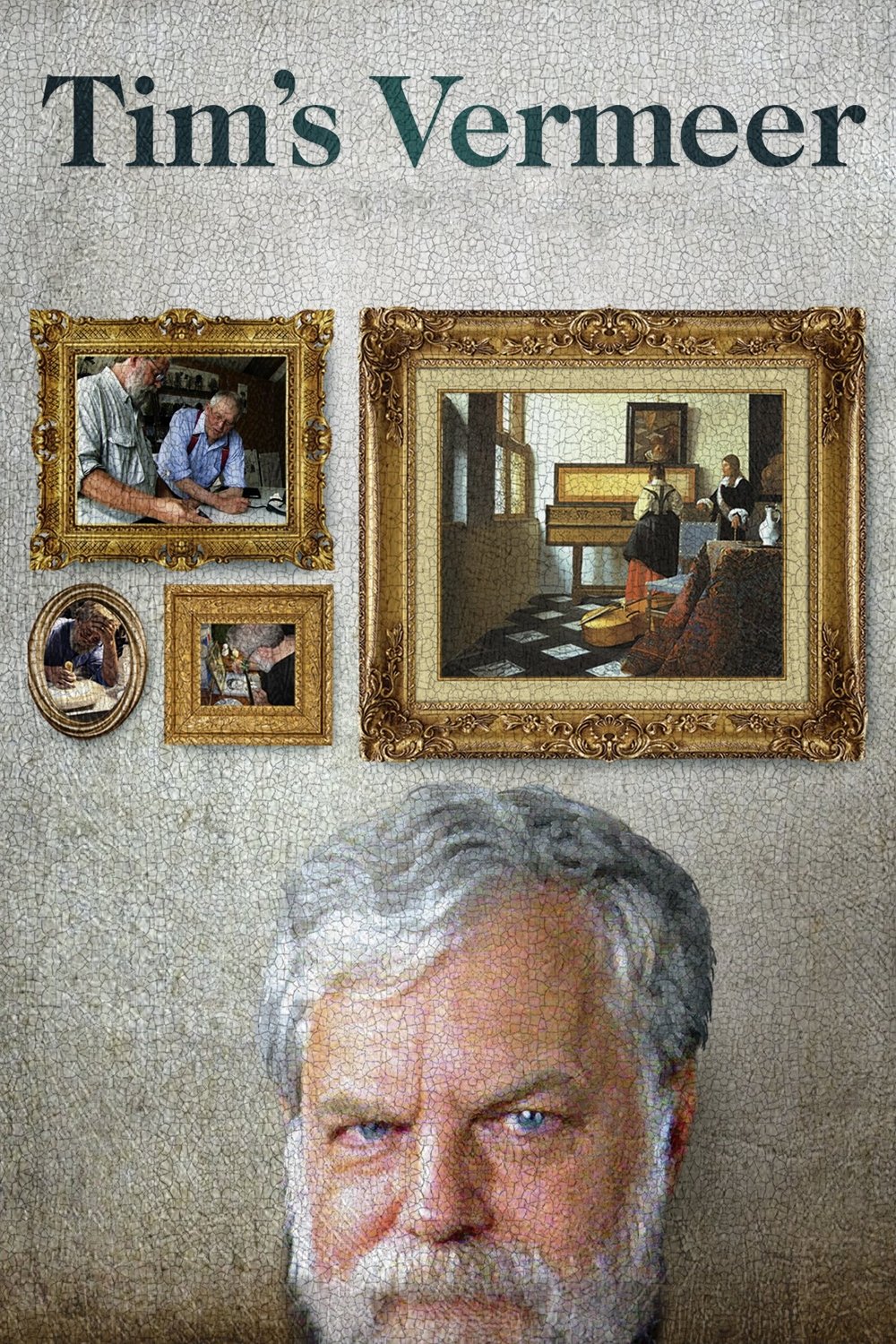
Story Structure — 5 Plot Phases
The Optical Hypothesis
Jenison discovers Hockney and Steadman's theories about Vermeer's use of optical aids. He discards simple projection methods and develops a mirror-based technique for precise color matching.
Key Events
-
Jenison's Vermeer Fascination — Engineer and art enthusiast Tim Jenison becomes obsessed with Vermeer's photographic style. Characters: Himself
Location: Jenison's workspace
-
Reading Optical Theories — Jenison reads books by Hockney and Steadman proposing Vermeer used camera obscura. Characters: Himself, Himself, Himself
Location: Study
-
Discarding Light Projection — Jenison quickly abandons simple light projection due to color matching impossibility. Characters: Himself
Location: Workshop
-
Mirror Technique Epiphany — Jenison realizes a 45-degree mirror allows simultaneous viewing of original and canvas for precise color matching. Characters: Himself
Location: Workshop
-
Crude Prototype Construction — Jenison builds a quick, rough prototype to test the mirror reflection method. Characters: Himself
Location: Workshop
Prototype & Academic Pushback
Jenison and Steadman build functional prototypes and successfully paint a vase. Their hypothesis faces significant criticism from traditional art historians who view it as a rationalist intrusion.
Key Events
-
Crude Prototype Construction — Jenison builds a quick, rough prototype to test the mirror reflection method. Characters: Himself
Location: Workshop
-
Father-in-Law Photo Test — Using his father-in-law's photo, Jenison produces an oil painting nearly identical to the photograph. Characters: Himself
Location: Studio
-
Lens Prototype Collaboration — Jenison and Steadman build a lens-equipped prototype to capture real-life objects. Characters: Himself, Himself
Location: Workshop
-
Vase Painting Experiment — Neither artist has formal training, yet they produce an impressive vase painting together. Characters: Himself, Himself
Location: Studio
-
Art Historian Backlash — Historians criticize the optical hypothesis as a crass rationalist intrusion into art. Characters: Himself, Himself
Location: Academic circles
The Grand Recreation
Jenison commits to reproducing The Music Lesson by digitally modeling and physically crafting a period-accurate set. He spends months woodworking, mixing paints, and polishing lenses using only 17th-century methods.
Key Events
-
Art Historian Backlash — Historians criticize the optical hypothesis as a crass rationalist intrusion into art. Characters: Himself, Himself
Location: Academic circles
-
The Music Lesson Plan — Jenison decides to physically recreate Vermeer's The Music Lesson using his software. Characters: Himself
Location: Office
-
Digital Scene Modeling — Jenison models the entire painting digitally before physical construction begins. Characters: Himself
Location: Computer lab
-
Period-Accurate Set Construction — Jenison spends seven months crafting props and scenery using only 17th-century methods. Characters: Himself
Location: Workshop
-
Paint & Lens Preparation — Jenison mixes his own paints and hand-polishes his lens to match historical techniques. Characters: Himself
Location: Workshop
-
Meticulous Painting Begins — With the set visually identical to the original, Jenison starts painting under the mirror system. Characters: Himself
Location: Studio
The Lens Revelation
During the painting process, Jenison identifies optical artifacts like chromatic aberration and bokeh in Vermeer's work. He accidentally discovers that lens curvature matches the original painting's details, confirming the mechanical aid theory.
Key Events
-
Meticulous Painting Begins — With the set visually identical to the original, Jenison starts painting under the mirror system. Characters: Himself
Location: Studio
-
Diffuse Lighting Analysis — Jenison notes Vermeer's hyper-accurate diffuse lighting defies simple human color constancy. Characters: Himself
Location: Studio
-
Chromatic Aberration Discovery — Accidentally sketching the virginal, Jenison notices lens curvature matching the original painting's pattern. Characters: Himself
Location: Studio
-
Bokeh & Lens Artifacts Confirmed — Jenison verifies that chromatic aberration and depth of field in Vermeer's work match lens optics. Characters: Himself
Location: Studio
-
Four-Month Painting Completion — After intense labor, Jenison finishes the reproduction and applies a final varnish layer. Characters: Himself
Location: Studio
The Final Document
After four months of meticulous work, Jenison completes and varnishes the painting. Hockney and Steadman validate the result, cementing the hypothesis that Vermeer used optical tools.
Key Events
-
Four-Month Painting Completion — After intense labor, Jenison finishes the reproduction and applies a final varnish layer. Characters: Himself
Location: Studio
-
Emotional Final Reflection — Jenison takes a quiet, emotional moment to observe his completed work. Characters: Himself
Location: Studio
-
Hockney & Steadman Validation — Both experts confirm the painting proves Vermeer used similar optical tools, calling it a document. Characters: Himself, Himself, Himself
Location: Studio
-
Fireplace Display — The film ends with Jenison's copy of The Music Lesson hanging above his fireplace. Characters: Himself
Location: Home