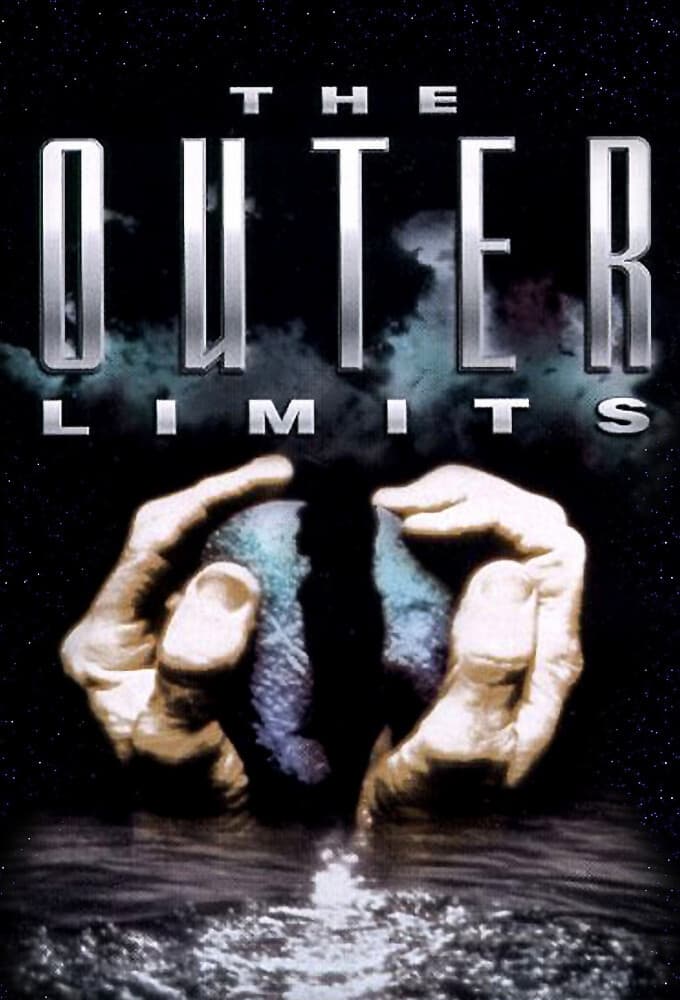
The Outer Limits (1995) interactive character relationship network and AI-powered story timeline. Explore the connections, alliances, and conflicts between characters across the narrative arc.
Across seven seasons, the anthology repeatedly tests human identity, morality, and survival against alien contact, scientific ambition, temporal disruption, and artificial intelligence.
Rating: 7.7/10 (253 votes)
The opening season examines alien contact, artificial beings, genetic intervention, and attempts to defeat death. Human characters repeatedly confront technologies or visitors whose purposes are uncertain.
The second season broadens the scope from isolated experiments to social control, alien invasion, time distortion, and biological danger. Scientific progress increasingly threatens identity, memory, and human autonomy.
The third season focuses on neural networks, genetic evolution, alien occupation, resurrection, and displaced communities. Private crises become expressions of wider technological and ecological instability.
The fourth season repeatedly questions what counts as human through android bodies, genetic mutations, alien societies, and postwar communities. Military and scientific institutions often treat individual lives as experimental resources.
The fifth season combines alien politics, artificial intelligence, historical trauma, time travel, and changing human identity. Nicholas Prentice appears in stories where technology and temporal displacement reshape personal and collective memory.
The sixth season presents societies governed by spectacle, surveillance, biological transformation, and restrictive law. Dr. Theresa Givens becomes central to a future legal conflict over technology and historical survival.
The final season returns to domestic robots, alien symbiosis, future plagues, artificial intelligence, and experimental missions. Its closing stories leave humanity negotiating whether advanced systems can be controlled or morally contained.
Plot analysis generated from content on Wikipedia, licensed under CC BY-SA 4.0.
Related entry on Wikidata (Q1621450), public domain (CC0).