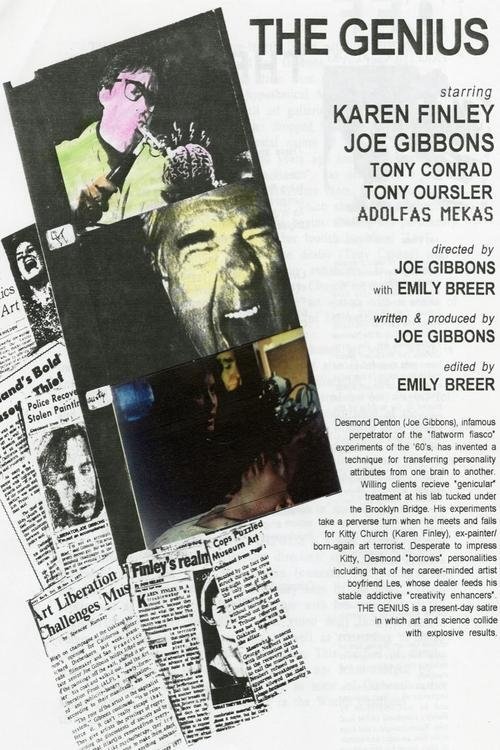
The Genius (1993) character relationship network mapped with AI analysis. Explore the connections, alliances, and conflicts between characters.
Characters
Desmond Denton
(played by Joe Gibbons) — protagonist
Scientist who discovers a method to copy personalities. Initially falls for Kitty, but later uses his invention to become a terrorist waging a violent crusade against the American Family League's cult...
Kitty Church
(played by Karen Finley) — protagonist
Rebel female artist actively resisting the ultra-conservative American Family League's monopoly on New York art galleries and their promotion of the restrictive New Formalism movement.
Les Alabaster
(played by Tony Oursler) — supporting
Dirk Dirkson
(played by Tony Conrad) — supporting
Dr. Corbin
(played by Adolfas Mekas) — supporting
Manic Client
(played by Camden Toy) — supporting
Depressed Client
(played by Mark MacElhattan) — supporting
Psycho Client
(played by Mike Ousterhout) — supporting
Canonical Relationships
Family, romantic, and professional connections based on plot evidence.
Les Alabaster → Psycho Client
(Professional Employer) — Controls artist through drugs
Les Alabaster → Depressed Client
(Professional Employer) — Controls artist through drugs
Les Alabaster → Manic Client
(Professional Employer) — Controls artist through drugs
Desmond Denton → Kitty Church
(Romantic Lovers) — Scientist falls for rebel artist
Story Dynamics
Alliances, conflicts, and narrative interactions that evolve throughout the story.
Les Alabaster → Dirk Dirkson
(Alliance Allies) — Both represent oppressive art world forces
Kitty Church → Dirk Dirkson
(Conflict Opponent) — Artist opposes exploitative dealer
Kitty Church → Les Alabaster
(Conflict Adversary) — Rebel fights against the conservative League
Desmond Denton → Dirk Dirkson
(Conflict Nemesis) — Opposes the exploitative art dealer
Desmond Denton → Les Alabaster
(Conflict Arch Enemy) — Fights against the League's leader
Story Analysis
A scientist's personality-copying invention transforms romantic desire into a violent revolt against cultural and artistic control.
Plot Progression
The Identity Experiment
— Desmond Denton discovers a method for copying personalities and begins using it to become more like other people. His attraction to a rebel artist gives the invention an intensely personal purpose.
Galleries Under Control
— The American Family League controls New York art galleries and promotes New Formalism. The restrictive cultural system establishes the conflict surrounding artistic expression.
The Terrorist Transformation
— Desmond uses his invention to win over the rebel artist, but his identity changes in a darker direction. He becomes a terrorist and launches a violent crusade against the League.
War Against Artistic Exploitation
— Desmond's campaign expands beyond the League to a greedy art dealer who controls artists with drugs. Cultural oppression and commercial manipulation merge into the final conflict.
Directed by Emily Breer, Joe Gibbons
The Genius (1993) · 7/10 · comedy, crime, science-fiction
Content sources
Plot breakdown and analysis on this page are AI-generated from the title's synopsis and metadata.