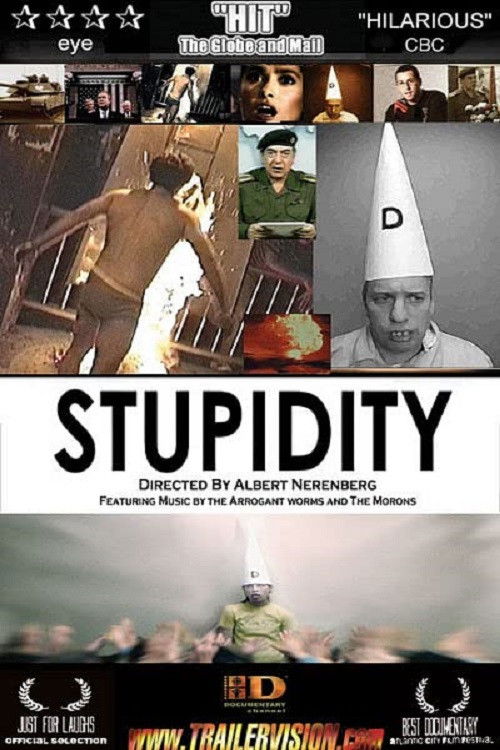
Plot Analysis Summary
A documentary exploration of how society measures, performs, and misinterprets intelligence across historical and modern contexts.
Story Structure — 4 Plot Phases
Historical Foundations
The documentary establishes its premise by tracing the origins of intelligence measurement from early 1900s IQ tests. This historical context sets the stage for understanding how society has long been fascinated by categorizing and judging mental acuity.
Key Events
-
IQ Test Origins — Introduction to early 1900s intelligence testing methods.
Location: Archival Footage
-
Historical Assessment Context — Establishes the historical baseline for measuring stupidity.
Location: Studio Narration
-
Modern Pop Culture Shift — Transition from historical tests to contemporary cultural phenomena.
Location: Montage Sequence
-
Jackass Era Emergence — Analysis of Jackass as a symbol of modern perceived silliness.
Location: Media Archive
Pop Culture Manifestations
The narrative shifts to contemporary examples, examining Jackass and boy bands as modern expressions of perceived silliness. Nerenberg introduces his central thesis that public perception often masks underlying competence.
Key Events
-
Jackass Era Emergence — Analysis of Jackass as a symbol of modern perceived silliness.
Location: Media Archive
-
Boy Band Phenomenon — Examination of boy bands as another facet of contemporary culture.
Location: Media Archive
-
Nerenberg Thesis Introduction — Core argument about public fascination with perceived stupidity is presented.
Location: Studio Narration
-
Bush Sandler Comparison — Direct comparison drawn between political and entertainment figures.
Location: Studio Narration
-
Audience Expectation Theory — Explanation of how audiences shape public perception of intelligence.
Location: Studio Narration
-
Chomsky Quote Integration — Academic perspective added to support the documentary's thesis.
Location: Interview Setting
Expert Analysis & Comparisons
Academic and cultural authorities like Chomsky, Sternberg, Maher, and Schecter provide quotes that validate the documentary's arguments. The film draws direct parallels between political and entertainment figures to illustrate audience-driven perception.
Key Events
-
Chomsky Quote Integration — Academic perspective added to support the documentary's thesis.
Location: Interview Setting
-
Sternberg Academic View — Psychological authority validates the smart-people-stupid paradox.
Location: Interview Setting
-
Maher Youth Culture Critique — Cultural commentary linking perceived stupidity to generational trends.
Location: Interview Setting
-
Schecter Media Analysis — Former producer provides industry insight on media portrayal.
Location: Interview Setting
-
Cleese Interview Segment — Guest expert shares perspective on comedy and perception.
Location: Interview Setting
-
Coolio Cultural Perspective — Music artist contributes viewpoint on public image and reality.
Location: Interview Setting
-
Hayek Lawrence Insights — Additional guests expand the documentary's thematic scope.
Location: Interview Setting
Societal Revelation & Conclusion
A diverse array of interviewees contributes final perspectives on performance versus reality. The documentary concludes by revealing that society fundamentally prefers individuals who conceal their true acumen rather than displaying it overtly.
Key Events
-
Hayek Lawrence Insights — Additional guests expand the documentary's thematic scope.
Location: Interview Setting
-
Moore Pevere Commentary — Filmmakers and critics offer deeper analysis of media narratives.
Location: Interview Setting
-
Schumacher Spence Views — Industry professionals discuss audience expectations in entertainment.
Location: Interview Setting
-
Steve-O Vogels Perspectives — Final interviewees provide concluding remarks on performance vs reality.
Location: Interview Setting
-
Hidden Acumen Revelation — Core thesis confirmed: society prefers people who hide their acumen.
Location: Studio Narration
-
Documentary Conclusion — Final reflection on the public fascination with perceived stupidity.
Location: Studio Narration
An exploration into the nature of stupidity in Western society and its history of our perception of it.