Story Structure — 4 Plot Phases
The Dominant Season
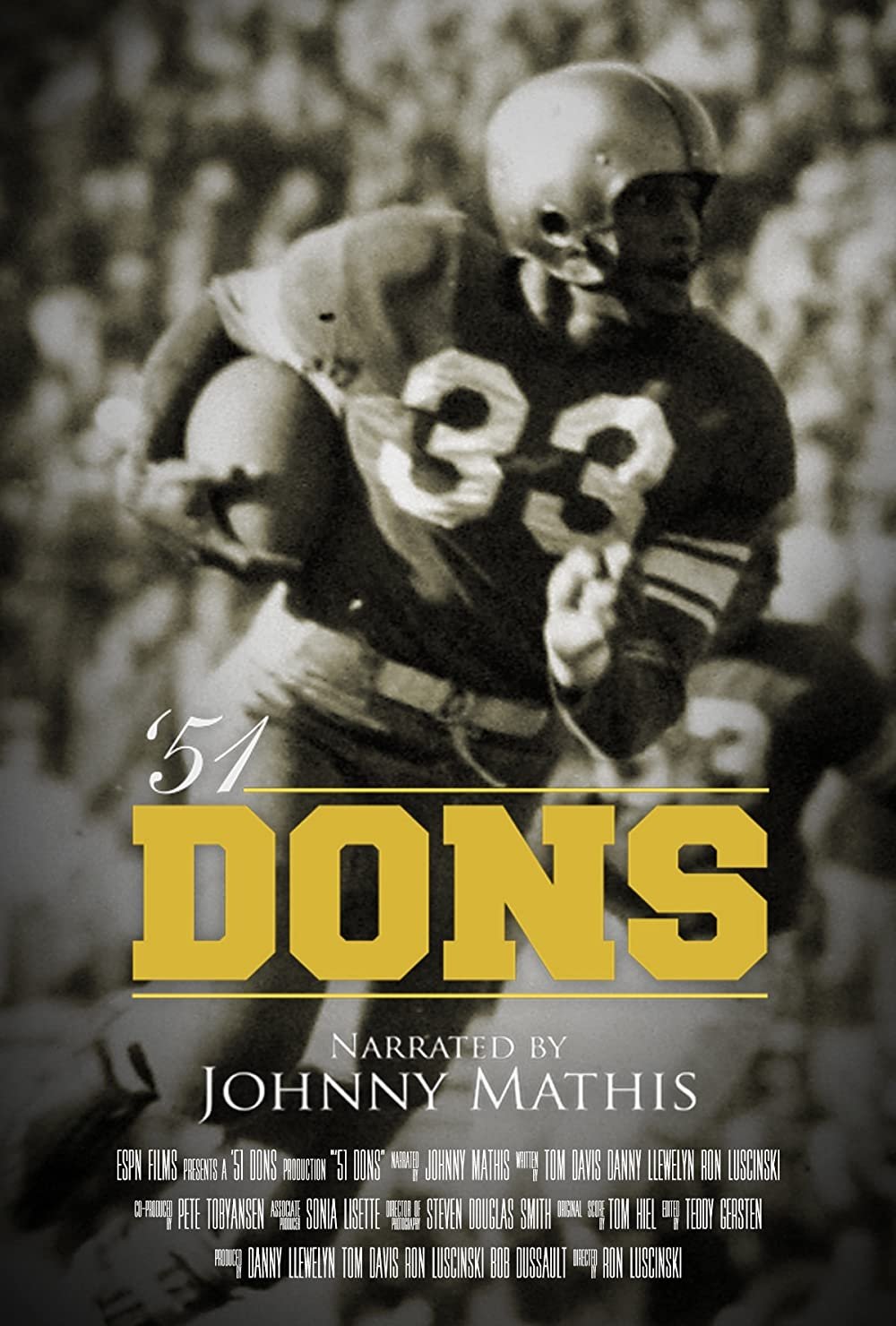
The USF Dons football team achieves a flawless 9-0 record, establishing themselves as a top national program. The perfect season generates excitement and hope for a historic bowl invitation that could financially rescue the university.
Key Events
-
1951 Season Begins — The Dons football team starts their 1951 season with high expectations.
Location: University of San Francisco
-
Achieving 9-0 Record — The team dominates the season, securing a perfect 9-0 record.
Location: Various Stadiums
-
Top Team Status — USF establishes itself as one of the nation's premier college teams.
Location: University of San Francisco
-
First Bowl Bid Hope — The team anticipates their first-ever bowl game invitation.
Location: University of San Francisco
The Impossible Condition
An invitation to the Miami bowl game arrives with a discriminatory stipulation: the team must bench their two African American stars, Ollie Matson and Burl Toler. The squad faces a severe ethical dilemma between financial survival and racial integrity.
Key Events
-
First Bowl Bid Hope — The team anticipates their first-ever bowl game invitation.
Location: University of San Francisco
-
Financial Stakes Revealed — A bowl payout is identified as crucial for saving the cash-strapped program.
Location: University of San Francisco
-
Miami Invitation Arrives — The Dons receive an official invitation to play in Miami.
Location: University of San Francisco
-
Racial Condition Imposed — Organizers demand the team bench their two African American stars.
Location: University of San Francisco
-
Matson and Toler Identified — The specific players targeted for removal are named.
Location: University of San Francisco
-
Team Deliberation — The squad debates the ethical and financial implications of the demand.
Location: Locker Room
The Defiant Stand
After intense deliberation, the entire team collectively refuses to play under the racist condition. They willingly forfeit the bowl bid and its crucial payout, choosing solidarity and equality over financial gain.
Key Events
-
Team Deliberation — The squad debates the ethical and financial implications of the demand.
Location: Locker Room
-
Defiant Refusal — The Dons collectively refuse to play under the discriminatory condition.
Location: University of San Francisco
-
Bowl Bid Forfeited — The team accepts the financial loss to uphold their principles.
Location: University of San Francisco
-
Precedent Established — Their stand sets a crucial precedent for racial equality in sports.
Location: Historical Archive
-
Civil Rights Timeline Context — The event is placed more than a decade before the Civil Rights Movement.
Location: Historical Archive
-
Scholar Recognition Begins — Contemporary scholars begin analyzing the historical significance.
Location: Film Interview Set
Historical Legacy & Analysis
Scholars Dr. Harry Edwards and Dr. Clarence Benjamin Jones examine the event's profound impact. They validate the Dons' decision as a pioneering act of social justice that predated the Civil Rights Movement by over a decade.
Key Events
-
Scholar Recognition Begins — Contemporary scholars begin analyzing the historical significance.
Location: Film Interview Set
-
Dr. Edwards Analysis — Dr. Edwards highlights sports as an engine for social justice.
Location: Film Interview Set
-
Dr. Jones Commentary — Dr. Jones, a MLK speech writer, validates the team's moral stance.
Location: Film Interview Set
-
Social Justice Validation — Both scholars confirm the event's role in advancing racial equality.
Location: Film Interview Set
-
Historical Legacy Cemented — The Dons' decision is permanently recognized in American sports history.
Location: Historical Archive
-
Modern Academic Consensus — Contemporary studies solidify the event's impact on civil rights.
Location: Film Interview Set
-
Film Documentation Complete — The documentary concludes by preserving the Dons' courageous stand.
Location: Film Archive