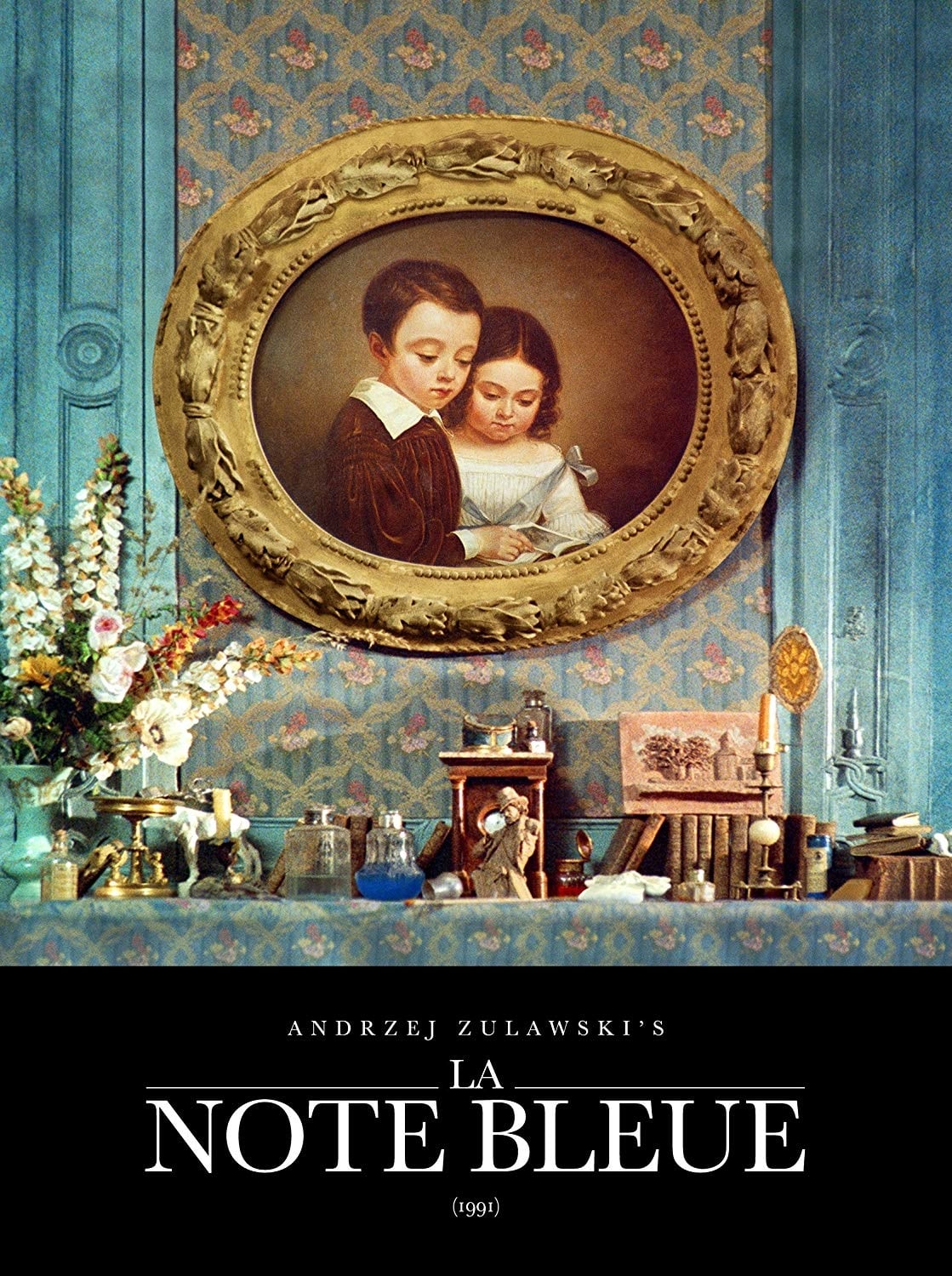
The Blue Note (1991) character relationship network mapped with AI analysis. Explore the connections, alliances, and conflicts between characters.
Characters
Solange Sand
(played by Sophie Marceau) — protagonist
Frédéric Chopin
(played by Janusz Olejniczak) — supporting
Aurore Dudevant
(played by Marie-France Pisier) — supporting
Auguste Clésinger
(played by Aurélien Recoing) — supporting
Eugène Delacroix
(played by Féodor Atkine) — supporting
Maurice Sand
(played by Benoît Le Pecq) — supporting
Fernand de Préaulx
(played by Gilles Détroit) — supporting
Adalbert Grzymala
(played by Roman Wilhelmi) — supporting
Louis Viardot
(played by Serge Ridoux) — minor
Ivan Tourgueniev
(played by Serge Renko) — minor
Canonical Relationships
Family, romantic, and professional connections based on plot evidence.
Solange Sand → Auguste Clésinger
(Romantic Fiancés) — Their engagement is publicly celebrated but unsettled by concerns about Auguste's debts.
Aurore announces that Solange Sand and Auguste Clésinger are engaged, presenting their union as a sign of changing morality.
Story Dynamics
Alliances, conflicts, and narrative interactions that evolve throughout the story.
Solange Sand → Frédéric Chopin
(Social Household Associates) — Their connection arises from the shared household atmosphere shaped by Chopin's illness and Solange's personal concerns.
Solange becomes involved in household tensions while Chopin remains at the center of the same gathering and is shown as increasingly fragile.
Aurore Dudevant → Fernand de Préaulx
(Social Host And Guest) — Their connection is established by his presence at the household gathering.
Fernand de Préaulx arrives among the guests and friends gathered around Aurore's household.
Aurore Dudevant → Louis Viardot
(Social Host And Guest) — Louis participates in the social gathering hosted within Aurore's household.
Louis Viardot is listed among the guests and friends who arrive at the household around Aurore.
Aurore Dudevant → Eugène Delacroix
(Social Host And Guest) — Their connection is defined by Delacroix's participation in Aurore's gathering.
Eugène Delacroix arrives as one of the guests and friends in the household around Aurore.
Aurore Dudevant → Maurice Sand
(Social Household Associates) — They are connected through the shared household environment and its domestic disorder.
Maurice Sand is among the people present as the household around Aurore comes to life and domestic duties become part of the gathering.
Ivan Tourgueniev → Adalbert Grzymala
(Social Political Associates) — Their relationship is grounded in participation in the same politically charged gathering.
Both are listed among the guests during the discussion of violence in Poland and the aristocratic uprising.
Aurore Dudevant → Adalbert Grzymala
(Unknown Political Interlocutors) — They share the gathering in which political contradictions are openly debated.
Adalbert Grzymala is present when the guests debate the Polish uprising, reprisals, revolutionary ideals, and social privilege.
Aurore Dudevant → Ivan Tourgueniev
(Unknown Political Interlocutors) — Their positions meet within a debate about revolution, privilege, and violence.
Ivan Tourgueniev describes violence in Poland, while Aurore defends revolt in principle during the resulting political discussion.
Frédéric Chopin → Ivan Tourgueniev
(Social Gathering Associate) — They share an intellectual and artistic social environment.
Ivan Tourgueniev participates in the household conversations while Chopin remains at the center of the gathering.
Frédéric Chopin → Adalbert Grzymala
(Social Gathering Associate) — Their connection is established through the shared circle surrounding Chopin.
Adalbert Grzymala arrives among the guests and friends while Chopin is the central figure of the gathering.
Frédéric Chopin → Eugène Delacroix
(Social Artistic Associate) — They belong to the same artistic and intellectual circle in the household gathering.
Eugène Delacroix is among the guests participating in conversations involving artistic admiration, while Chopin remains central to the gathering.
Aurore Dudevant → Frédéric Chopin
(Social Host And Guest) — Their shared household gathering is shaped by Chopin's fragile condition.
The household around Aurore Dudevant hosts a gathering in which Chopin remains at the center, while Aurore worries about his prolonged illness and dec...
Aurore Dudevant → Auguste Clésinger
(Conflict Skeptical Host) — Aurore supports the union publicly while the household remains suspicious of Auguste.
The household is troubled by Auguste Clésinger's character and debts, even as Aurore announces his engagement to Solange.
Aurore Dudevant → Solange Sand
(Social Household Associate) — Aurore has a socially influential role in Solange's domestic and romantic situation.
Solange Sand becomes involved in tensions within Aurore Dudevant's household, and Aurore later announces Solange's engagement.
Story Analysis
An artistic household balances political ideals, domestic disorder, illness, and a contested promise of marriage.
Plot Progression
Music Before the Gathering
— Chopin opens the film with an extraordinary piano performance while Aurore's household slowly awakens. Guests and friends then arrive, creating a lively artistic and social circle.
Revolution in Conversation
— Ivan describes the violence and reprisals surrounding the Polish uprising. Aurore and the other guests debate revolt, privilege, suffering, and the contradictions of political ideals.
The Household Turns Chaotic
— The servants leave, forcing the guests to handle cooking, washing, dishes, and the fire. Domestic comedy repeatedly collides with serious discussions of art, morality, and social progress.
Illness and Private Anxiety
— Chopin's music becomes faint as his illness and emotional isolation become increasingly visible. Aurore's distress and Solange's involvement deepen the household's uneasy atmosphere.
A Promise Under Strain
— Auguste's character and debts provoke suspicion, but Aurore announces his engagement to Solange. The gathering ends with a promise of freedom and new morality shadowed by continuing anxieties.
Directed by Andrzej Żuławski
The Blue Note (1991) · 5.5/10 · drama, music, romance
Content sources
Related entry on
Wikidata
(Q2358852), public domain (CC0).
Plot breakdown and analysis on this page are AI-generated from the title's synopsis and metadata.