Story Structure — 5 Plot Phases
The Lone Dissent
The jury receives its duty and enters deliberation with an overwhelming guilty majority. Juror #8 refuses to vote lightly because the case may carry a death sentence.
Key Events
-
Unanimous Verdict Instruction — The jury is told that the murder verdict must be unanimous. Characters: Juror #1 / Foreman, Juror #8, Juror #3, Juror #10
Location: Courtroom
-
Eleven Guilty Votes — The initial vote is eleven guilty to one not guilty. Characters: Juror #1 / Foreman, Juror #8, Juror #3, Juror #4, Juror #7, Juror #10
Location: Jury room
-
Round Table Deliberation — The Foreman asks each juror to explain his view of the case. Characters: Juror #1 / Foreman, Juror #8, Juror #3, Juror #4, Juror #5, Juror #7, Juror #10
Location: Jury room
-
Background Used As Evidence — Several jurors cite the defendant's slum background and criminal record. Characters: Juror #4, Juror #5, Juror #7, Juror #10, Juror #8
Location: Jury room
Doubt In The Evidence
Juror #8 questions the uniqueness of the switchblade and exposes a matching knife. A secret ballot then reveals that Juror #9 has joined the not-guilty position.
Key Events
-
The Knife Is Requested — Juror #8 asks that the alleged murder weapon be brought into the room. Characters: Juror #8, Juror #4, Juror #10, Juror #3, Juror #5
Location: Jury room
-
Identical Knife Revealed — Juror #8 produces an identical knife bought near the defendant's home. Characters: Juror #8, Juror #4, Juror #3, Juror #5, Juror #10
Location: Jury room
-
Secret Ballot Proposed — Juror #8 agrees to accept the result if all eleven other votes remain guilty. Characters: Juror #8, Juror #1 / Foreman, Juror #3, Juror #9, Juror #10
Location: Jury room
-
Second Not Guilty Vote — The secret ballot reveals ten guilty votes and Juror #9 admits changing his vote. Characters: Juror #1 / Foreman, Juror #8, Juror #9, Juror #3, Juror #10
Location: Jury room
Time Against Testimony
The elevated train raises doubts about what the old man could hear. A timed reenactment further challenges the witness's claim that he reached the door in fifteen seconds.
Key Events
-
Train Noise Challenge — Juror #8 questions whether the old man could hear the alleged threat over the train. Characters: Juror #8, Juror #9, Juror #3, Juror #5, Juror #10
Location: Jury room
-
Threats Do Not Prove Intent — Juror #8 argues that people may say threats without intending to kill. Characters: Juror #8, Juror #3, Juror #5, Juror #9
Location: Jury room
-
Third Vote Shifts — Juror #5 changes to not guilty, making the vote nine to three. Characters: Juror #8, Juror #5, Juror #3, Juror #9, Juror #10, Juror #4
Location: Jury room
-
Old Man Timing Reenacted — Juror #2 times the reenactment and finds it takes 28 seconds. Characters: Juror #8, Juror #2, Juror #3, Juror #9, Juror #5
Location: Jury room
-
Juror #3 Lunges — Juror #3 threatens to kill Juror #8 and lunges at him. Characters: Juror #8, Juror #3, Juror #2, Juror #5, Juror #9
Location: Jury room
Prejudice Is Isolated
The jurors examine the mechanics of the stabbing and reject a vote made from boredom. Juror #10's racist speech isolates him from the group.
Key Events
-
Stab Angle Questioned — Juror #2 questions the downward wound angle based on the defendant's height. Characters: Juror #2, Juror #8, Juror #3, Juror #5, Juror #4
Location: Jury room
-
Underhand Strike Demonstrated — Juror #8 demonstrates an upward underhand strike, supported by Juror #5's experience. Characters: Juror #8, Juror #3, Juror #5, Juror #2, Juror #4
Location: Jury room
-
Boredom Vote Rejected — Juror #7 changes his vote out of boredom, and Juror #11 demands seriousness. Characters: Juror #7, Juror #11, Juror #1 / Foreman, Juror #8, Juror #3
Location: Jury room
-
Acquittal Majority Forms — The vote becomes nine to three in favor of acquittal, leaving three holdouts. Characters: Juror #1 / Foreman, Juror #3, Juror #4, Juror #7, Juror #8, Juror #10, Juror #11
Location: Jury room
The Last Reasonable Doubt
Juror #6 recalls that the female witness wore glasses, weakening the final eyewitness account. Juror #4 and then Juror #3 abandon the guilty verdict, producing acquittal.
Key Events
-
Racist Tirade Rejected — Juror #10 claims the defendant is guilty because of his group, and the others turn away. Characters: Juror #10, Juror #4, Juror #8, Juror #6, Juror #11, Juror #3
Location: Jury room
-
Eyewitness Vision Challenged — Juror #6 recalls the witness's glasses, weakening her ability to see the stabbing. Characters: Juror #8, Juror #4, Juror #6, Juror #3, Juror #10
Location: Jury room
-
Unanimous Acquittal — Juror #3 finally changes his vote, and the defendant is found not guilty. Characters: Juror #1 / Foreman, Juror #3, Juror #4, Juror #8, Juror #6, Juror #10, Juror #11
Location: Jury room
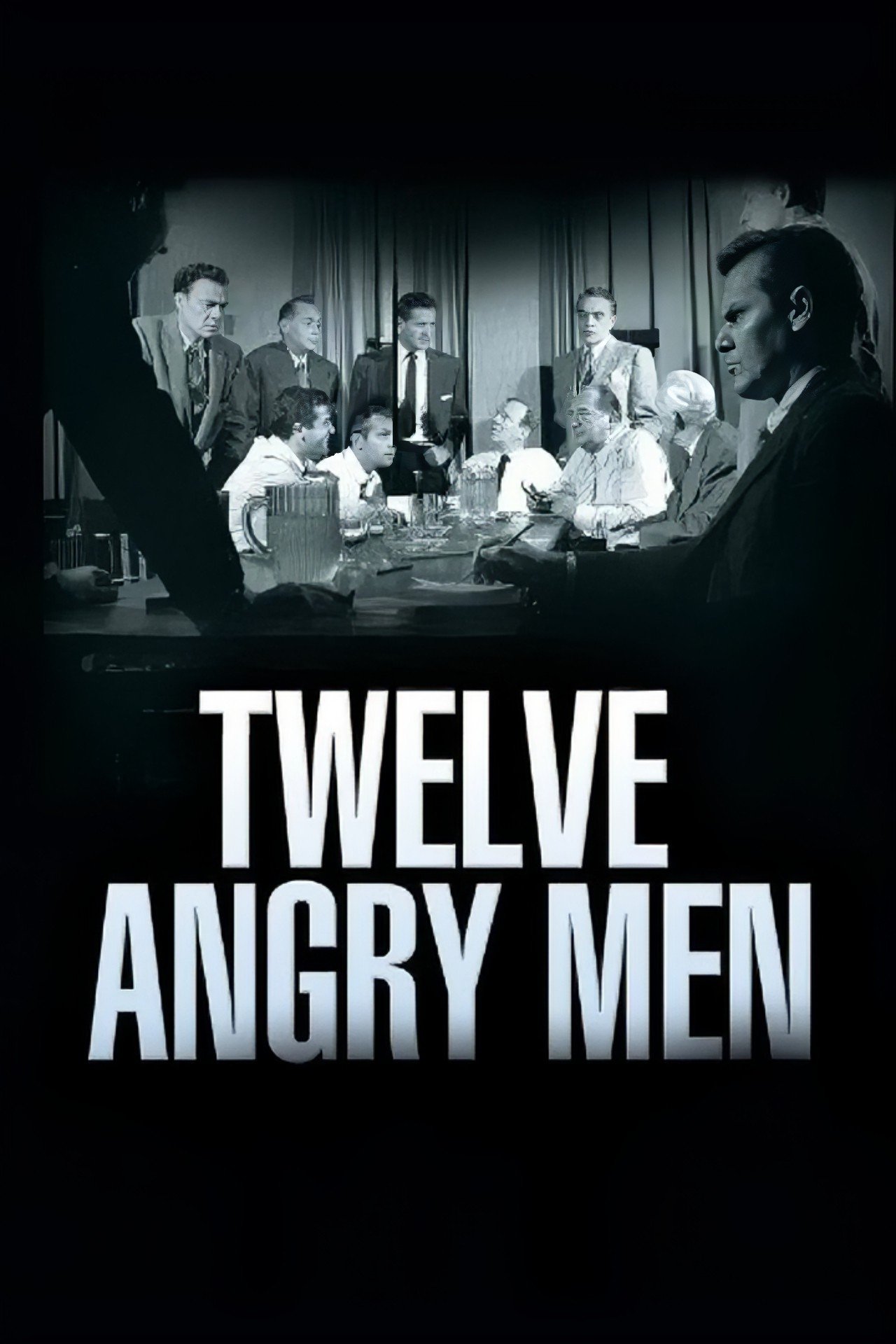
Twelve Angry Men is a 1954 teleplay by Reginald Rose for the Studio One anthology television series. Initially staged as a CBS live production on 20 September 1954, the drama was later rewritten for the stage in 1955 under the same title and again for a feature film, 12 Angry Men (1957). The episode garnered three Emmy Awards for writer Rose, director Franklin Schaffner and Robert Cummings as Best Actor.