Story Structure — 4 Plot Phases
Production Foundations
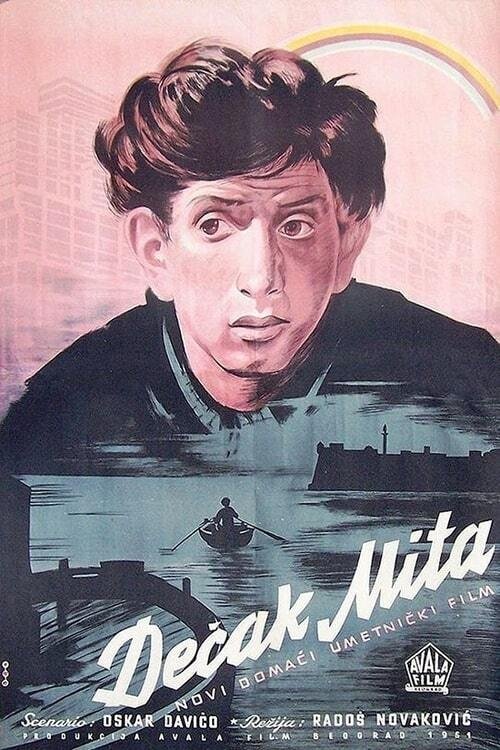
The film is established as a Yugoslav partisan war project. The original Serbo-Croatian script is drafted and director Radoš Novaković takes charge of the creative vision.
Key Events
-
Film Release 1951 — The partisan war film Dečak Mita is officially released to the public.
Location: Yugoslavia
-
Yugoslav Production Setup — Production begins under Yugoslav studio frameworks for the war genre.
Location: Yugoslavia
-
Serbo-Croatian Script Draft — The original screenplay is written in Serbo-Croatian for the partisan narrative.
Location: Script Office
-
Director Radoš Novaković Appointment — Radoš Novaković is assigned to direct the partisan war film.
Location: Production Studio
Casting and Crew Assembly
Principal actors Dragomir Felba, Karlo Bulić, and Ljubiša Jovanović are selected for their roles. The production commits to a black and white cinematographic style.
Key Events
-
Director Radoš Novaković Appointment — Radoš Novaković is assigned to direct the partisan war film.
Location: Production Studio
-
Lead Actor Dragomir Felba Casting — Dragomir Felba is selected as one of the principal actors for the film.
Location: Casting Room
-
Lead Actor Karlo Bulić Casting — Karlo Bulić joins the principal cast to support the partisan storyline.
Location: Casting Room
-
Lead Actor Ljubiša Jovanović Casting — Ljubiša Jovanović is cast as a third principal actor for the production.
Location: Casting Room
-
Black and White Cinematography Decision — The production commits to filming entirely in black and white.
Location: Camera Department
-
Partisan War Genre Definition — The narrative framework is firmly established as a partisan war film.
Location: Production Meeting
Principal Photography
Filming begins on location with the lead cast delivering performances in Serbo-Croatian. War sequences and character interactions are captured in monochrome.
Key Events
-
Partisan War Genre Definition — The narrative framework is firmly established as a partisan war film.
Location: Production Meeting
-
Principal Photography Start — Main filming begins with the principal cast on location.
Location: Yugoslav Locations
-
War Scene Execution — Action sequences depicting partisan warfare are shot in monochrome.
Location: Battlefield Sets
-
Dialogue Recording in Serbo-Croatian — Actors deliver lines in the original Serbo-Croatian language.
Location: Sound Stage
-
Character Development Scenes — Quiet moments focusing on partisan camaraderie and resolve are filmed.
Location: Interior Sets
-
Principal Photography Completion — All scheduled shooting days conclude with the principal cast.
Location: Production Studio
Post-Production and Release
Raw footage is edited, graded, and mixed into a final master. The completed partisan war film premieres theatrically and enters historical archives.
Key Events
-
Principal Photography Completion — All scheduled shooting days conclude with the principal cast.
Location: Production Studio
-
Post-Production Editing — Raw footage is assembled and refined into a coherent narrative.
Location: Editing Suite
-
Black and White Color Grading — Monochrome contrast and tone are finalized for theatrical presentation.
Location: Post-Production Lab
-
Soundtrack and Audio Mixing — Musical scores and dialogue audio are balanced for the final cut.
Location: Audio Studio
-
Final Film Mastering — The complete partisan war film is prepared for distribution.
Location: Mastering Facility
-
Theatrical Premiere Screening — The finished black and white film is shown to audiences in Yugoslavia.
Location: Cinema
-
Historical Archival Preservation — The 1951 partisan war film is cataloged and preserved for future study.
Location: Film Archive
Instead of going to Belgrade, a boy called Mita joins illegal movement. Germans, who occupied Belgrade in the meantime, start to hunt down communists. Many of them are killed, but Mita succeeds to get to the freed land together with a girl who was going to Belgrade with him.