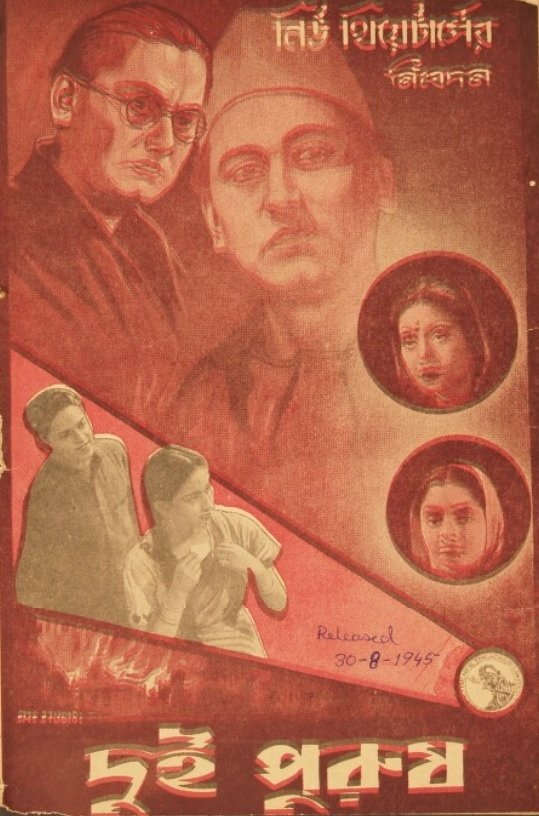
A story of ideological decay and redemption across two generations, driven by love, rebellion, and moral reckoning.
Story Structure — 4 Plot Phases
The Idealist's Struggle
Nutubehari fights the Zamindar for villagers' rights but is imprisoned. Kalyani is forced into marriage, and Nutubehari marries Bimla, founding a village school.
Key Events
Nutu's Social Work — Nutubehari works as an educated social worker fighting for villagers' rights. Location: Village
Nutu vs Zamindar — Nutubehari confronts the wealthy Zamindar over land and people's rights. Location: Village
Nutu's Imprisonment — An enraged Zamindar has Nutu put in jail for his activism. Location: Jail
Kalyani's Marriage — Kalyani is married off to someone else while Nutu is in jail. Characters: KalyaniLocation: Home
Nutu Marries Bimla — Nutubehari marries Bimla and begins a new life in the village. Location: Village
Exile and Return
Kalyani's husband dies, leading to her exile with infant Mamta. She returns to the village, shelters with Nutubehari, and takes over school leadership.
Key Events
Nutu Marries Bimla — Nutubehari marries Bimla and begins a new life in the village. Location: Village
School Founded — Nutubehari and Bimla start a school in the village. Location: Village
Arun's Birth — Nutubehari and Bimla have a son called Arun. Location: Home
Kalyani's Widowhood — Kalyani's husband dies, leaving her vulnerable. Characters: KalyaniLocation: Home
Kalyani Exiled — Kalyani and her infant daughter Mamta are thrown out by her in-laws. Characters: KalyaniLocation: Home
The Corrupt Ascension
Years pass as Nutubehari becomes a wealthy lawyer and politician, abandoning his original ideals. Arun grows up disillusioned by his father's moral compromise.
Key Events
Kalyani Exiled — Kalyani and her infant daughter Mamta are thrown out by her in-laws. Characters: KalyaniLocation: Home
Kalyani Returns — Kalyani returns to the village and takes shelter with Nutubehari. Characters: KalyaniLocation: Village
School Leadership — Nutubehari lets Kalyani run the school as she integrates into the community. Characters: KalyaniLocation: School
Nutu's Legal Career — Years pass, and Nutubehari becomes a lawyer fighting a court case against the Zamindar. Location: Court
Political Rise — Nutubehari joins politics and amasses great wealth. Location: City
Ideological Shift — Nutubehari has let go of his original social ideals for personal gain. Location: Home
Generational Reckoning
Arun rebels against an arranged marriage to pursue his love for Mamta. This defiance triggers Nutubehari's moral awakening and final reconciliation with his past.
Key Events
Ideological Shift — Nutubehari has let go of his original social ideals for personal gain. Location: Home
Arun's Disillusionment — Arun is dismayed at the changes in his father's character and values. Location: Home
Arranged Marriage — Arun faces an arranged marriage that conflicts with his personal desires. Location: Home
Arun Loves Mamta — Arun rebels against the arrangement as he now loves Kalyani's daughter Mamta. Location: Village
Nutu's Realization — Nutubehari sees the error of his ways and reflects on his past ideals. Location: Home
Generational Bridge — The younger generation's love story prompts Nutubehari to reconcile with his former self. Characters: KalyaniLocation: School
Final Reconciliation — Nutubehari fully reconciles with his former self, aligning with his son's values. Characters: KalyaniLocation: Village
Story Breakdown
Social Activism Arc — Nutubehari's early life as a principled social worker challenging systemic oppression.
Fighting the Zamindar — Nutubehari organizes villagers and confronts the wealthy landlord over rights.
Imprisonment & Sacrifice — The Zamindar retaliates by jailing Nutubehari, severing his connection with Kalyani.
Romantic Entanglements — Love stories that span decades, influencing character choices and generational dynamics.
Nutu and Kalyani — A youthful romance interrupted by imprisonment and forced marriage.
Arun and Mamta — A second-generation love that defies tradition and heals past wounds.
Family Dynamics — Marriages, parenthood, and cohabitation that shape the household structure.
Nutu and Bimla — A pragmatic marriage that establishes a stable home and raises Arun.
Kalyani and Mamta — A maternal bond that survives exile and drives Kalyani's resilience.
Ideological Decline — Nutubehari's transformation from an idealist to a compromised elite.
Political Ambition — Nutubehari enters politics and law, gaining wealth and status.
Loss of Principles — He abandons his original mission, prioritizing personal success over community welfare.
Generational Conflict — The clash between Arun's moral clarity and his father's compromised values.
Arun's Rebellion — Arun rejects his father's arranged marriage plans and societal expectations.
Moral Disillusionment — Arun witnesses his father's corruption and distances himself emotionally.
Redemptive Resolution — The younger generation's actions force the elder to confront his past and restore integrity.
Father's Realization — Nutubehari recognizes his moral failure and remembers his original ideals.
Bridging the Gap — The family reconciles, aligning past principles with future hopes.
One of the early films of Chhabi Biswas featuring him as a leading man, before he came to be associated with the dominating patriarch roles that have become iconic in Bengali cinema, the film is a tale of the love, relationships and ideals of two generations. Nutubihari is an idealist who has given up his love for Kalyani for the sake of his beliefs. He marries Bimala and becomes a lawyer, fighting for the rights of the poor against the feudal lords. Meanwhile, Kalyani comes to ask refuge after she becomes a widow and is inexplicably accepted by Bimala with a lot of warmth. As the years pass Kalyani's daughter Mamata and Nutu's oldest son Arun fall in love and wish to get married. However, the new-found fame and fortune turns his head and Nutu begins to resemble all the ideals and vices that he had always despised. On the other hand in an ironical turn of events, Arun comes to occupy the position once held by his father, highlighting the generational conflict of ideals.