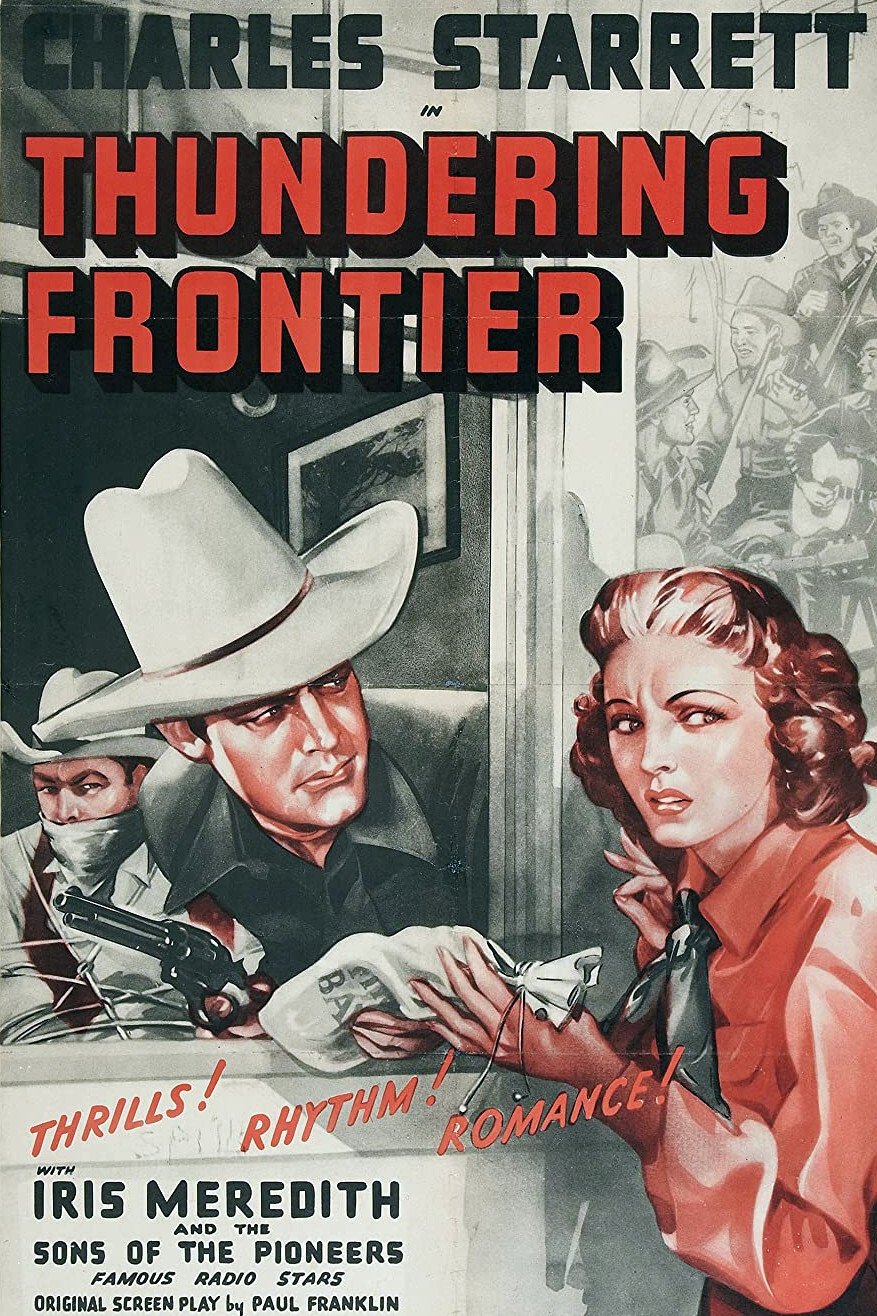
Thundering Frontier (1940) — AI Story Visualization
Plot Analysis Summary
A 1940 American Western film directed by D. Ross Lederman and starring Charles Starrett, presented in black and white.
Story Structure — 4 Plot Phases
Frontier Introduction
The film is introduced as a Western genre piece set in the American frontier. The narrative framework establishes the historical and stylistic context of the era.
Key Events
Western Genre Introduction — Establishes the film as a Western frontier story Location: Narrative Setting
Director Credit — Credits D. Ross Lederman as the director Location: Production Studio
Crew and Cast Overview
Production details highlight director D. Ross Lederman and lead actor Charles Starrett. The segment focuses on the creative team behind the film.
Key Events
Lead Actor Casting — Introduces Charles Starrett as the lead actor Location: Casting Office
Production and Format
Technical aspects are detailed, including the black and white cinematography and English language script. The segment outlines the filmmaking process.
Key Events
Black and White Filming — Notes the monochrome cinematography style Location: Film Set
Release and Legacy
The film's 1940 release is contextualized within the broader landscape of English-language cinema. The segment concludes with historical placement and archival notes.
Key Events
1940 Theatrical Release — Marks the film's public debut and historical context Location: Cinema
Story Breakdown
Genre Classification — Defines the film's placement within the Western genre and frontier storytelling tradition.
Western Setting — Establishes the frontier backdrop and thematic scope.
Frontier Themes — Explores classic Western motifs and narrative conventions.
Directorial Vision — Highlights the creative leadership and stylistic direction of the production.
D. Ross Lederman — Credits the director responsible for the film's execution.
Creative Direction — Outlines the artistic choices guiding the film's tone.
Lead Performance — Focuses on the central actor and their role in the production.
Charles Starrett — Identifies the lead actor driving the narrative.
Starring Role — Details the primary character portrayal and screen presence.
Cinematography Style — Examines the visual format and technical presentation of the film.
Black and White — Notes the monochrome visual aesthetic and period style.
Visual Format — Describes the framing and photographic techniques used.
Production Origin — Traces the geographical and industrial background of the film.
United States — Identifies the country of origin and production base.
American Cinema — Places the film within the broader US film industry context.
Release Timeline — Documents the chronological debut and historical placement of the film.
1940 Debut — Marks the official theatrical release year.
Historical Context — Connects the release to the cinematic landscape of the era.
Comparative Analysis — References contemporary benchmarks and critical framing of the period.
Abe Lincoln Reference — Compares the film's release to other notable 1940 titles.
Yearly Benchmarks — Evaluates the film against industry standards of the time.
Archival Status — Notes the film's preservation and cataloging within cinematic history.
English Language — Confirms the original script and dialogue language.
Legacy Status — Tracks the film's documentation and historical record.
After a handful of non-formula westerns, Charles Starrett returned to the mixture as before in Thundering Frontier. Starrett plays Jim Fillmore, kind to old ladies, small animals and heroine Norma Belknap (Iris Meredith). In contrast, the villains are kind to no one, least of all struggling building contractor Square Deal Scottie (Alex Callam), whose projects are continually targeted for demolition and his payroll is forever being stolen at gunpoint. A good 25 percent of the film's running time is given over to Bob Nolan and the Sons of the Pioneers, whose C&W croonings are pleasant but a bit much. One of the film's few surprises is that Starrett's perennial screen sparring partner Dick Curtis isn't one of the bad guys.