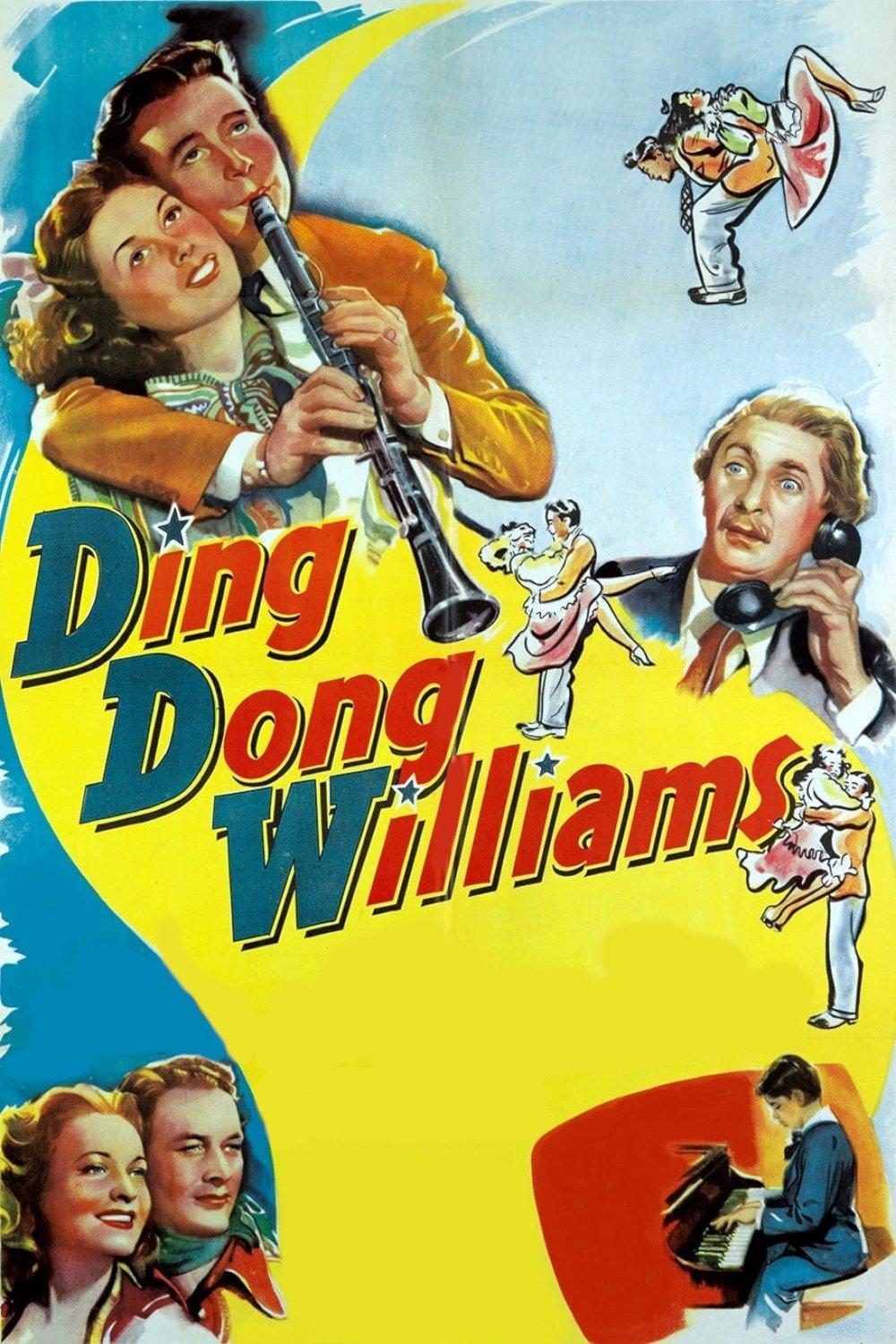
Ding Dong Williams (1946) character relationship network mapped with AI analysis. Explore the connections, alliances, and conflicts between characters.
Characters
Ding Dong Williams
(played by Glen Vernon) — protagonist
Ding Dong is a jive clarinetist engaged by Sunrise Studios to contribute music to a film about a heartbroken composer. He cannot read or write music and plays by improvising according to his feelings....
Miss Angela Jones
(played by Marcy McGuire) — supporting
Angela is the young secretary in Sunrise Studios' music department and helps arrange for Ding Dong to work on the film. She tries several ways to draw sad, soulful music from him, including secretly h...
Hugo Meyerheld
(played by Felix Bressart) — supporting
Hugo is the head of Sunrise Studios' music department. He and his secretary Angela engage Ding Dong Williams to contribute music to the studio's film. Later, Hugo conducts pianist Richard Korbel and t...
Vanessa Page
(played by Anne Jeffreys) — supporting
Mr. Saul Dana
(played by William B. Davidson) — supporting
Steve Moore
(played by James Warren) — supporting
Zang
(played by Tommy Noonan) — supporting
Director Kenmore
(played by Jason Robards Sr.) — supporting
Bob - Sons of the Pioneers Leader
(played by Bob Nolan) — supporting
Laura Cooper
(played by Ruth Lee) — supporting
Zing
(played by Cliff Nazarro) — supporting
Introducing 11-year Old Concert Pianist
(played by Richard Korbel) — minor
Richard Korbel is the young concert pianist performing Chopin's Fantaisie Impromptu with the studio orchestra. Hugo Meyerhold conducts the performance. As the orchestra plays, Ding Dong Williams, posi...
Story Analysis
A jive clarinetist's spontaneous improvisation ultimately solves a Hollywood film's musical dilemma.
Plot Progression
The Improvisation Dilemma
— Ding Dong is hired for his jive clarinet skills but struggles with the studio's demand for structured, soulful music. Angela attempts various schemes to inspire him, all of which fail.
Hollywood Disillusionment
— After facing criticism from the studio boss, Ding Dong becomes disenchanted with Hollywood life. He wanders to the rear of the recording stage, feeling disconnected from the classical production.
The Blue Counterplay
— While watching a Chopin performance, Ding Dong spontaneously plays a blue counterpoint. Angela recognizes its potential and quickly sets up a microphone to capture the unexpected melody.
Harmonious Resolution
— The studio boss approves the counterpoint as exactly what the film needs. The conflict between improvisation and classical structure is resolved, leading to a happy ending.
Directed by William Berke
Ding Dong Williams (1946) · 7.5/10 · comedy, music, romance