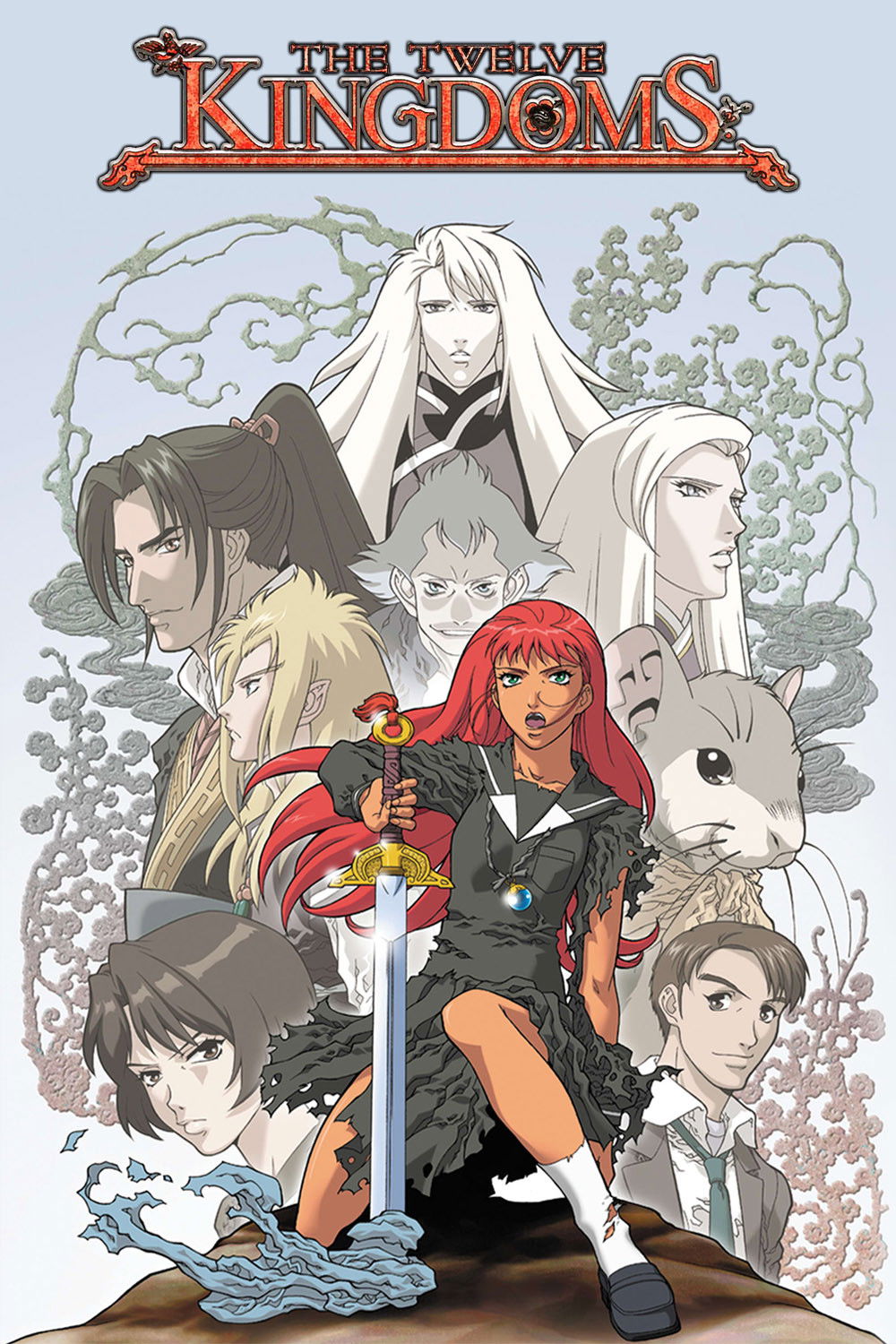
The Twelve Kingdoms (2002) interactive character relationship network and AI-powered story timeline. Explore the connections, alliances, and conflicts between characters across the narrative arc.
The full narrative moves from displacement and survival to questions of legitimate rule, political responsibility, and rebellion across several kingdoms.
"In Season 2, Keiki trains with Taiki, apologizes for being unable to help him, and promises to congratulate him when he chooses a ruler."
"In Season 3, Rakushun and Suzu are sent to the same inn as representatives during an exchange involving their respective groups."
"In Season 2's reminiscence chapter, Rokuta explains the structure of the Twelve Kingdoms and gives special attention to the history of Tai and the my...
Directed by Tsuneo Kobayashi
Rating: 7.9/10 (54 votes)
A displaced student is pulled into the Twelve Kingdoms and survives through fear, distrust, and guidance from Rakushun. The season culminates in recognition of royal responsibility and the tragic collapse of corrupt authority.
Taiki's childhood and training reveal the difficulty of choosing a ruler and understanding kirin duty. Keiki's support and later departure leave Taiki's future unresolved.
Suzu's arrival exposes the cruelty faced by outsiders who cannot communicate or claim protection. Her movement toward political resistance parallels the wider struggle against abusive local power.
Political suspicion, rebellion, and corruption force the ruler of Kei to act beyond the palace. The conflict ends when her identity is revealed and lawful authority is restored.
A regional rebellion tests the limits of loyalty, popular support, and royal legitimacy. The conflict narrows toward a final choice between surrender and a personal challenge for the throne.
Plot analysis generated from content on Wikipedia, licensed under CC BY-SA 4.0.
Related entry on Wikidata (Q107349377), public domain (CC0).