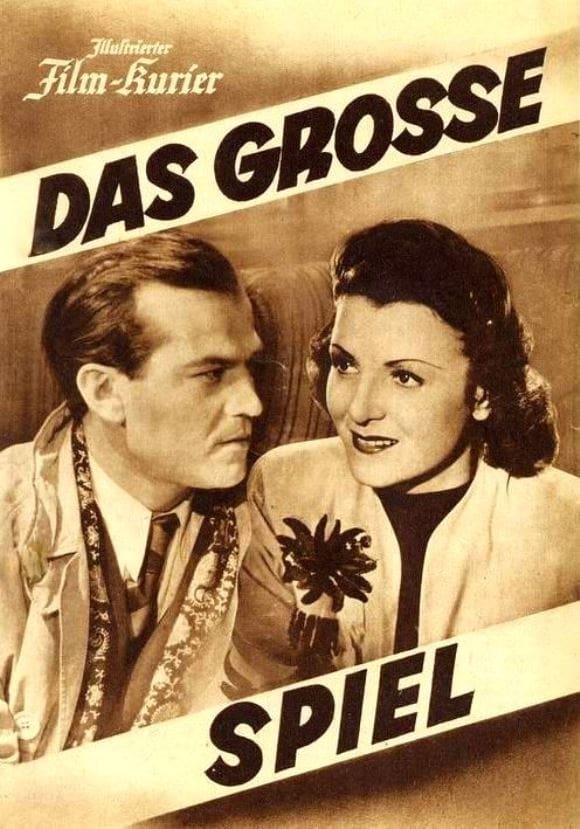
A wartime sports film that doubles as a covert protection mission for German footballers.
Story Structure — 4 Plot Phases
Frontline Mobilization
The film project is introduced alongside the active Second World War setting. National coach Sepp Herberger initiates a strategic recall of German international footballers from combat zones.
Key Events
Film Introduction — Introduction of the 1942 German sports film project.
Location: German Film Studio
Director Appointment — Stemmle takes charge of directing the sports film.
Location: Production Office
Star Casting — Three lead actors are selected for the film.
Location: Casting Room
Historical Context Setup — Footballers are actively engaged in Second World War combat.
Location: WWII Frontlines
Herberger's Strategic Decision — Coach Herberger formulates a plan to recall players.
Location: National Coaching Headquarters
Dual Purpose Revelation
The official narrative of improving film quality contrasts with the covert mission of protecting players from war horrors. The production team begins assembling cast and crew.
Key Events
Herberger's Strategic Decision — Coach Herberger formulates a plan to recall players.
Location: National Coaching Headquarters
Recall Order Issued — Herberger officially arranges the players' return from war.
Location: Military Command Center
Overt Production Goal — Public justification focuses on improving film quality.
Location: Film Set
Covert Protection Mission — True motive revealed: shielding players from war horrors.
Location: Safe Housing Facility
War Horror Avoidance — Players are successfully removed from active combat zones.
Location: Rear Base Camp
Agfacolor Sequences Filmed — Production utilizes advanced Agfacolor technology for key scenes.
Location: Color Studio
Technical & Artistic Execution
Art directors Gerbert Hochreiter and Walter Schlick design sets while director Robert A. Stemmle oversees Agfacolor sequences. The footballers transition from soldiers to actors.
Key Events
Agfacolor Sequences Filmed — Production utilizes advanced Agfacolor technology for key scenes.
Location: Color Studio
Art Direction Planning — Art directors begin conceptualizing the film's visual sets.
Location: Design Workshop
Set Design Execution — Physical sets are constructed based on design plans.
Location: Construction Yard
Technical Innovation Showcase — Agfacolor sequences are processed and reviewed.
Location: Film Laboratory
Production Team Collaboration — Director and art directors align on final production details.
Location: Production Meeting
Footballers Assemble — Recalled players gather for filming and preparation.
Location: Training Grounds
Historical Consolidation
The dual nature of the production is fully realized. The film wraps production, serving as both a sports feature and a documented act of wartime protection.
Key Events
Footballers Assemble — Recalled players gather for filming and preparation.
Location: Training Grounds
Dual Purpose Realization — The dual nature of the project (art vs protection) becomes clear.
Location: Production Office
Cinematic Legacy Established — The film's production nears completion with high standards.
Location: Film Studio
Historical Documentation — The film serves as a record of wartime sports culture.
Location: Archival Room
Wartime Sports Culture — The movie reflects the intersection of sports and national life.
Location: Public Stadium
Film Release Context — The film is prepared for public exhibition during the war.
Location: Cinema Theater
Production Completion — All filming and set construction phases are finalized.
Location: Studio Lot
Narrative Closure — The film's true protective mission is cemented in history.
Location: Historical Archive
Story Breakdown
Production Leadership — Director Robert A. Stemmle orchestrates the entire film project.
Directorial Vision — Stemmle establishes the creative direction for the sports narrative.
Casting Strategy — Selection of René Deltgen, Gustav Knuth, and Heinz Engelmann as leads.
Athletic Recruitment — Sepp Herberger mobilizes international footballers from active combat.
Strategic Recall — Herberger arranges official paperwork to remove players from war zones.
Frontline Extraction — Players are physically relocated from Second World War battlefields.
Covert Protection — The true mission shields athletes from wartime dangers.
Safety Relocation — Footballers are moved to secure rear locations away from combat.
War Horror Avoidance — The operation successfully prevents casualties among the squad.
Visual Innovation — Advanced cinematic techniques elevate the film's production value.
Agfacolor Implementation — Selective use of Agfacolor technology for key sequences.
Technical Processing — Laboratory development ensures high-quality color output.
Artistic Design — Art directors Gerbert Hochreiter and Walter Schlick build the world.
Set Conceptualization — Initial blueprints and architectural planning for film locations.
Physical Construction — On-site building and detailing of studio environments.
Historical Legacy — The film documents a unique intersection of sports and wartime survival.
Cultural Documentation — Records how sports functioned during the Second World War era.
Protective Legacy — Establishes the film's role in saving players from combat fatalities.
A player on a soccer team, where everyone matches together just perfectly, has fallen out of a championship tournament due to illness; which leads to a big problem: who would be the perfect man to replace him? Werner Fehling appears to be the perfect replacement for the sick man. The problem is, he's a bitter rival of the goalkeeper, Jupp Jaeger. Both men love the same girl, Grete Gabler. Grete is the daughter of a senior member of the sports club, which is why she feels doubly under pressure not to do anything to jeopardize the success of the team.