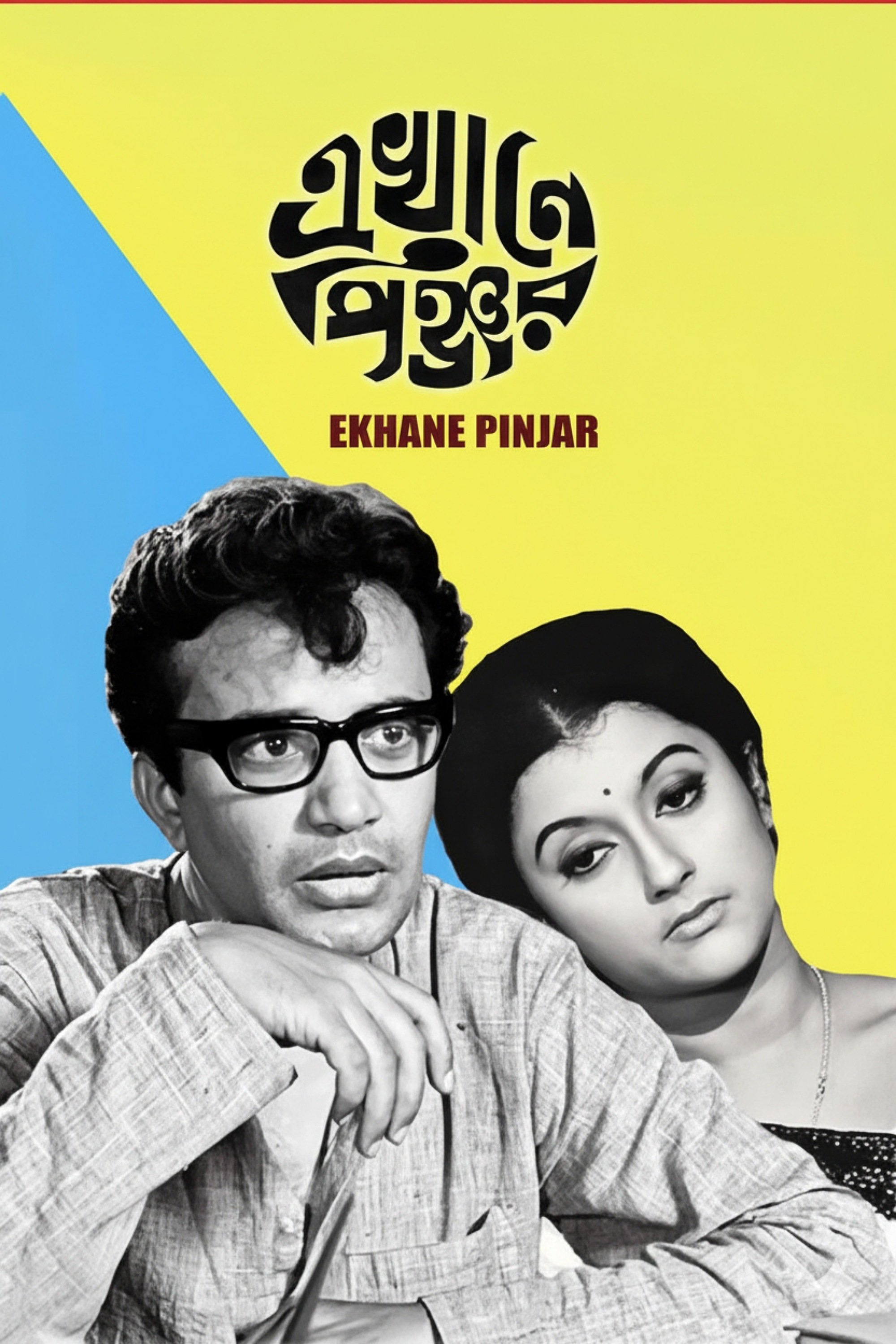
Story Structure — 4 Plot Phases
Literary Foundations
The narrative originates from Prafulla Roy's novel, establishing the source material for adaptation.
Key Events
-
Literary Source Identification — Establishment of Prafulla Roy's novel as the foundational text.
Location: Literary Archive
-
Director Assignment — Jatuk takes on the directorial role for the adaptation.
Location: Production Office
Production Assembly
Jatuk directs the project while Bupen Hazarika handles the score. Calcutta Arts Movis manages studio operations.
Key Events
-
Casting Announcement — Four lead actors are officially attached to the project.
Location: Casting Studio
-
Musical Composition — Bupen Hazarika composes and directs the film's music.
Location: Recording Studio
-
Studio Production — Calcutta Arts Movis oversees filming and post-production.
Location: Film Studio
Cast Integration
Uttam Kumar, Aparna Sen, Dilip Mukherjee, and Gangapada Bose are brought together as the principal ensemble.
Key Events
-
Studio Production — Calcutta Arts Movis oversees filming and post-production.
Location: Film Studio
-
Theatrical Release — The film premieres in 1971 under the studio banner.
Location: Cinema Theaters
-
Audience Reception — The movie gains recognition as a popular Bengali film.
Location: Public Venues
Media Expansion
Following theatrical success, a television channel adapts the story into a one-month serial broadcast.
Key Events
-
Audience Reception — The movie gains recognition as a popular Bengali film.
Location: Public Venues
-
Television Adaptation — A TV serial version is produced for network distribution.
Location: TV Studio
-
Broadcast Cycle — The serial airs for a dedicated one-month programming slot.
Location: Television Network
-
Cultural Legacy — The franchise solidifies its place in Bengali media history.
Location: Cultural Archives
Amal Basu, who decides to visit his hometown, meets Lila on the train. When he goes to his friend Nabendu's home, he learns that Lila is his sister and a smuggler.