Story Structure — 5 Plot Phases
A Mystical Adaptation
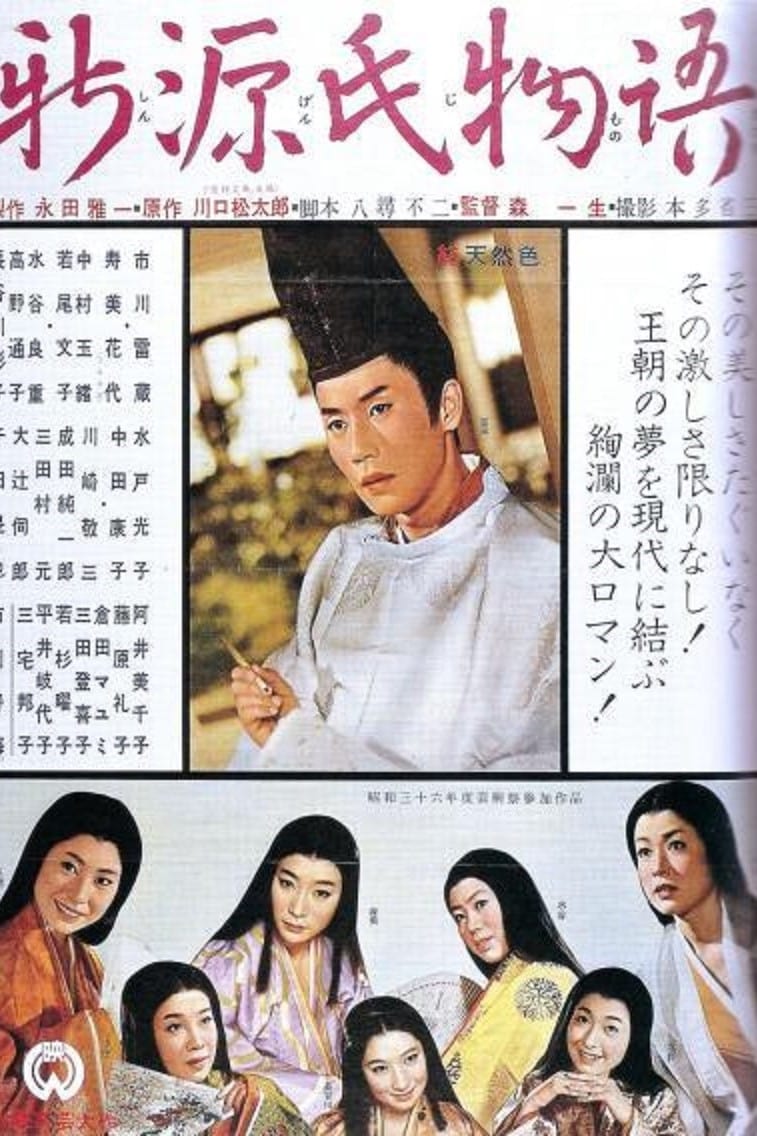
The film presents a version of Lady Murasaki's seminal novel directed by Kazuo Mori. Its approach is described as more mystical than the 1951 adaptation.
Key Events
-
Murasaki Novel Adaptation — The film adapts Lady Murasaki's seminal novel.
Location: Unspecified narrative setting
-
Mori Directs the Version — Kazuo Mori directs this version of the novel.
Location: Unspecified narrative setting
-
Prince Hikaru Appears — Raizo Ichikawa plays Prince Hikaru, the central figure.
Location: Unspecified narrative setting
-
Mystical Tone Emerges — This version is described as more mystical than the 1951 film.
Location: Unspecified narrative setting
-
Women Become Central — The film emphasizes the devastating effect of Hikaru on the women around him.
Location: Unspecified narrative setting
The Prince And His Effects
Although Hikaru remains central, the film gives greater attention to the women affected by him. Their seductions and attachments become the main source of emotional pressure.
Key Events
-
Women Become Central — The film emphasizes the devastating effect of Hikaru on the women around him.
Location: Unspecified narrative setting
-
Fujitsubo Stands Apart — Fujitsubo / Kiritsubo is identified as Hikaru's mother and Lady Fujitsubo. Characters: Fujitsubo / Kiritsubo
Location: Unspecified narrative setting
-
Women Pursue Hikaru — The women, except Fujitsubo, are described as seducing Hikaru.
Location: Unspecified narrative setting
-
Desire Shapes the Story — The narrative shifts attention from the prince to the consequences of desire.
Location: Unspecified narrative setting
-
First Tragic Consequences — The loved women are said to meet devastating outcomes.
Location: Unspecified narrative setting
Women In Ruin
The women's relationships with Hikaru lead to devastating outcomes. Some die in childbirth, while others abandon their daughters and become nuns.
Key Events
-
First Tragic Consequences — The loved women are said to meet devastating outcomes.
Location: Unspecified narrative setting
-
Deaths In Childbirth — Some of the women die in childbirth.
Location: Unspecified narrative setting
-
Mothers Lose Their Daughters — Other women are forced to abandon their daughters.
Location: Unspecified narrative setting
-
Retreat Into Nunhood — Some women are forced to become nuns after their losses.
Location: Unspecified narrative setting
-
Love Produces Isolation — The women's attachments to Hikaru lead toward separation and isolation.
Location: Unspecified narrative setting
The Last Remaining Bond
After the other women suffer loss or separation, only Murasaki remains. The emotional focus narrows toward the final unresolved bond.
Key Events
-
Love Produces Isolation — The women's attachments to Hikaru lead toward separation and isolation.
Location: Unspecified narrative setting
-
Murasaki Remains — Only Murasaki remains with Hikaru after the other outcomes.
Location: Unspecified narrative setting
-
The Final Companion — The surviving relationship becomes the emotional focus near the ending.
Location: Unspecified narrative setting
-
Hikaru Rides Away — Hikaru rides away into the fields.
Location: Fields
A Farewell In The Fields
Hikaru rides into the fields and asks Murasaki to wait for him. The ending remains open, inviting reflection rather than closure.
Key Events
-
Hikaru Rides Away — Hikaru rides away into the fields.
Location: Fields
-
A Request To Wait — Before leaving, Hikaru asks Murasaki to wait for him.
Location: Fields
-
Open-Ended Separation — The departure leaves the remaining relationship unresolved.
Location: Fields
-
Multiple Film Interpretations — The reference places this adaptation among many versions of the same story.
Location: Unspecified narrative setting
-
Meaning Remains Reflective — The adaptation is presented as a text through which viewers examine themselves.
Location: Unspecified narrative setting