Story Structure — 4 Plot Phases
Jewish Origins & Conversion
Fritz Shimon Haber navigates his Jewish heritage and converts to Lutheranism to gain German acceptance. His intense career ambition begins to shape his personal and professional trajectory.
Key Events
-
Jewish Heritage & Identity — Born and raised Jewish, establishing his initial cultural background. Characters: Fritz Shimon Haber
Location: Germany
-
Conversion to Lutheranism — Converts to Lutheranism driven by a longing for German acceptance. Characters: Fritz Shimon Haber
Location: Church
Scientific Breakthrough & Nobel
He develops industrial nitrogen fixation, leading to synthetic fertilizers and explosives. The discovery earns him the 1918 Nobel Prize and establishes his scientific legacy.
Key Events
-
Intense Career Ambition — Pursues scientific advancement with relentless professional drive. Characters: Fritz Shimon Haber
Location: Laboratory
-
Nitrogen Fixation Research — Develops industrial process to fix atmospheric nitrogen into ammonia. Characters: Fritz Shimon Haber
Location: Research Facility
-
Dual Application Discovery — Realizes ammonia can be used for both synthetic fertilizers and explosives. Characters: Fritz Shimon Haber
Location: Lab
-
Fertilizer Production Scale — Industrializes nitrogen fixation for mass agricultural use. Characters: Fritz Shimon Haber
Location: Factory
-
Explosives Manufacturing Link — Connects chemical research to wartime military production. Characters: Fritz Shimon Haber
Location: War Factory
Military Draft & Ethical Crisis
The German government drafts him to bypass Hague bans and develop chlorine gas. Domestic tensions rise as his wife Clara sacrifices her career and disapproves of his weaponization of science.
Key Events
-
Dual Application Discovery — Realizes ammonia can be used for both synthetic fertilizers and explosives. Characters: Fritz Shimon Haber
Location: Lab
-
Nobel Prize Recognition — Wins the 1918 Nobel Prize for his chemical breakthrough. Characters: Fritz Shimon Haber
Location: Award Ceremony
-
Agricultural Impact Assessment — Synthetic fertilizers initially boost short-term food productivity. Characters: Fritz Shimon Haber
Location: Field
-
Environmental Consequence Warning — Long-term soil depletion and corporate agribusiness issues emerge. Characters: Fritz Shimon Haber
Location: Office
Tragedy & Eastern Front
Clara's suicide marks the emotional breaking point. Despite personal loss, Haber immediately departs to supervise chemical warfare deployment on the Eastern Front.
Key Events
-
Environmental Consequence Warning — Long-term soil depletion and corporate agribusiness issues emerge. Characters: Fritz Shimon Haber
Location: Office
-
German Government Draft — Conscripted by the state to develop chemical warfare agents. Characters: Fritz Shimon Haber
Location: Military HQ
-
Chlorine Gas Synthesis — Produces banned chemical weapons despite Hague Convention restrictions. Characters: Fritz Shimon Haber
Location: Chemical Plant
-
Clara's Career Sacrifice — His wife Clara sacrifices her own promising chemistry career to support him. Characters: Fritz Shimon Haber
Location: Home
-
Marital Oppression — His domineering personality creates an oppressive domestic environment. Characters: Fritz Shimon Haber
Location: Home
-
Ethical Disapproval — Clara disapproves of using science to engineer horrific soldier deaths. Characters: Fritz Shimon Haber
Location: Study
-
Clara's Suicide — Clara takes her own life due to moral and personal despair. Characters: Fritz Shimon Haber
Location: Home
-
Immediate Departure — Leaves the day after the suicide to oversee chemical warfare deployment. Characters: Fritz Shimon Haber
Location: Train Station
-
Eastern Front Supervision — Directs the introduction of chemical warfare on the Eastern Front. Characters: Fritz Shimon Haber
Location: Battlefield
-
Ypres Gas Deployment — Oversees early chemical attacks that violate international treaties. Characters: Fritz Shimon Haber
Location: Ypres
-
Scientific Legacy Debate — His dual legacy highlights the moral complexity of scientific progress. Characters: Fritz Shimon Haber
Location: Historical Archive
-
Personal Tragedy Aftermath — Continues professional duties despite profound personal loss. Characters: Fritz Shimon Haber
Location: Home
-
Historical Moral Reflection — The film concludes by examining the ethical burden on scientists. Characters: Fritz Shimon Haber
Location: Narrative Frame
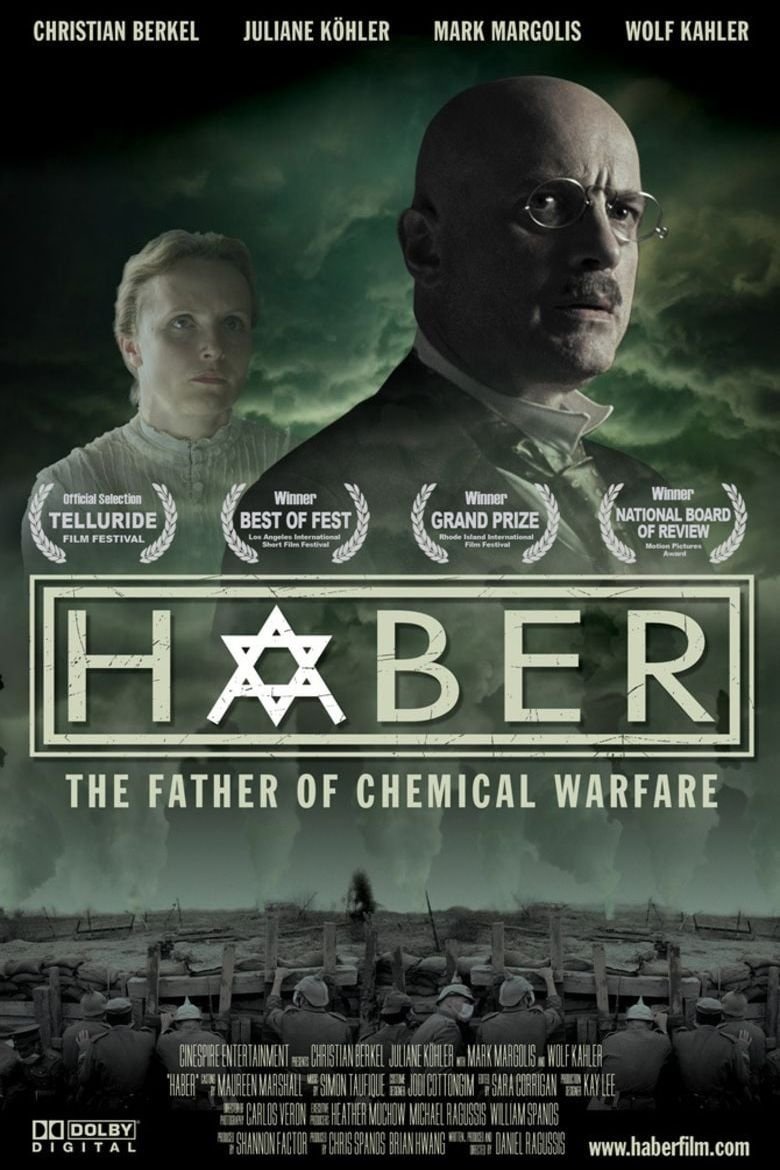
At the brink of World War I, Fritz Shimon Haber was Germany's greatest chemist. Haber's Nobel prize-winning synthetic fertilizers saved world's population from mass starvation. But as World War I broke out killing millions of German soldiers, the desperate German forces asks Shimon Haber to provide the army with new kind of weapon. Haber has already sacrificed his and his family's Jewish identity in order to become a respectable German citizen. With his decision to invent such a weapon, Haber was the first scientist in human history to unleash a weapon of mass destruction. Later he paid the ultimate price for his ambition as his wife Clara committed suicide and his invention was used for murdering millions of Jewish people during World War II.