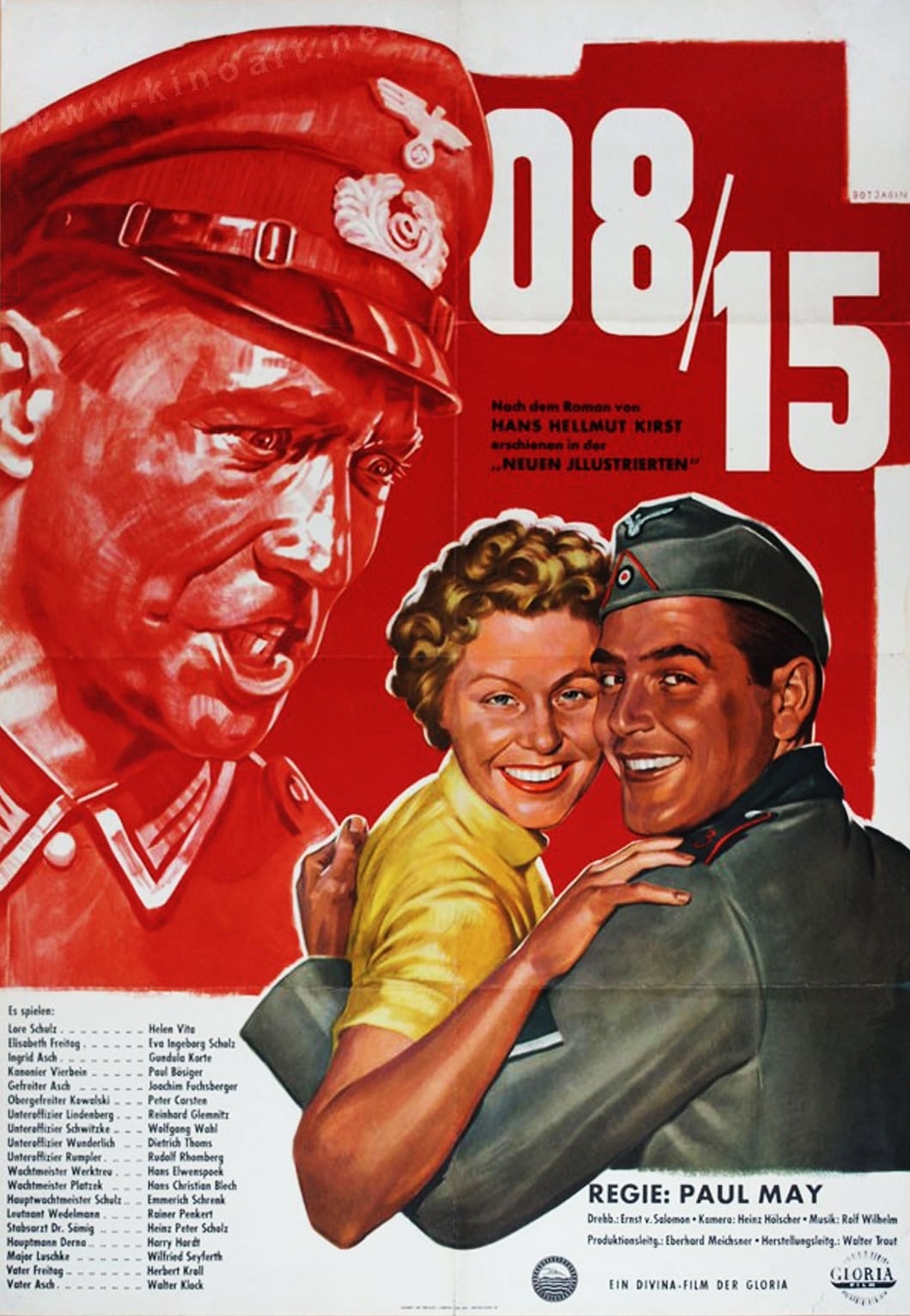
Lindenberg reports Asch for insubordination under NCO pressure, creating a direct professional conflict that Asch must navigate.
Hauptwachtmeister Schulz → Major Luschke
(Conflict Subordinate Target) — Corrupt NCO faces disciplinary consequences from battalion command.
Schulz relays complaints up the chain of command, but Luschke ultimately threatens him with demotion to silence the reports.
Gefreiter Asch → Major Luschke
(Alliance Benefactor) — Protagonist finds resolution and support from higher command.
Major Luschke intervenes in the escalating crisis, forces reporting officers to withdraw complaints, and ultimately grants Asch's promotion.
Gefreiter Asch → Hauptwachtmeister Schulz
(Conflict Arch Enemy) — Central antagonistic relationship driving the film's primary conflict.
Schulz systematically harasses soldiers, prompting Asch to blackmail him and fire shots into his office, escalating their hostility.
Story Analysis
A soldier defies corrupt NCO leadership through strategic resistance, forcing higher command to intervene and resolve systemic abuse.
Plot Progression
Systematic Oppression
— The film opens in a 1939 German artillery barracks where corrupt NCOs systematically harass enlisted men. Gefreiter Asch witnesses the abuse and decides the harassment must end.
Calculated Defiance
— Asch begins strategically compromising his superiors to protect his comrades from unfair treatment. He navigates multiple reports and confrontations while building leverage against the NCO leadership.
Escalating Crisis
— Tensions peak as Asch blackmails Schulz and fires shots into his office, forcing the chain of command to intervene. A medical diagnosis and a gun threat push the situation to a breaking point.
Command Intervention
— Major Luschke takes direct control, threatening demotion to silence all complaints and granting Asch his promotion. The internal conflict resolves as the battalion prepares for the outbreak of war.