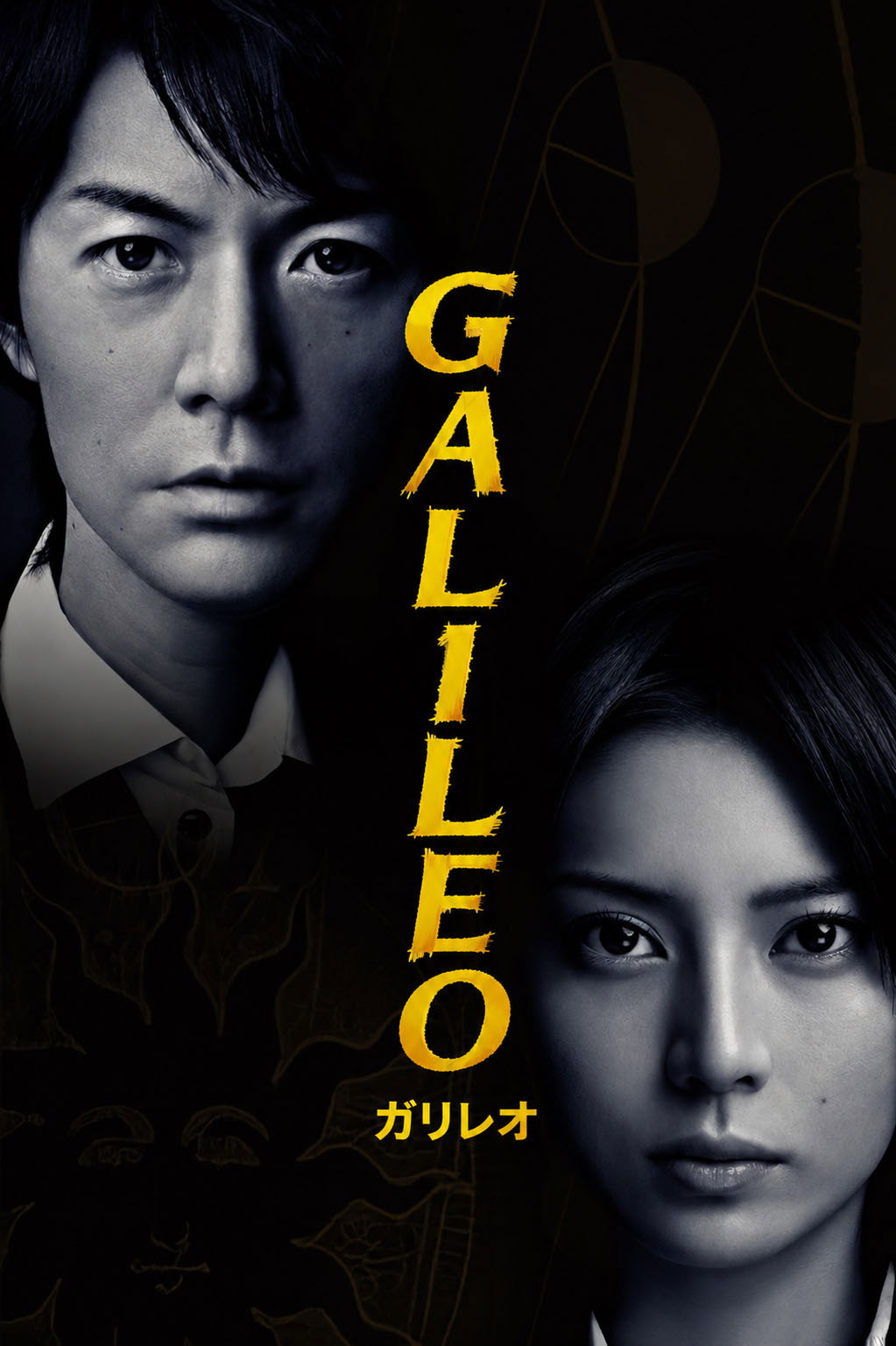
Galileo (2007) interactive character relationship network and AI-powered story timeline. Explore the connections, alliances, and conflicts between characters across the narrative arc.
Across two seasons, Manabu Yukawa investigates deaths and threats that appear supernatural or impossible. The overarching structure repeatedly moves from extraordinary claims to scientific examination, while the later cases make Yukawa himself the target of an intellectual challenge.
Directed by Mizuki Nishisaka
Rating: 8.2/10 (42 votes)
The first season begins with apparently impossible deaths and unusual physical evidence. Yukawa enters the investigations as a scientific problem solver, turning supernatural-looking clues into questions that can be tested.
Cases involving necrosis, a sealed hotel room, and ghost fire deepen the tension. The recurring narrative pattern is the collision between extraordinary claims and material evidence.
Impossible temporal connections, remote warnings, and the Death Mask case bring increasingly disturbing implications. The season culminates in Yukawa confronting his former teacher while a police investigator faces mortal danger.
The second season resumes the consultation structure with cases involving a pendulum, a curse, and carbon monoxide poisoning. Yukawa continues to test apparently paranormal explanations against scientific reasoning.
Twin intuition, a mountain murder, a mummified crow tengu, and a phone-linked theater death broaden the range of mysteries. The cases increasingly frame Yukawa's science as something that can be challenged directly.
The Devil's Hand openly challenges Yukawa's scientific authority through threats and criminal experiments. The final poisoning case reconnects Yukawa with a former classmate and concludes with an experiment intended to solve the mystery.
Plot analysis generated from content on Wikipedia, licensed under CC BY-SA 4.0.
Related entry on Wikidata (Q1192780), public domain (CC0).