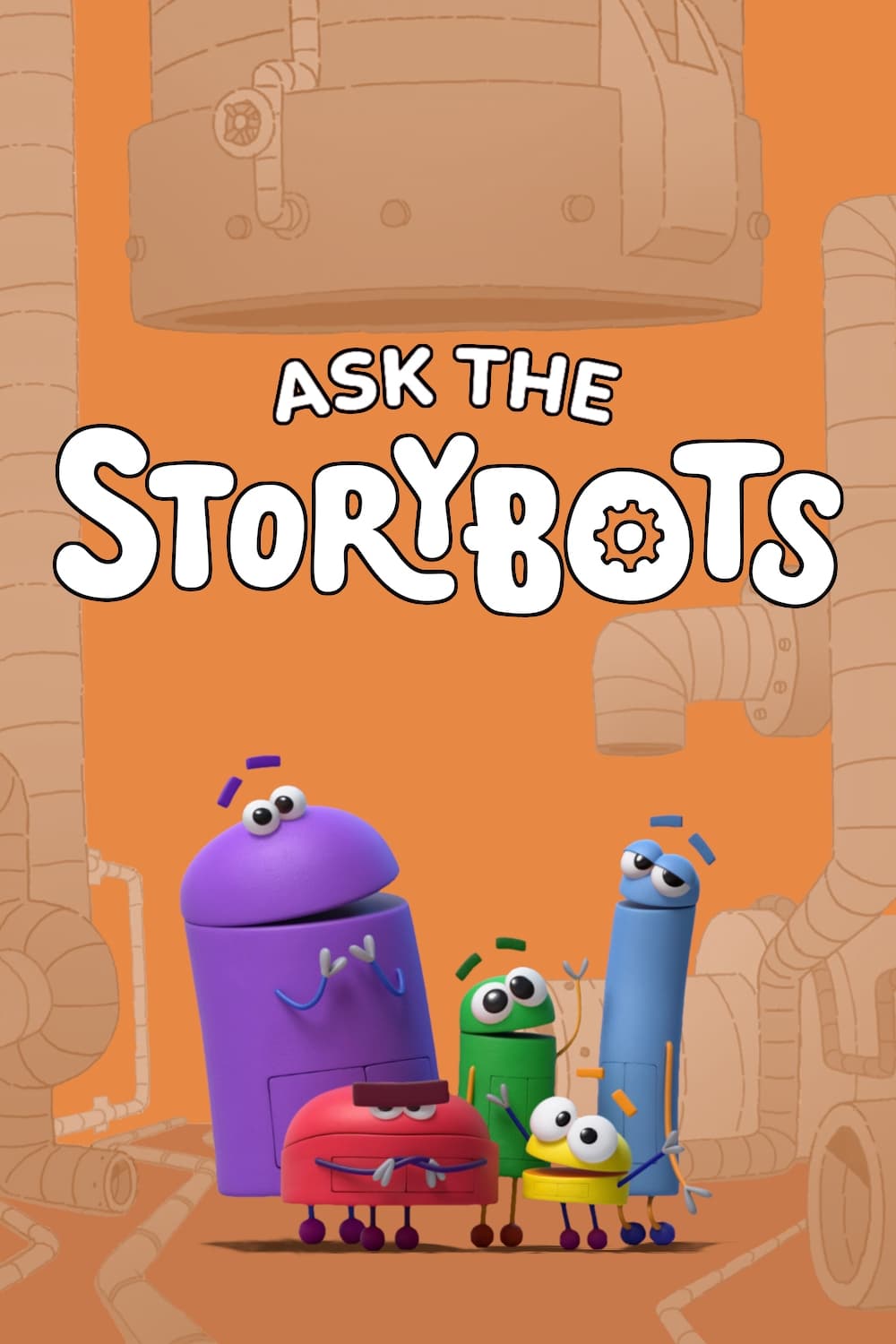
Ask the Storybots (2016) interactive character relationship network and AI-powered story timeline. Explore the connections, alliances, and conflicts between characters across the narrative arc.
The series uses recurring educational adventures rather than a single serialized conflict. Across three seasons, the StoryBots expand from everyday mysteries to technological, biological, human, and cosmic systems.
"The supplied character profiles identify Bang as a protagonist and Hap as a supporting character. The episode summaries describe the StoryBots collec...
Rating: 7/10 (13 votes)
The StoryBots investigate night, flight, dental health, color, food production, and rain. The season establishes the recurring pattern of entering an unusual environment to answer a practical question.
The first season combines playful travel with introductory explanations of natural and bodily processes. Its conflicts remain contained within each question-driven adventure.
The StoryBots move inside computers, biological systems, and electrical processes. The season increases the complexity of its subjects while retaining the episodic educational structure.
Nutrition, animal diversity, hearing, volcanic pressure, flowers, and illness broaden the range of living and physical systems under examination. The season balances comic conflict with direct scientific explanation.
The third season opens with music, planetary formation, DNA, and recycling. Its subjects connect imaginative adventure with questions about identity, society, and the wider universe.
The StoryBots explore cell phones, sanitation, chocolate production, and eyesight. The season closes by showing how hidden systems shape ordinary experiences.
Plot analysis generated from content on Wikipedia, licensed under CC BY-SA 4.0.
Related entry on Wikidata (Q26252711), public domain (CC0).